动态高分子

Search documents
“造小”的艺术,用分子构筑新材料
Xin Lang Cai Jing· 2025-12-22 00:52
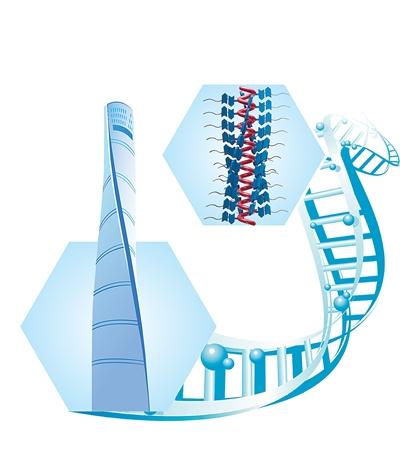
Core Insights - A recent collaboration between Chinese and Dutch scientists has successfully synthesized a dynamic polymer with a distinct double-helix structure, inspired by the Shanghai Tower, marking a significant advancement in biomimetic smart materials [2][10] - The polymer exhibits dynamic behavior similar to natural proteins, allowing it to expand and contract with temperature changes, fully unwind under specific conditions, and degrade into absorbable small molecules, presenting new avenues for material development [2][4] Research Background - The research was conducted by the Nobel Prize-winning team at East China University of Science and Technology, inspired by the architectural design of the Shanghai Tower, which is the tallest building in China and the third tallest in the world [2] - The team aimed to create artificial polymers with similar geometric features and dynamic functions as biological helical polymers, which play critical roles in information storage and structural support in living organisms [2][3] Methodology - The researchers began with basic small molecules, using natural, biocompatible "molecular building blocks" like amino acids and disulfide bonds, connected through dynamic reversible chemical bonds to form stable helical structures [3] - Initial designs relied on weak interactions, leading to structural collapse under heat or environmental changes, but breakthroughs were achieved by combining dynamic covalent bonds with rigid amino acid backbones, resulting in a flexible yet stable helical structure [3][4] Applications - The new polymer demonstrates potential in biocompatible materials, suitable for next-generation wearable or implantable medical devices, capable of adapting to complex mechanical environments within the body and safely metabolizing after use [4] - Its excellent mechanical flexibility, biocompatibility, and complete degradability position it as an ideal candidate for applications in flexible neural interfaces, targeted drug delivery systems, and tissue engineering scaffolds [4] Broader Implications - The research highlights the importance of bridging physical laws and biological phenomena, showcasing how simple molecular components can lead to complex structures and functionalities, a principle that has driven significant scientific advancements [5][6] - The ongoing development of molecular machines and nanotechnology, as evidenced by previous Nobel Prize-winning work, underscores the potential for these innovations to revolutionize various fields, including medicine and environmental science [6][9]

动态高分子论坛官宣︱2025(第三届)高分子循环再利用大会
DT新材料· 2025-10-22 16:05
Core Viewpoint - The 2025 Dynamic Polymer Forum focuses on the design and manufacturing of recyclable dynamic polymers, emphasizing their role in sustainable development through reversible chemical bonds that enable recycling, self-repair, and reprocessing [2][4]. Group 1: Event Overview - The forum is organized by DT New Materials and will take place from December 11-13, 2025, in Ningbo, Zhejiang [3]. - The event will feature a macro forum on polymer recycling, advanced recycling technologies, and case studies on the circular use of PCR/PIR polymers [18][19]. Group 2: Key Topics - Dynamic polymer chemistry and principles [5]. - High-performance dynamic polymer materials that can self-repair and be recycled under mild conditions [5]. - High-stability dynamic non-covalent supermolecular polymer materials [5]. - Dynamic polymer elastomer materials [5]. - Dynamic polymer gel materials [5]. Group 3: Specialized Topics - Macro forum on polymer recycling industry, discussing domestic and international recycling policies, regulations, and future development directions [6]. - Advanced recycling technologies for waste polymers, including various depolymerization methods [6]. - Case studies on the circular use of PCR/PIR polymers, focusing on regulatory impacts and technological advancements in recycling [7][8]. Group 4: Highlights of the Forum - Insights into global plastic recycling policies and China's 14th Five-Year Plan for plastic recycling [10]. - Sharing advancements in advanced recycling technologies for mixed low-value waste plastics and rubber [10]. - Discussion on balancing performance, compliance, and sustainability in recycled plastics across various industries [10]. - Exploration of dynamic polymers' sustainability and functionality through molecular structure design [10]. - Opportunities for collaboration and innovation among leading enterprises, top universities, and industry stakeholders [10]. Group 5: Agenda Overview - The agenda includes registration, a youth scientist forum, and various specialized sessions on polymer recycling and advanced technologies [11].