华龙工鸿操作系统

Search documents
小区供水泵房用上AI算法 水压更稳水质更可靠
Nan Fang Du Shi Bao· 2025-12-03 23:08
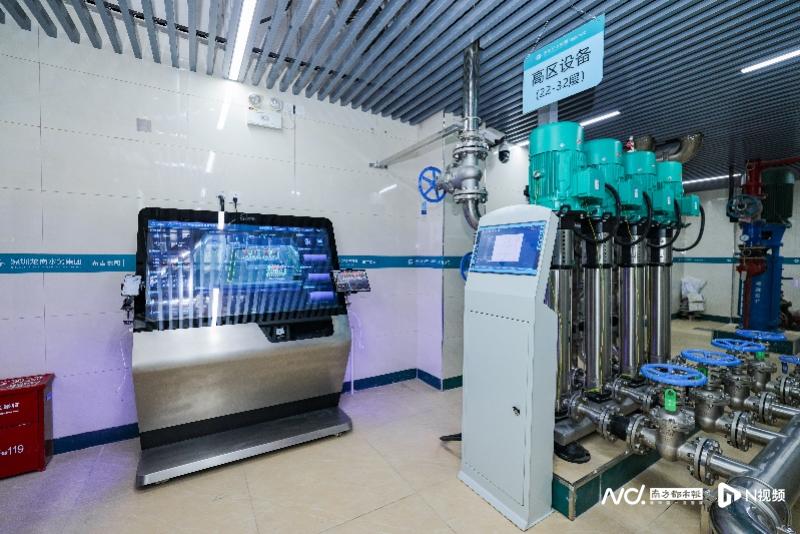
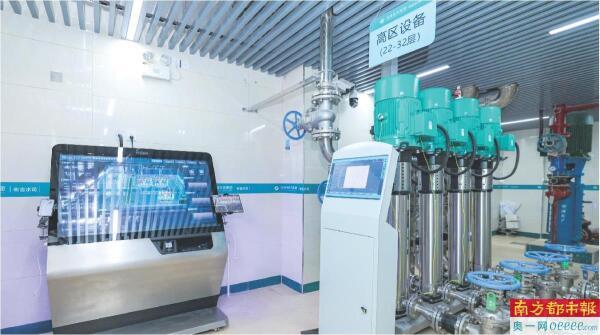
Core Insights - The first open-source HarmonyOS smart pump station in Shenzhen's Longgang District is transforming urban water supply systems by enabling autonomous operation without dedicated personnel [2][3] - The project marks a significant breakthrough in the smart water sector, utilizing a self-sensing system that adjusts water pressure and issues fault alerts [2][3] Group 1: Technology and Innovation - The open-source HarmonyOS pump station integrates distributed soft bus technology, merging PLC control systems, monitoring platforms, and sensing devices into a "cloud-edge-end" collaborative operation mechanism [3] - The system features built-in AI algorithms for real-time water quality alerts, precise energy regulation, and equipment fault prediction, enhancing operational efficiency and reducing maintenance costs [3] Group 2: Operational Efficiency - Compared to traditional pump stations, the upgraded system achieves more stable water pressure, reliable water quality, and a 10% reduction in overall energy consumption, while the procurement cost of the core PLC controller decreases by 5% [3] - The project has established a mature, replicable model for smart water management, with plans to implement HarmonyOS upgrades in 47 additional pump stations across the district [4] Group 3: Broader Applications - The application of open-source HarmonyOS is expanding beyond pump stations to municipal water supply stations and water treatment plants, contributing to the formation of a comprehensive "open-source Harmony smart water system" in the region [4] - The HarmonyOS is also being validated in various industrial sectors, including chemicals and home appliance manufacturing, showcasing its advantages in operating system architecture and multi-end collaboration capabilities [5]

运维效率提升超60% 能耗降低15%以上 全国首个开源鸿蒙智慧水务标杆落地深圳
Xin Lang Cai Jing· 2025-12-03 04:25
Core Insights - The event "Open Source Harmony Smart Water Management Benchmark Case Visit" was held in Shenzhen, showcasing the integration of domestic chips and operating systems into traditional industrial sectors [1] Group 1: Company Overview - Hualong Xunda, in collaboration with ecological partners, has developed a smart water management model site that demonstrates the capabilities of the "Hualong Gonghong" operating system [1] - The system allows a single Harmony terminal to control four robots and manage 512 motion control test beds, significantly reducing the workforce required from 200 to 50 [1] Group 2: Technological Advancements - The "Hualong Gonghong" system utilizes domestic chips and operating systems, along with proprietary HMI and SCADA software, providing a "Chinese solution" for safe and controllable industrial control systems [1] - All devices adhere to a unified protocol, which greatly reduces communication costs while enhancing system stability and response speed [1] Group 3: Efficiency and Energy Savings - Post-transformation, operational efficiency has improved by over 60%, and energy consumption has decreased by more than 15% [1]
开源鸿蒙智慧泵房在深圳落地,如何再造城市供水系统?
Nan Fang Du Shi Bao· 2025-12-02 13:44
Core Insights - The first open-source HarmonyOS smart pump room in Shenzhen's Longgang District is revolutionizing urban water supply systems by enabling autonomous operation and real-time monitoring without the need for dedicated personnel [1][3]. Group 1: Technology and Innovation - The smart pump room utilizes the open-source HarmonyOS, integrating distributed soft bus technology with PLC control systems, monitoring platforms, and sensing devices to create a "cloud-edge-end" collaborative operation mechanism [3]. - The system features built-in AI algorithms that provide real-time water quality alerts, precise energy regulation, and equipment fault prediction, significantly enhancing operational efficiency and reducing maintenance costs [3][4]. Group 2: Operational Efficiency - Compared to traditional pump rooms, the upgraded system offers more stable water pressure and reliable water quality, achieving a 10% reduction in overall energy consumption and a 5% decrease in the procurement cost of core PLC controllers [4]. - The implementation of the smart pump room has led to a substantial decrease in manpower requirements, as staff can now use HarmonyOS mobile devices for immediate synchronization of pump pressure and water quality parameters [3][4]. Group 3: Expansion and Future Prospects - The Longgang open-source HarmonyOS smart pump room project has established a mature, replicable, and promotable model for smart water management, with plans to upgrade 47 additional pump rooms based on pilot experiences [4]. - The application of open-source HarmonyOS is expanding beyond pump rooms to municipal water supply stations and water treatment plants, accelerating the formation of a comprehensive "open-source Harmony smart water system" in the district [4][5].