和县人化石

Search documents
时代人物丨研究古人类,“93岁,要当39岁来过”
Xin Hua Wang· 2026-01-22 18:09
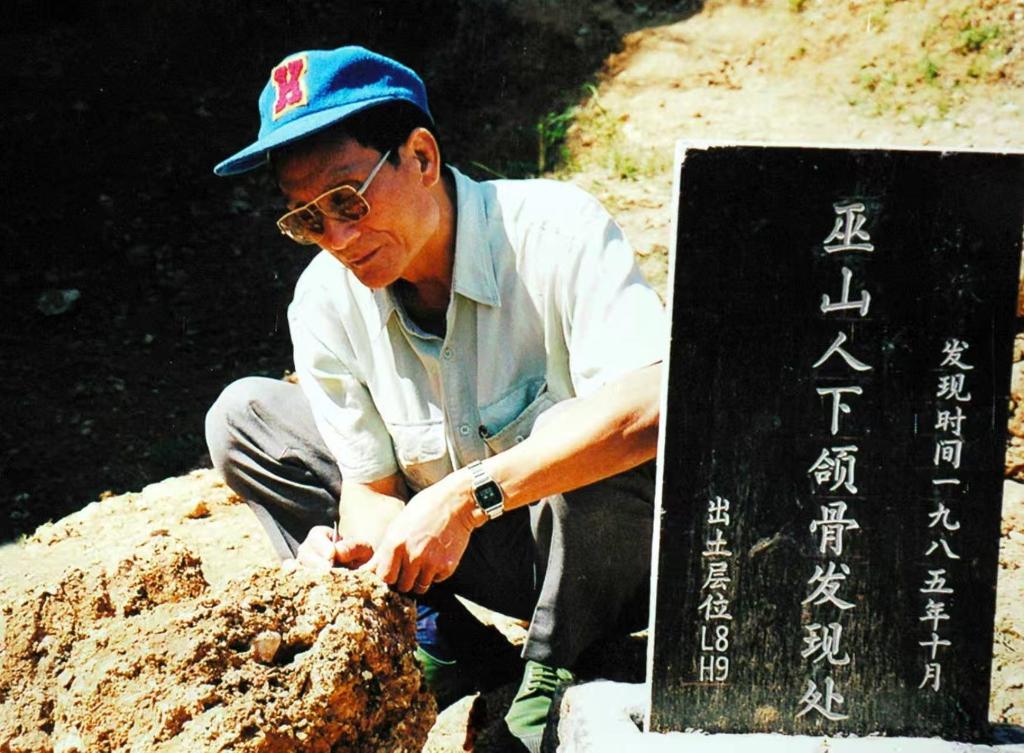
Core Viewpoint - The research on "Wushan Man" has made new progress, with ongoing debates about its classification as either human or ape, and the potential implications of its discovery for understanding early human evolution in East Asia [1][4]. Group 1: Research Findings - "Wushan Man" is believed to have cognitive abilities and the capacity to create stone tools, supported by the discovery of over 3,000 stone artifacts and animal bones with cut marks [4]. - The geological age of the Wushan site is estimated to be between 2.5 million and 2 million years ago, suggesting that "Wushan Man" could be the earliest hominin in East Asia, predating Yuanmou Man by over 300,000 years [4]. - The dental morphology of "Wushan Man" shows characteristics that do not align with either apes or Homo erectus, indicating it may represent a new lineage of early humans [4]. Group 2: Researcher's Background - Huang Wanbo, a 93-year-old researcher, has been involved in paleontological studies since graduating in 1954 and has made significant contributions to the field, including the discovery of "Lantian Man" and "Hecun Man" [5][9]. - His mentor, Pei Wenzhong, played a crucial role in shaping his research approach, emphasizing the importance of fieldwork and attention to geological details [5][7]. Group 3: Ongoing Research Efforts - Huang has participated in all five excavation rounds at the Longgupo site, with the most recent round set to conclude in 2024, during which he and his team spent 182 days on-site [11]. - The team plans to apply for a new excavation round at the same stratigraphic level where the jawbone was found, with hopes of discovering more fossils, particularly cranial remains, which are critical for understanding the classification of "Wushan Man" [11].