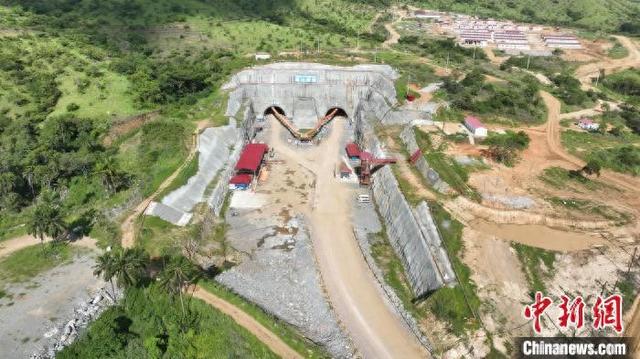
安哥拉凯凯水电站

Search documents
(新春走基层)“非洲三峡”工地上的中国年
Zhong Guo Xin Wen Wang· 2026-02-20 08:07
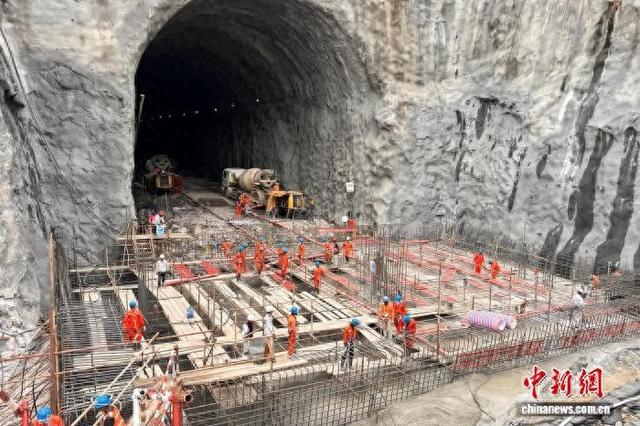
作者 陆希成 黄笛 中新网昆明2月20日电 题:"非洲三峡"工地上的中国年 2号尾水洞洞口闸室同样繁忙。为赶在雨季前将仓位浇筑到位,该项目浇筑队队长袁敏刚带领队员穿梭 于密集钢筋网间备仓。他俯身检查绑扎质量,"浇筑精度要求极高,每个角落都不能留死角。"不远处, 振捣棒嗡嗡作响,工人们正合力将混凝土捣实。 春节期 间,安哥拉凯凯水电站建设现场,工人正在紧张施工。中国能建葛洲坝集团 供图 春节期 间,安哥拉凯凯水电站项目部举办迎新春文化活动,安哥拉籍员工体验写"福"字。中国能建葛洲坝集团 供图 红日偏西,工地迎来短暂休憩。营区广场上,"凯凯跃马,迎春争锋"篮球赛拉开帷幕;春联摊前墨香四 溢,员工挥毫写下"平安顺遂""工程创优"的祝愿;套圈摊前笑声不断,简易摆设的玩偶、清凉油、沐浴 露等奖品引得众人跃跃欲试。安哥拉籍工人若昂瞄准、出手,圈子稳稳套中一瓶清凉油,他高举"战利 品"喊出刚学会的中文:"好运气!中国年!"人群报以欢笑与掌声。 夜色渐深,凯凯河畔工地灯火再次亮起,隧洞里的焊花仍在闪烁。(完) 春节期间,安哥拉凯凯水电站项目2号工区营地,大红灯笼高挂,尾水隧洞工地上没有鞭炮声,却有搅 拌车的轰鸣、焊枪的火花。 ...

中企承建安哥拉凯凯水电站1号尾水隧洞实现全线贯通
Zhong Guo Xin Wen Wang· 2025-05-30 14:06
Core Insights - The Angola Kake Hydropower Station project, undertaken by China Energy Engineering Group Gezhouba Company, has made significant progress with the completion of the tailwater tunnel No. 1, which was achieved 349 days ahead of schedule [1][2] - The project is located in Angola's Kwanza Norte Province and is part of a planned series of eight hydropower stations on the Kwanza River, with a total installed capacity of 2,172 megawatts and an expected annual generation of 8,566 GWh, earning it the title of "Africa's Three Gorges Project" [2][4] - The tailwater tunnels are crucial for connecting the tailwater regulating chamber to the Kwanza River, with a total length exceeding 10 kilometers, facilitating subsequent unit installation and water storage for power generation [2][4] Project Details - The tailwater tunnel project faced multiple challenges, including tight schedules, strict standards, and significant transportation pressures [4] - The construction team overcame adverse conditions such as high temperatures, humidity, and poor ventilation, achieving a monthly excavation rate of over 182 meters for several consecutive months through innovative techniques like the "dual-machine operation" model [4] - Upon completion, the hydropower station is expected to meet over 50% of Angola's national electricity demand, reduce greenhouse gas emissions by approximately 7.2 million tons annually, and decrease the consumption of non-renewable resources by 2.733 million tons [4]