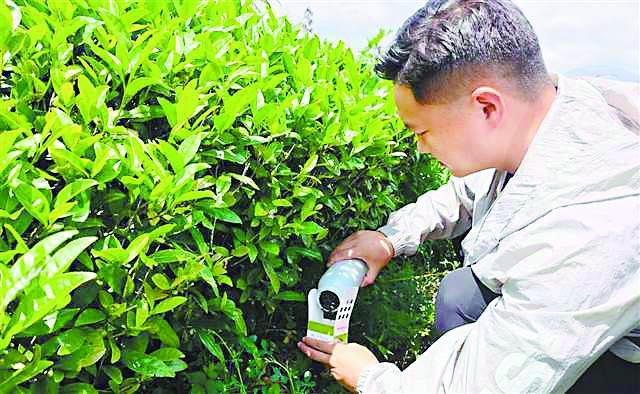
捕食螨

Search documents
绿色生产力,重塑农业竞争力 | “四个农业”的广东实践②
Nan Fang Nong Cun Bao· 2026-02-11 04:00
Core Viewpoint - Guangdong is actively promoting green agricultural practices to enhance agricultural competitiveness and sustainability through innovative techniques and ecological strategies [5][12][120] Group 1: Green Agricultural Practices - The Guangdong Provincial Rural Work Conference emphasized the importance of developing new quality productivity in agriculture and improving the rural living environment [6][8] - The province is implementing a systematic approach to green development, focusing on scientific fertilization, precision monitoring, and resource recycling [10][12] - Specific tasks related to green agriculture have been outlined, marking its significant role in current and future agricultural work in Guangdong [7][8] Group 2: Scientific Fertilization - Guangdong is transforming agricultural production methods from resource-consuming to ecological conservation through scientific fertilization [14][15] - The province has achieved over 90% coverage of soil testing and formula fertilization technology, with fertilizer utilization rates increasing to 42.52% [22] - The use of leguminous green manure is highlighted as a key measure for reducing chemical fertilizer use while enhancing soil fertility [25][26] Group 3: Smart Pest Control - The integration of smart monitoring and green pest control techniques is being developed to create an efficient ecological pest management system [41][47] - A successful response to a bacterial disease outbreak in rice fields demonstrated the effectiveness of a coordinated approach involving drones and professional service organizations [48][56] - Innovations in pest control, such as the "insect face recognition" system, have significantly improved monitoring efficiency and accuracy [68][71] Group 4: Circular Agriculture - Guangdong is focusing on green circular agriculture as a key pathway to cultivate new quality productivity, emphasizing the recycling of livestock waste and crop residues [83][85] - Successful models have been established for the resource utilization of livestock waste and straw, transforming waste into valuable nutrients [90][92] - The circular approach is reshaping agricultural organization and resilience, promoting a closed-loop system that reduces reliance on external inputs [101][103] Group 5: Overall Impact and Future Directions - The comprehensive strategies being implemented in Guangdong aim to enhance agricultural productivity, quality, and brand value, ultimately leading to a more resilient agricultural sector [116][120] - The transition to green development is seen as essential for Guangdong to fulfill its responsibilities as a major economic province and to reshape its agricultural competitive advantages in the new era [120][121]


小战士 大功臣
Xin Lang Cai Jing· 2026-01-08 16:57
Core Insights - The article discusses the increasing use of beneficial insects, specifically predatory mites, in agriculture as a means to reduce pesticide usage by over 30% while ensuring the safety and quality of agricultural products [6][8][12] - The adoption of biological pest control methods, such as using predatory mites, has shown significant benefits in pest management, but faces challenges in widespread implementation due to farmers' preference for quick results from chemical pesticides [10][11] Group 1: Benefits of Beneficial Insects - Over 2 million acres have been released with predatory mites, effectively reducing pesticide application and enhancing product safety [6][8] - Farmers like Zhu Wenxiang have reported a 40% reduction in pesticide use and a 30% increase in fruit prices due to the effectiveness of predatory mites in controlling spider mites [8][12] - The use of predatory mites has led to a significant decrease in pesticide residues, making products safer for consumers, particularly families with children [8][12] Group 2: Challenges in Promotion - Despite the benefits, the application of beneficial insects in pest control is less than 5% in crop pest management, indicating a slow adoption rate [9][10] - Farmers often prefer immediate results from chemical pesticides, leading to a reluctance to adopt the slower-acting biological methods [10][11] - The need for precise monitoring and early release of beneficial insects poses a challenge for farmers who are accustomed to reactive chemical treatments [10][11] Group 3: Innovations and Solutions - Innovative production methods, including the use of AI, have reduced production costs of beneficial insects by over 60% [14] - New release methods, such as drone deployment and smart field release devices, have improved efficiency and precision in applying beneficial insects [14] - Establishing a diverse agricultural ecosystem with companion plants can enhance the effectiveness of beneficial insects by providing necessary nutrients and habitats [14]