智能货物运输管理系统

Search documents
新华鲜报丨“太空快递员”!轻舟货运飞船完成多项关键技术验证
Xin Hua She· 2025-12-10 11:12
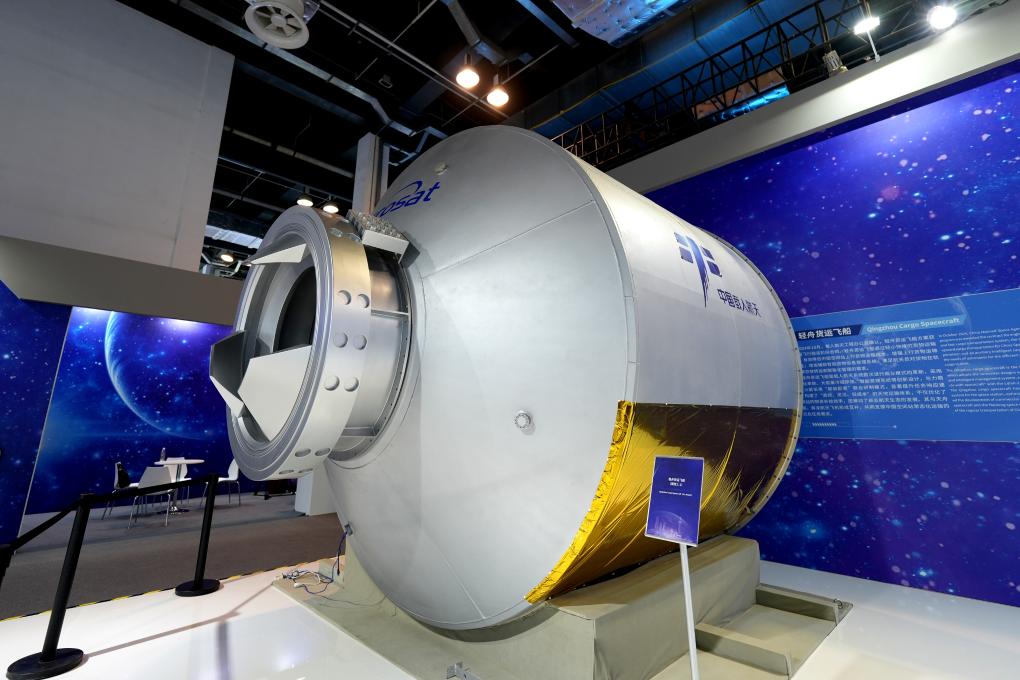
Core Viewpoint - The new generation cargo spacecraft "Light Boat" has completed several key technology validations and is set for its maiden flight next year, designed specifically for the Chinese space station to enhance cargo transportation efficiency and reliability [1][6]. Group 1: Technical Features - The "Light Boat" spacecraft weighs approximately 5 tons and features a cargo hold with a four-layer shelf layout, accommodating 40 standard cargo slots with a total loading volume of 9 cubic meters and an overall cargo hold volume of 27 cubic meters [3][4]. - It includes an intelligent cargo management system that allows astronauts to quickly locate and manage items through voice interaction, significantly improving delivery efficiency and reducing on-orbit workload [3][4]. - The spacecraft is equipped with a modular "space refrigerator" with individual cold chain boxes of 60 liters, which can be combined for a maximum total volume of 300 liters, allowing for precise temperature control and stable preservation during transport [3][4]. Group 2: Economic and Operational Aspects - The "Light Boat" employs an integrated single-cabin design that enhances space utilization and allows compatibility with various rocket types for rapid launches [4]. - The current transportation cost is approximately 100,000 yuan per kilogram, with expectations for further reductions through mass production and deepened commercial cooperation [4]. - The spacecraft features both "door-to-door delivery" and "pick-up" capabilities, enabling it to carry waste from the space station back to Earth for atmospheric destruction, thus achieving a closed-loop transportation system [4][6]. Group 3: Strategic Importance - The addition of the "Light Boat" as a backup for cargo transportation will significantly enhance the safety and reliability of material supply to the Chinese space station [6]. - The development unit has previously achieved success with projects like the Beidou navigation satellite and dark matter particle detection satellite, marking a new breakthrough in modular spacecraft and rapid response technology [6].