气象数据

Search documents
万字综述遥感AI智能体!六大应用场景全面爆发,地理空间智能从「眼睛」变「大脑」
机器之心· 2026-03-20 11:27
Core Insights - The article discusses the transformative impact of AI-driven remote sensing agents, moving from passive perception to active cognition, enabling them to plan, remember, and collaborate as "geospatial intelligent agents" [3][4]. Group 1: Definition and Framework - The paper provides a formal definition of remote sensing AI agents, describing them as systems capable of understanding user goals, autonomously breaking down tasks, and utilizing professional tools [9][10]. - It introduces a multi-dimensional technical classification system analyzing existing methods based on planning strategies, memory mechanisms, action execution, and multi-agent collaboration [10]. Group 2: Applications - The article outlines six major application scenarios for remote sensing agents: urban governance, precision agriculture, ecological monitoring, marine supervision, emergency response, and geological exploration [10][25][26][27][28][29]. - In urban governance, AI agents automate spatial analysis and decision-making processes, enhancing proactive management [25]. - In precision agriculture, agents integrate remote sensing with agricultural decision-making, providing comprehensive support from perception to action [26]. - For ecological monitoring, agents facilitate the entire chain from quantitative assessment to policy analysis [27]. - In marine supervision, agents achieve breakthroughs in scientific reasoning and autonomous navigation control [28]. - During emergency response, agents demonstrate significant value in disaster monitoring and decision-making [29]. - In geological exploration, agents automate geological interpretation and exploration processes, significantly enhancing efficiency [29]. Group 3: Challenges and Future Directions - The article identifies key challenges facing remote sensing agents, including data reliability, dynamic adaptability, security and privacy concerns, and the need for comprehensive evaluation benchmarks [30][35]. - It emphasizes the importance of self-evolution, causal reasoning, collective intelligence, embodied interaction, and personalized services as critical future directions for the development of remote sensing agents [35].


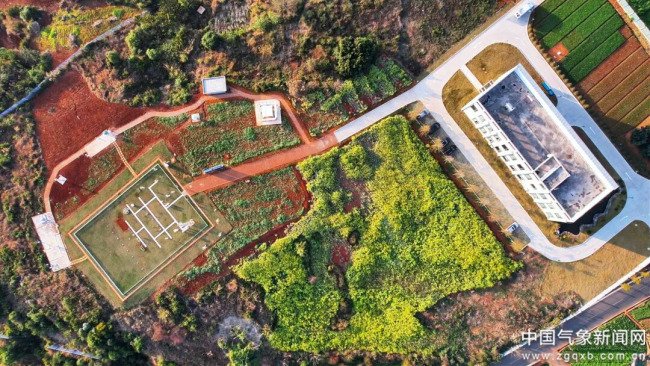
在弥勒,揭秘云贵高原“天气魔术师”云贵准静止锋空基综合观测试验开展
Xin Lang Cai Jing· 2026-01-16 09:52
Core Viewpoint - The cloud and plateau quasi-stationary front research is crucial for improving weather forecasting accuracy in Southwest China and addressing severe weather challenges such as low-temperature rain and snow, as well as strong convective weather [2][12]. Group 1: Experiment Overview - The cloud and plateau quasi-stationary front airborne comprehensive observation experiment was conducted from January 15 to March 1 at the Yunnan Meteorological Bureau's experimental base in Mile City, Yunnan Province [1]. - The experiment utilized self-developed high-altitude drone systems and ground-based remote sensing vertical observation equipment to collect meteorological data at various heights and locations of the front [1][5]. - The base has established a comprehensive observation system combining "point-line-surface" to study the fine structure characteristics and evolution of the quasi-stationary front [5][12]. Group 2: Research Significance - The research on the quasi-stationary front is expected to enhance the understanding of its vertical structure and movement patterns, particularly during the winter when its activity is most pronounced [5][10]. - The findings from this research have been integrated into Yunnan's intelligent forecasting platform, contributing to the "1262" refined forecasting and emergency response mechanism [7][12]. - The experiment aims to provide data support for improving monitoring and forecasting capabilities for severe weather in the region [12]. Group 3: Future Directions - The research team plans to expand the experiment's scope by deploying ground-based remote sensing vertical observation equipment in five key areas affected by the quasi-stationary front [10]. - There is an emphasis on collaboration with experts and scholars to enhance observation experiments, mechanism research, and forecasting technology development [10][12].
中国气象局:加大数据资源供给,先后开放100余种气象数据
Nan Fang Du Shi Bao· 2025-06-24 04:08
Group 1 - The core viewpoint of the articles emphasizes the significant potential and wide applicability of meteorological data across various industries, highlighting the achievements of the "Data Element ×" initiative by the China Meteorological Administration [1][2] - The China Meteorological Administration has opened 5 batches of over 100 types of meteorological data, providing 13PB of data to more than 1.3 million users, supporting innovation in over 20 industries [1] - The "Data Element ×" competition showcased that over 20% of the awarded projects integrated meteorological data, indicating its growing importance in sectors like modern agriculture and transportation [1][2] Group 2 - In 2024, a new "Data Element ×" competition will be held, with the Guangdong Meteorological Bureau winning first prize in the meteorological track, demonstrating advancements in data utilization technologies and platforms [2] - The China Meteorological Administration has selected 23 typical cases that deeply integrate meteorological data into 12 industry fields, including flood prevention and urban resilience planning [2] - The "Digital Flood Prevention Decision-Making Command System" in Chongqing can predict flood risks up to 6 days in advance, showcasing the effectiveness of integrating meteorological data with other departmental data [2] Group 3 - The establishment of a meteorological data identity system is underway, with over 900,000 meteorological data identities issued to support data registration, compliance certification, and safety supervision [3] - The identity system aims to monitor the entire lifecycle of data circulation and protect the rights of various entities involved in data development and utilization [3]
Spire (SPIR) - 2025 Q1 - Earnings Call Transcript
2025-05-14 22:02
Financial Data and Key Metrics Changes - GAAP revenue for Q1 2025 was $23.9 million, reflecting a sequential growth of $2.2 million or 10% from Q4 2024, but a decline from $34.8 million in Q1 2024 [22][23] - Non-GAAP operating loss was negative $11.5 million for Q1 2025 compared to negative $7.1 million in Q1 2024, while adjusted EBITDA was negative $7.9 million for Q1 2025 compared to negative $1.2 million in Q1 2024 [23] - The company ended Q1 2025 with $35.9 million in cash and cash equivalents, and as of April, had approximately $136 million in cash and no debt [24][15] Business Line Data and Key Metrics Changes - The company secured a significant CAD 72 million contract from the Canadian Space Agency for a dedicated satellite constellation for wildfire monitoring, marking a key achievement in technical recognition and environmental contribution [11] - Approximately 20 satellites were launched in Q1 2025, with half supporting space services customers and the other half enhancing weather data capabilities [27] Market Data and Key Metrics Changes - The U.S. has over 200 operational surveillance satellites, while Europe has fewer than 20, indicating a significant market opportunity for the company [11] - The U.S. Administration's proposed budget for fiscal year 2026 includes a 13% increase in defense spending, creating new opportunities for the company [8] Company Strategy and Development Direction - The company aims for 20% revenue growth targets in the medium to long term, focusing on achieving profitability and operational efficiency [17][20] - Strategic investments are being made in manufacturing capabilities in Boulder and Munich to support U.S. Government and European customers [19] Management's Comments on Operating Environment and Future Outlook - Management expressed confidence in the growth potential in the second half of the year, driven by government demand and increasing defense budgets [36] - The company expects to achieve breakeven to positive operating cash flow in the second half of the year, with a focus on reducing non-GAAP operating loss and adjusted EBITDA loss [31][30] Other Important Information - The company completed the strategic sale of its maritime business, eliminating its entire debt burden and strengthening its balance sheet by over $100 million [15] - The company is streamlining its office footprint, closing offices in San Francisco and Singapore to better support evolving business needs [19] Q&A Session Summary Question: Guidance for the year and sequential growth rates - Management indicated strong growth expected in the second half of the year, with growth rates in the midpoint of 12% to 17% range [34][37] Question: Adjusted EBITDA expectations - Management expects to reach breakeven in adjusted EBITDA going into 2026, with improvements in the second half of the year [39] Question: Confidence in NOAA contract awards - Management expressed confidence in regaining performance requirements and increasing budgets for NOAA, particularly for radio occultation data [40][41] Question: Updates on the Talos opportunity - Management confirmed ongoing collaboration with Thales and progress on the Uriallo project [43][44] Question: Revenue mix and growth areas - Management stated that all areas, including space services, weather, and aviation, are important growth areas, with strong representation in the U.S. and Europe [48] Question: Pipeline and contract pricing - Management noted strong demand across all products and services, particularly in government contracts, but did not provide specific pipeline numbers [74][75] Question: NOAA contract renewal - Management clarified that the NOAA contract will be renegotiated, affecting both price and number of soundings [82] Question: High-definition weather forecast demand - Management indicated there is demand for high-definition weather forecasts on both commercial and government sides [83] Question: Growth drivers for 2026 - Management confirmed that a 20% top-line growth assumption for 2026 remains reasonable [84] Question: Space services business and capital investment - Management emphasized a focus on organic growth and efficiency without pursuing vertical integration at this time [96]