
水稻新株系

Search documents
【科技日报】水稻热信号感知响应机制揭示
Ke Ji Ri Bao· 2025-12-22 04:07
中国科学院分子植物科学卓越创新中心研究员林鸿宣团队与上海交通大学研究员林尤舜团队等合 作,破解了水稻感知并响应高温的双重"密码锁",揭示了植物中的一个循序激活、协同串联的热信号感 知响应机制,成功培育出具有梯度耐热性的水稻新株系。该成果不仅为耐高温分子育种提供了有力支 持,更为应对全球变暖导致的粮食减产提供了新的解决方案。相关研究成果日前发表于国际学术期刊 《细胞》。 该机制的破解为作物育种提供了精准靶点。据悉,全球平均气温每升高1℃,作物将减产3%— 8%,小麦、玉米、水稻和大豆四大作物减产合计达19.7%。研究团队基于DGK7和MdPDE1开展遗传设 计,在模拟高温的田间试验中取得喜人结果:单基因改良的水稻株系比对照株系增产50%—60%;而水 稻耐高温基因TT2协同DGK7的双基因改良株系比对照株系产量提升约一倍,且米质更优。 "这意味着,未来科学家不仅能增强作物的耐热性,更能像调节音量一样精准设计'梯度耐热'品 种,以适应不同地区的气候需求,维持作物在高温环境下的产量稳定。"中国科学院院士、中国科学院 分子植物科学卓越创新中心主任韩斌说。 (原载于《科技日报》 2025-12-22 08版) 进入灌浆 ...

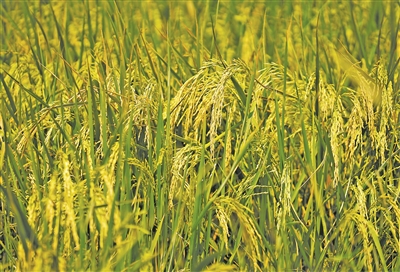
高温天也能稳产 我国科学家破译水稻“热警报”双重密码
Ke Ji Ri Bao· 2025-12-03 02:09
Core Insights - The article discusses the impact of rising global temperatures on food security, particularly how high temperatures threaten crop yields and quality, necessitating the exploration of heat-resistant genes in crops [1] Group 1: Research Findings - A collaborative research team from the Chinese Academy of Sciences and Shanghai Jiao Tong University has identified a dual mechanism in rice that allows it to sense and respond to high temperatures, published in the journal "Cell" [1] - The study reveals two key regulatory factors in rice: diacylglycerol kinase (DGK7) and phosphodiesterase (MdPDE1), which connect membrane lipid remodeling to nuclear signaling [2] - DGK7 acts as a "lipid decoder" on the cell membrane, while MdPDE1 functions as a "cyclic nucleotide decoder" in the nucleus, forming a signaling chain that translates physical heat signals into biological instructions [2] Group 2: Mechanism of Action - Upon high-temperature exposure, DGK7 is activated, generating phosphatidic acid (PA) as a lipid messenger, which amplifies the initial heat signal and initiates a chemical alarm within the cell [2] - PA then activates MdPDE1, which degrades cyclic adenosine monophosphate (cAMP) to maintain the expression of heat-resistant genes, enabling the synthesis of heat shock proteins and reactive oxygen species scavengers [3] - This mechanism allows cells to transition into a "high-temperature emergency state," enhancing their resilience against heat stress [3] Group 3: Implications for Breeding - The research provides precise targets for breeding heat-resistant crops, with findings indicating that a 1°C increase in global average temperature could lead to a 3%-8% reduction in crop yields, totaling a 19.7% decrease for major crops like wheat, corn, rice, and soybeans [3] - Field trials showed that rice lines with single-gene modifications yielded 50%-60% more than control lines, while double-gene modified lines exhibited nearly double the yield and improved grain quality without affecting normal yield conditions [3] - This advancement suggests that scientists can design "gradient heat-resistant" varieties tailored to different climatic needs, ensuring stable yields under high-temperature conditions [3][4]