水面光伏项目

Search documents
冀东油田二氧化碳循环利用与清洁能源转型取得进展
Xin Hua Wang· 2025-10-13 02:23
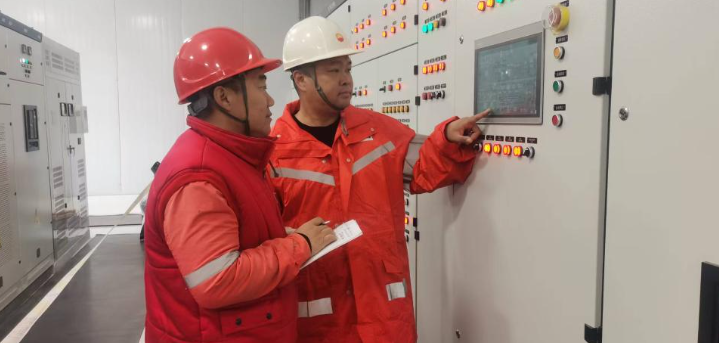
Core Viewpoint - China Petroleum's Jidong Oilfield Company is advancing its production towards a green and low-carbon transformation through the implementation of carbon dioxide recycling and clean energy substitution projects [1][3] Group 1: Carbon Dioxide Recycling - The Gao Shang Bao Gao 17 gathering station is a key facility currently undergoing trial operation, marking a significant step in carbon recovery for the oilfield [1] - The project leader, Li Dong, stated that once fully operational, the maximum injection capacity could reach 60,000 cubic meters per day, with an expected annual recycling of over 30,000 tons of carbon dioxide [3] - This technology recycles carbon dioxide produced during the oil extraction process, enhancing oil recovery rates while achieving carbon resource recycling [3] Group 2: Energy Efficiency Improvements - Jidong Oilfield is enhancing energy efficiency through system optimization and equipment upgrades, with a focus on energy conservation as a crucial pathway for green and low-carbon development [3] - The oilfield has simplified processes and conducted energy-saving renovations, resulting in the shutdown of multiple oil transfer stations and measurement rooms, reducing the total pipeline length by 323 kilometers and improving production system efficiency by 18.5% [3] - The projected electricity savings for 2024 is 6.57 million kilowatt-hours [3] Group 3: Clean Energy Substitution - The Jidong Oilfield has established a "photovoltaic + diversified microgrid" system and built a water surface photovoltaic project on idle platforms [3] - Since the construction of the diversified microgrid system, 1,495 photovoltaic panels have been installed, generating over 920,000 kilowatt-hours annually [3] - The water surface photovoltaic project is expected to save 28,200 tons of standard coal each year [3] Group 4: Future Plans - The Jidong Oilfield plans to continue expanding the application of renewable energy sources such as solar energy and advance carbon storage and carbon-driven oil projects, supported by digital technology to accelerate the goal of becoming a "negative carbon operation area" [3]