相控阵气象雷达系统及产品

Search documents
IPO雷达| 毛利率为何落后同行19个百分点?华盛雷达隐患重重
Xin Lang Cai Jing· 2026-01-17 00:36
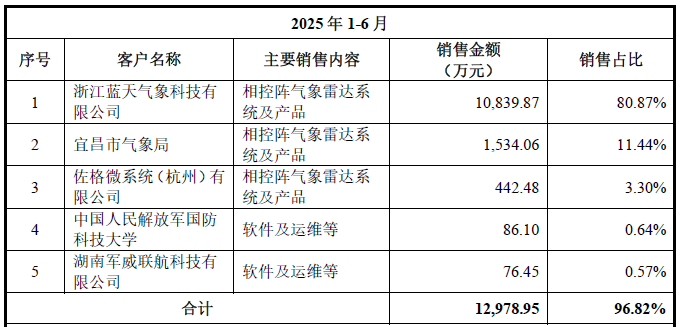
Core Viewpoint - Zhejiang Huasheng Radar Co., Ltd. has submitted its IPO application to the Sci-Tech Innovation Board, reporting a significant revenue increase of 382.82% year-on-year, successfully turning a profit after years of losses [1][3]. Group 1: Financial Performance - In 2022 and 2023, the company reported revenues of 30.43 million yuan and 73.22 million yuan, respectively, with net losses of -55.08 million yuan and -53.35 million yuan. In 2024, revenue surged to over 350 million yuan, with net profit exceeding 77 million yuan [3]. - The company's gross profit margins were 28.81%, 31.02%, 44.98%, and 44.81% over the reporting period, significantly lower than competitors, with a margin gap of over 19 percentage points [7][8]. Group 2: Market Dependency - The company's sales revenue from Zhejiang Province accounted for 77.20%, 43.15%, 63.93%, and 82.66% of its main business income from 2022 to the first half of 2025, indicating a high regional dependency [3][4]. - In the first half of 2025, 80.87% of the company's revenue came from a single client, Zhejiang Blue Weather Technology Co., Ltd., which is wholly owned by the Zhejiang Meteorological Service Center [4][6]. Group 3: Sales Strategy and Risks - The company has adopted aggressive sales strategies, including a trial radar model, which poses significant asset impairment risks. As of mid-2025, the book value of trial radars reached 93.33 million yuan [10][11]. - The trial model's risks include potential returns from clients if the equipment does not meet performance expectations, which could lead to substantial asset impairments [13]. Group 4: Internal Control Issues - The company has a long-standing issue with a 450,000 yuan loan to Shenzhen Sci-Tech Enterprise Service Center that has not been recovered for over five years, indicating potential internal control weaknesses [24][26]. - The high proportion of depreciation and amortization in sales expenses, reaching 48.17% in the first half of 2025, raises questions about the company's expense structure and asset management [21][23].