磁浮交通系统

Search documents
中国加快构建磁浮交通系统创新应用体系
Zhong Guo Xin Wen Wang· 2025-11-07 13:46
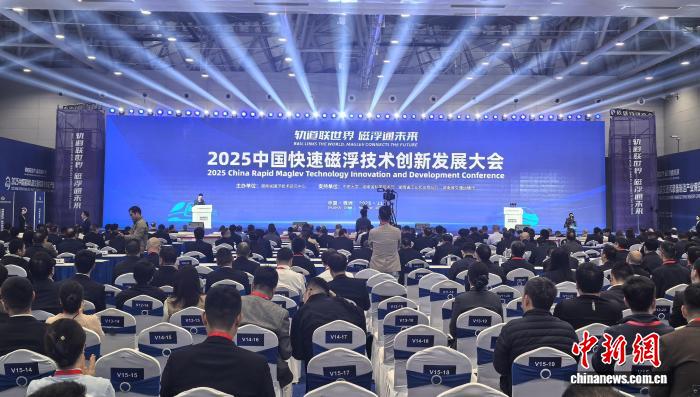
Core Viewpoint - China is accelerating the construction of an innovative application system for magnetic levitation (maglev) transportation, with a focus on expanding its use in urban agglomerations and diverse scenarios such as urban commuting and tourism integration [3][4]. Group 1: Industry Development - The 2025 China International Rail Transit and Equipment Manufacturing Expo opened in Zhuzhou, Hunan, alongside the China Rapid Maglev Technology Innovation Development Conference [3]. - Experts discussed the innovation of maglev technology, industrial collaboration, and global layout during the conference [3]. - The application of maglev transportation is evolving from single high-speed demonstrations to more diversified scenarios, including urban interconnections and cultural tourism [3]. Group 2: Technical and Economic Aspects - The current commercial maglev systems in China primarily use short-stator maglev technology, designed for speeds of 100 to 140 kilometers per hour, suitable for urban commuting and scenic area connections [3]. - There is a rising demand for "short-distance, flexibility, and door-to-door" travel due to deepening new urbanization and accelerated regional economic integration, presenting new opportunities for maglev transportation [3]. - Challenges in promoting urban rail transit maglev systems include passenger flow, cost, energy consumption, environmental impact assessments, and investment, necessitating a balance between technological advancement and economic and social feasibility [3][4]. Group 3: Future Directions - The Hunan Provincial Maglev Technology Research Center is focusing on comprehensive technological breakthroughs rather than incremental improvements, aiming to achieve a full speed spectrum of up to 200 kilometers per hour for rapid maglev systems [4]. - The application scope will cover urban rail transit, intercity railways, regional rapid transit, and tourism-related rail transport [4]. - The global rail transit industry is entering a phase of high-quality development, with domestic markets demanding cost reduction and efficiency improvements, while international markets shift from scale expansion to innovation-driven growth [3].