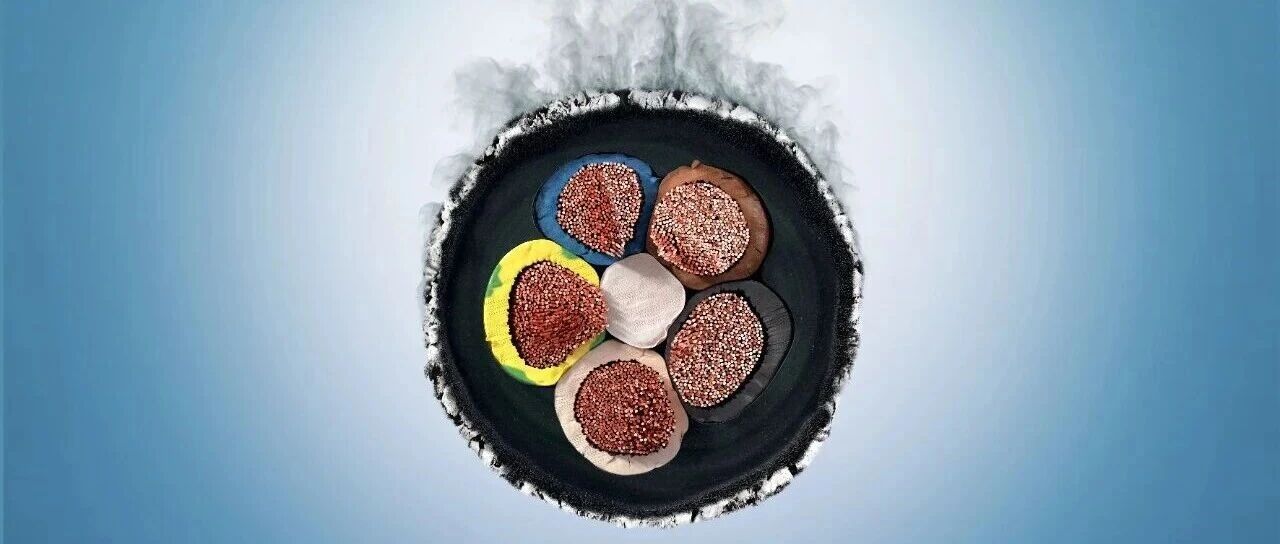
粘土基阻燃协效剂

Search documents
阻燃协效剂在线缆中的应用
DT新材料· 2026-01-19 22:33
Core Viewpoint - The article emphasizes the importance of clay-based flame retardant synergists in enhancing the fire safety of cables, particularly in the context of transitioning from halogenated to halogen-free materials, which are increasingly demanded due to environmental and safety concerns [3][11]. Group 1: Clay-Based Flame Retardant Synergists - Clay-based additives, particularly montmorillonite, are highlighted for their unique layered nanostructure and cation exchange properties, which allow for various modification pathways and wide application fields [4]. - After organic modification, montmorillonite retains its layered structure while transforming its hydrophilicity to hydrophobicity, enhancing compatibility with polymer matrices and achieving efficient delamination [5]. - The delaminated layered silicates can form a grid structure, ensuring long-term stability and effectiveness in flame retardancy applications [6]. Group 2: Advantages of BYK-MAX Products - BYK-MAX CT 4260, a clay-based flame retardant synergist, can improve the performance of conventional metal hydroxide flame retardants (such as ATH) and prevent dripping during combustion [14][19]. - The use of BYK-MAX CT 4260 allows for a reduction in the amount of ATH required in formulations, demonstrating effective flame retardancy while maintaining mechanical properties [11][28]. - The product is available in both powder and granule forms, with the granule form being dust-free and easier to handle, thus reducing occupational health risks [20][28]. Group 3: Performance Testing and Formulation - Testing shows that formulations with 65% ATH alone may fail mechanical performance tests, while those with 53% ATH combined with 5% clay can pass both flame retardancy and mechanical performance tests [24][26]. - The article outlines the challenges of achieving high ATH loading while meeting mechanical performance requirements, indicating a trend towards optimizing formulations with clay-based synergists [24][25]. - The typical composition of halogen-free flame retardant cable materials is discussed, emphasizing the need for innovative solutions to meet stringent fire safety standards [22].