背叛

Search documents
“新发现·科普书单”三岁了,已推荐194种优秀科普图书
Xin Lang Cai Jing· 2026-01-01 09:28
Core Insights - The tenth edition of the "New Discoveries: Popular Science Book List" was officially released at East China Normal University, marking the third anniversary of the initiative, featuring 19 selected books across three subcategories: "Scientific Humanities," "Scientific Life," and "Scientific Youth" [1][4]. Group 1: Overview of the Book List - The "New Discoveries: Popular Science Book List" is the first dedicated popular science book list in China, having launched in 2023 and published ten editions, selecting a total of 194 outstanding popular science books [1][8]. - The current book list includes seven titles in the "Scientific Humanities" subcategory, six in "Scientific Life," and six in "Scientific Youth," covering a wide range of topics from cosmic exploration to life sciences and health [2][4]. Group 2: Expert Opinions - Zeng Yitao, the chairman of the judging panel and an academician at the Chinese Academy of Engineering, emphasized the list's value in covering all age groups, allowing readers from children to experts to find engaging materials [4][5]. - Bai Yunxiang, a popular science writer, praised the quality of the selected books, noting that many authors possess deep professional backgrounds, ensuring scientific accuracy [7]. Group 3: Future Directions - The Shanghai Science Education Publishing House, the organizer of the book list, aims to continue promoting quality popular science literature through various initiatives, including book donations to schools and public lectures [9][16]. - The initiative has seen a significant increase in participating publishers, indicating its growing influence and the rising quality of selected books [10][12].


从蝙蝠的互助到猩猩的政治:“动物行为学”与卢梭的对话
Di Yi Cai Jing· 2025-12-26 04:10
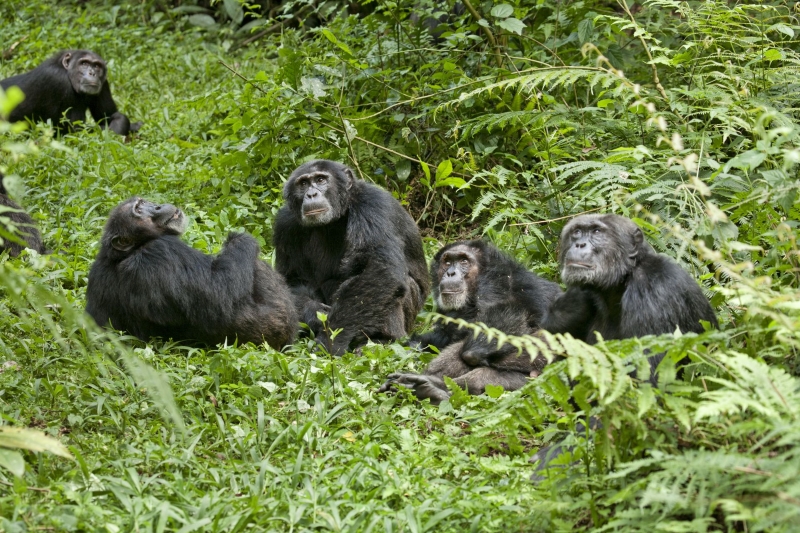
Core Argument - The book "The Philosophy of Animal Societies: Exploring the Secrets of Conflict, Betrayal, Cooperation, and Prosperity" by Ashley Ward aims to explore the concept of "sociality," traditionally viewed as a human trait, in the non-human world, detailing how it appears, sustains, and evolves across various species [1][4]. Group 1: Observational Insights - The book is based on field observations and provides a detailed analysis of animal social behaviors, avoiding romanticizing these findings as mere reflections of human virtues or direct answers to human political issues [2][4]. - Ward examines various species, including vampire bats, dolphins, baboons, and elephants, to illustrate the diverse manifestations of social behavior in the animal kingdom [1][4]. Group 2: Mechanisms of Social Behavior - Key themes in the book include reciprocity, punishment, social sanctions, information sharing, and how individuals navigate resource acquisition and safety within group networks [4][8]. - Ward emphasizes that social mechanisms are observable and comparable, moving beyond mere political and legal frameworks [4][5]. Group 3: Comparison with Rousseau - Ward's findings challenge Rousseau's notion that inequality arises solely from entering society, suggesting that sociality is inherent in nature and not a distinct divide between animal societies and human civilization [6][10]. - The book argues that while animals exhibit social mechanisms, these do not equate to the institutionalized inequalities created by human laws and property systems [6][7]. Group 4: Cultural Accumulation - Ward posits that cultural accumulation is not exclusive to humans, as evidenced by behaviors in dolphins, primates, and birds that show intergenerational transmission of knowledge [7][8]. - However, the qualitative difference lies in humans' ability to abstract and institutionalize behaviors through language and legal systems, leading to a more complex societal structure [7][8]. Group 5: Ethical Implications - The book discusses the importance of punishment mechanisms in animal groups for maintaining reciprocity, suggesting an ethical prototype where groups selectively uphold rules [8][10]. - This has implications for understanding human moral frameworks, indicating that while animal behaviors can inform our understanding of ethics, they do not directly translate to human political legitimacy [8][10]. Group 6: Complementary Perspectives - Ward and Rousseau's perspectives are seen as complementary, with Ward providing empirical evidence that questions biological assumptions in philosophical discourse, while Rousseau offers a theoretical framework for understanding how differences are amplified and legitimized [9][10]. - The integration of both viewpoints can lead to a more nuanced understanding of the origins of inequality, emphasizing the need for a political ecology perspective that considers both biological and institutional factors [9][10].