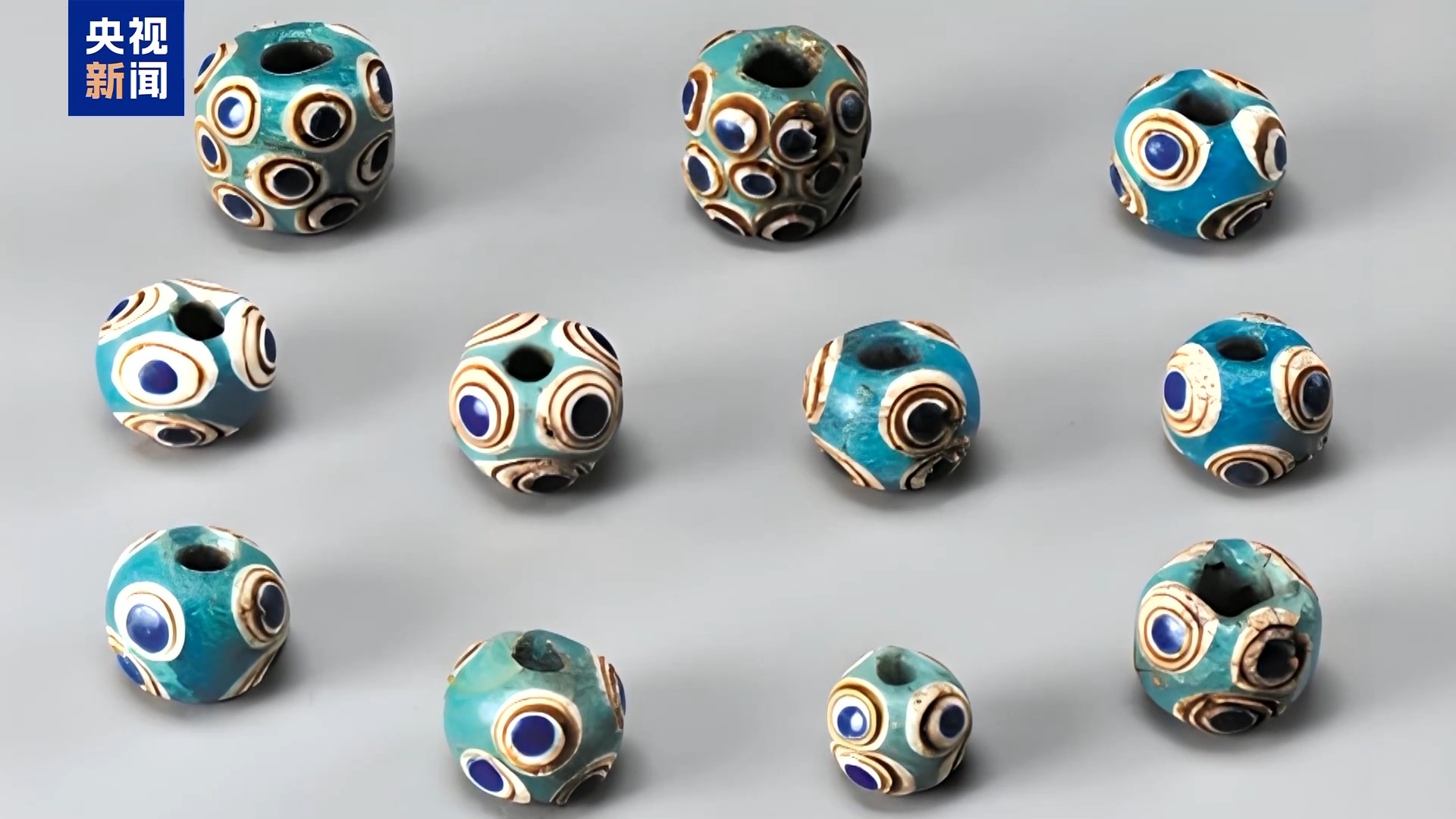
蜻蜓眼玻璃珠

Search documents
东西问|樊海涛:两千多年前的云南,何以出现类似希腊风格头盔?
Zhong Guo Xin Wen Wang· 2025-12-24 09:24
Core Viewpoint - The bronze helmet discovered in Yunnan, which exhibits characteristics similar to Greek styles, suggests potential cultural exchanges between ancient Yunnan and the Mediterranean world, highlighting the significance of the ancient Dian culture as a center of bronze civilization in Asia [3][4][5]. Group 1: Cultural Significance - The bronze helmet, dating back to the Western Han period, was unearthed from the Yangfutou tomb site in Kunming, which has been recognized as one of the "Top Ten Archaeological Discoveries" in 1999, revealing a rich array of artifacts that reflect the cultural interactions of the time [4][10]. - The helmet's design, featuring a unique shape reminiscent of the Greek "petasos," indicates that while it was locally manufactured, it also embodies foreign cultural influences, suggesting a complex web of cultural exchange [5][9]. Group 2: Archaeological Findings - The Yangfutou tomb site spans over 40,000 square meters and has yielded more than 7,000 valuable burial artifacts, including bronze items, tools, and daily utensils, showcasing the advanced craftsmanship and cultural richness of the ancient Dian civilization [4][10]. - The helmet features intricate designs, including two roosters, which symbolize agility and bravery, reflecting the local customs and the significance of poultry in ancient Yunnan culture [7][10]. Group 3: Cultural Exchange Mechanisms - Ancient Yunnan's position as a cultural melting pot is attributed to its location at the intersection of three major cultural transmission routes, facilitating indirect cultural exchanges with various regions, including the Mediterranean [9][10]. - The presence of artifacts such as the "sea shells" from the Gengma Shifo Cave site indicates early cultural interactions between Yunnan and the South Asian subcontinent, further emphasizing the region's historical significance in global trade and cultural exchange [10][12].


张骞凿空西域前已存在“前丝绸之路” 这些“蜻蜓眼玻璃珠”就是佐证
Yang Shi Xin Wen· 2025-05-28 05:10
Core Viewpoint - The research conducted by the Chinese Academy of Social Sciences reveals that the "dragonfly eye glass beads" unearthed from four archaeological sites in Xinjiang are similar to those found in Hubei, indicating cultural exchanges along the "pre-Silk Road" before the Han Dynasty's establishment of the Silk Road [1][6]. Group 1: Archaeological Findings - The "dragonfly eye glass beads" are characterized by a layer of glass of different colors embedded in the base glass, creating a pattern resembling a dragonfly's compound eyes [1]. - These beads can be traced back to around the 16th century BC in ancient Egypt, with significant finds in regions like Hubei, Hunan, and Henan during the Spring and Autumn period [1]. - The four archaeological sites in Xinjiang, located in the Ili region along the Tianshan Mountains, have yielded a large number of these glass beads [3]. Group 2: Elemental Analysis - Initial major element analysis identified some beads as consistent with alkali glass, confirming their origin from the Levant region [3][6]. - Further trace element analysis and synchrotron radiation micro-CT imaging revealed similarities in color, shape, and manufacturing techniques between the beads from Xinjiang and those found in Hubei and Gansu [5]. Group 3: Cultural Exchange Implications - The findings suggest a trade route from the Mediterranean through the Hexi Corridor in Gansu to Hubei, indicating that material cultural exchanges occurred along this path prior to the establishment of the Silk Road [6]. - This research provides evidence of early cultural interactions and exchanges between the East and West, highlighting the significance of glass artifacts in understanding historical trade routes [6].