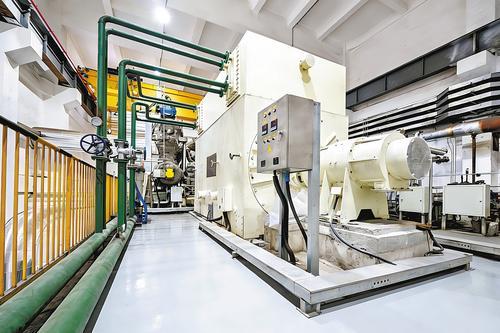
超碳一号(超临界二氧化碳发电机组)

Search documents
媒体报道丨“超碳一号”全球首台商用超临界二氧化碳发电机组商运
国家能源局· 2025-12-22 01:40
Core Viewpoint - The successful commercial operation of the world's first supercritical carbon dioxide power generation unit marks a significant advancement in energy technology, demonstrating the potential for enhanced efficiency and broader applications in various energy sectors [3][4][5]. Group 1: Technology Overview - The "Super Carbon No. 1" demonstration project is the world's first 15 megawatt supercritical carbon dioxide waste heat power generation project [4]. - Unlike traditional steam generation methods that convert water to steam, the supercritical carbon dioxide technology operates with an efficiency improvement of over 85% and a net power generation increase of over 50% [4]. Group 2: Commercial Implications - The commercial operation signifies the transition of supercritical carbon dioxide power generation technology from laboratory research to practical application [5]. - This technology has promising applications in various fields, including solar thermal power generation, indicating a broad potential for future energy solutions [5].

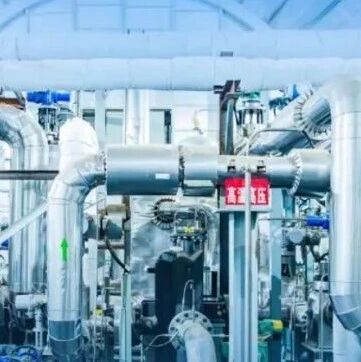
告别“烧开水”,二氧化碳能用来发电了
Xin Lang Cai Jing· 2025-12-20 23:09
Core Viewpoint - The successful commercial operation of the world's first supercritical carbon dioxide power generation unit, "Super Carbon No. 1," marks a significant advancement in power generation technology, moving away from traditional methods that rely on boiling water [3]. Group 1: Technology Overview - "Super Carbon No. 1" utilizes supercritical carbon dioxide as a working fluid, operating at temperatures above 31 degrees Celsius and pressures exceeding 73 atmospheres [3]. - The technology represents an innovative thermal-to-electric conversion method, differing from conventional power generation that typically involves steam [3]. Group 2: Advantages and Applications - The supercritical carbon dioxide power generation technology is noted for its high efficiency, compact system design, reduced auxiliary systems, and rapid response times [4]. - Initial estimates suggest that applying this technology to nationwide sintering waste heat recovery could lead to transformative changes not only in the steel industry but also in sectors like cement and glass [4].