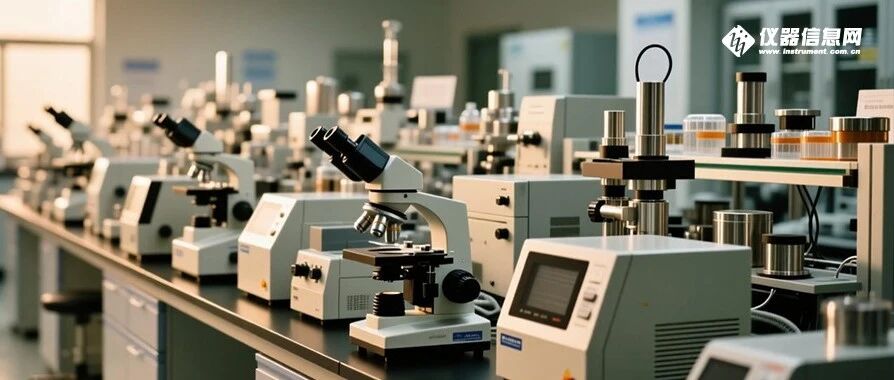
重频信噪比测量仪

Search documents
4.48亿元!中国科学院上海光机所采购大批仪器设备
仪器信息网· 2025-10-27 03:58
Core Viewpoint - The Shanghai Institute of Optics and Fine Mechanics (SIOM) has announced multiple government procurement intentions for scientific instruments, with a total budget of 4.48 billion yuan, indicating significant investment in optical and laser technology research and development [1][2]. Procurement Intentions - SIOM has released procurement intentions for 48 items of scientific instruments, with a total budget of 2.66 billion yuan, including large-aperture pulse compression gratings, lasers, weak energy meters, single-shot picosecond signal-to-noise ratio meters, and repetition frequency signal-to-noise ratio measurement instruments, expected to be procured by October 2025 [2][6]. Instrument Descriptions - **Single-shot Picosecond Signal-to-Noise Ratio Meter**: A high-precision optical measurement instrument designed to measure the signal-to-noise ratio of ultra-short laser pulses (picosecond level), crucial for evaluating laser pulse quality in ultra-short and ultra-strong laser systems [3]. - **Repetition Frequency Signal-to-Noise Ratio Measurement Instrument**: An electronic measurement device used to assess the relative strength of signals and noise in repetitive frequency working modes, important for applications in radar, laser ranging, and communication systems [4]. Detailed Procurement List - The procurement list includes various optical components and modules, such as: - Optical element modules with a budget of 1 billion yuan [7]. - Large-aperture pulse compression gratings with a budget of 5 billion yuan [8]. - High-stability lasers and other advanced optical systems, indicating a focus on enhancing laser technology capabilities [7][8]. Institutional Background - SIOM, established in 1964, is the largest and earliest research institution in laser science and technology in China, focusing on major foundational and applied research in modern optics and large-scale laser engineering technology [9]. - The institute has achieved significant milestones, including the development of the "Shenguang II" high-power laser device and the world's first space-based cold atomic clock, showcasing its leadership in the field [9][10].