钡锶盐

Search documents
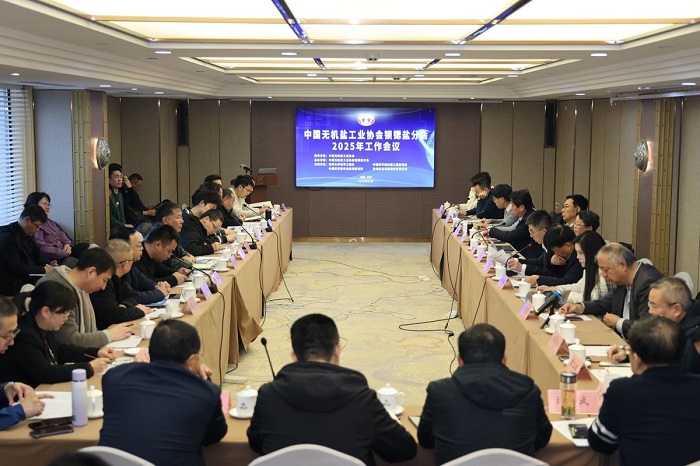
钡锶盐行业向“高质”而行
Zhong Guo Hua Gong Bao· 2025-12-24 08:58
Core Viewpoint - The China Inorganic Salt Industry Association's conference emphasizes the transition of the industry from rapid growth to high-quality development during the 14th Five-Year Plan period, focusing on structural adjustment and upgrading [1][3]. Group 1: Industry Challenges and Development Goals - China is the world's largest producer and exporter of barium and strontium salts, but the industry faces challenges such as insufficient innovation capacity, critical technology bottlenecks, severe safety and environmental issues, and tightening quality mineral resources [3]. - The industry aims to implement the development philosophy of "innovation, coordination, green, openness, and sharing" to address imbalances and inadequacies in development [3]. - Key strategies include capacity reduction, addressing shortcomings, and promoting supply-side structural reforms to facilitate the transition to high-quality development [3]. Group 2: Recommendations and Initiatives - Four recommendations were proposed: enhance industry information exchange and resource sharing; seek more national policy support due to rising costs and decreasing international competitiveness; guide structural adjustments and product upgrades; and optimize the industrial ecosystem to improve global competitiveness [3]. - The association plans to improve industry statistics and early warning systems, establish industry standards and technical specifications, and create platforms for technical exchange and industrial collaboration [3]. Group 3: Transformation Goals for the Industry - The transformation goals for the barium and strontium salt industry during the 14th Five-Year Plan include: optimizing industrial structure with fine chemical products accounting for about 30% by 2030; increasing industry concentration with the top five companies producing over 60% of total output; and optimizing resource utilization and recycling [4]. - The industry aims to enhance international competitiveness, targeting that key product facilities will account for 70%-80% of the global market by 2030, while fostering influential leading enterprises [4]. Group 4: Innovation and Collaboration - The industry must focus on innovation to overcome core technology bottlenecks and increase R&D for high-end products, while also exploring applications in strategic emerging industries like new energy [5]. - There is a need for innovative thinking and cross-industry communication to serve as a bridge between government and industry, contributing to the transition towards high-end manufacturing and supporting national strategies [5].