
阿尔巴斯白绒山羊

Search documents
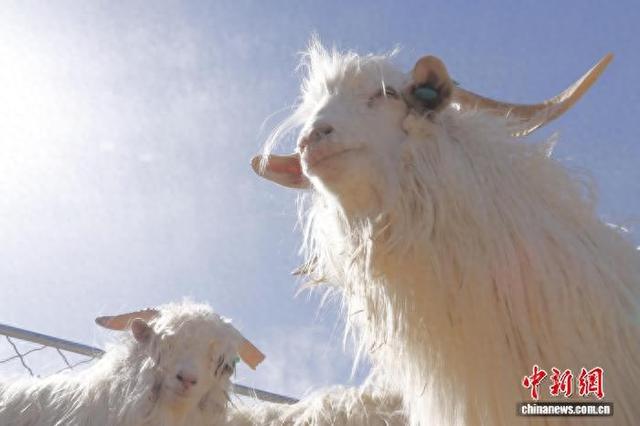
(乡村行·看振兴)为农牧民“开银行”的阿尔巴斯白绒山羊
Zhong Guo Xin Wen Wang· 2026-01-05 13:59
Core Insights - The Albas white cashmere goat has significantly improved the income of local herders in Inner Mongolia, with one herder projecting an income of over 1 million yuan by 2025, and a net income of over 200,000 yuan after expenses [1][3] - The price of goat meat has increased from over 30 yuan to above 40 yuan per jin, indicating a growing market demand for Albas white cashmere goat products [1] - The local production of cashmere has reached international markets, with exports to countries like the UK and Italy, enhancing the economic prospects for herders [3][4] Economic Impact - One herder sold 230 young goats for over 300,000 yuan, highlighting the profitability of goat farming [3] - Cashmere sales alone generated over 700,000 yuan for another herder, showcasing the high value of the cashmere produced [3] - The total stock of Albas white cashmere goats in the region has reached 1.56 million, with cashmere production at 1,200 tons, establishing the area as a key source for high-quality cashmere [4] Community Development - Local governance initiatives have improved safety and efficiency in goat farming, including the installation of surveillance systems in goat sheds [3] - Improved transportation infrastructure has made it easier for herders to access markets and supplies, further enhancing their economic situation [3] - The success of goat farming has led to lifestyle improvements for herders, including property purchases and aspirations for travel [4]

新华信用会客厅|额定达来:强化品牌信用与文旅融合 构建“以品牌推动产业、以产业带动区域”良性循环
Xin Lang Cai Jing· 2025-12-20 12:59
Group 1 - The core viewpoint of the article emphasizes the importance of regional public brand credit as a key component of local economic competitiveness [1] - The director of the Cultural and Tourism Bureau of Etuoke Banner highlighted the integration of brand credit with regional value, green ecology, and cultural tourism [1] - Etuoke Banner has successfully developed brands such as "Albas White Cashmere Goat," "Etuoke Spirulina," and "Ordos Nairi," creating a virtuous cycle of "driving industry through brands and driving regions through industry" [1]
育种创新为钥 鄂尔多斯开启畜牧业高质量发展新局
Xin Hua Cai Jing· 2025-08-15 14:04
Core Insights - The livestock breeding industry is a strategic and foundational core industry for the country, essential for the development of animal husbandry [1] - Inner Mongolia's Ordos City is focusing on breeding innovation as a key driver for the transformation and upgrading of the livestock industry, aligning with national rural revitalization strategies [1] Group 1: Breeding Innovation - Breeding innovation is increasingly recognized for its value in industrial development, exemplified by the high-end beef cattle breeding base in Uxin Banner, which has introduced Wagyu cattle and achieved A5 grade beef production [2] - The base has introduced over 1,000 high-end Wagyu cattle by 2025, with an estimated annual output of over 500 cattle, showcasing a successful model of "good breeds" leading to "good markets" [2] Group 2: Technological Empowerment - The focus in Etuoke Banner is on releasing the value of the Albas white cashmere goat, overcoming the challenge of high-quality products being confined to local markets [3] - A collaboration with research institutions has led to significant improvements in cashmere quality, enabling the local industry to connect better with broader markets [3] Group 3: Systematic Foundation - The revitalization of the livestock breeding industry in Ordos is a result of a coordinated approach under the "secondary industry supporting primary industry" strategy, integrating industrial advantages into agriculture [4] - The involvement of industrial enterprises, such as Inner Mongolia Xingguang Coal Group, has brought standardized practices to the livestock sector, enhancing the entire supply chain from breeding to sales [4] Group 4: Resource Protection and Joint Efforts - Ordos is enhancing the protection of genetic resources and advancing a breeding system that combines leading experts and innovative teams with local enterprises [5] - This approach aims to revitalize traditional livestock breeds with modern breeding technologies, ensuring that high-quality breeds contribute to the prosperity of local farmers [5]
