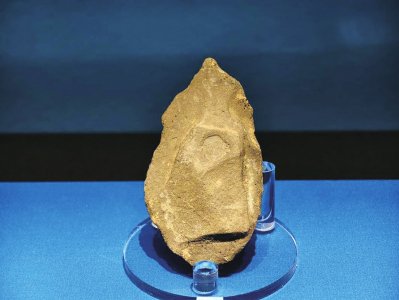
阿舍利手斧

Search documents
揭开青藏高原文明崛起与民族融合的壮丽诗篇
Xin Lang Cai Jing· 2025-12-25 22:30
Core Insights - The exhibition titled "At the Summit of Snowy Mountains, Source of Great Rivers - The Rise of Civilization and Ethnic Integration on the Tibetan Plateau" showcases 425 precious cultural relics from 29 cultural institutions, revealing the deep history of human conquest and cultural exchange on the Tibetan Plateau [8] Group 1: Human Activity on the Tibetan Plateau - Human activity on the Tibetan Plateau dates back at least 160,000 years, as evidenced by the discovery of a Denisovan jawbone in Gansu Province [9][10] - The archaeological site in the Garzê Tibetan Autonomous Prefecture yielded stone tools dating back 220,000 years, indicating early human adaptation to high-altitude environments [10][11] Group 2: Transition to Agriculture - The transition from hunting to agriculture on the Tibetan Plateau is evidenced by Neolithic artifacts, such as a bar-shaped stone axe from the Karuo site, dating back approximately 5,000 years [12] - Cultural exchanges during the Tang Dynasty led to the flourishing of Tibetan civilization, with artifacts from various ethnic groups showcasing the rich cultural tapestry of the region [12][13] Group 3: Ethnic Integration - The exhibition highlights the close interactions among various ethnic groups on the Tibetan Plateau, dating back 5,000 years, with evidence of shared architectural practices and cultural artifacts [14] - The integration of the Tuyuhun and Tibetan cultures is exemplified by artifacts from the Tuyuhun royal tombs, showcasing the historical connections between these groups [13][14] Group 4: Governance and Administration - The exhibition features artifacts that reflect the governance of the Tibetan region by the central Chinese authorities during the Yuan, Ming, and Qing dynasties, illustrating the administrative structures established to manage ethnic affairs [16][17] - The Qing Dynasty's establishment of the Dalai Lama system and the governance of Tibet through appointed officials marked a significant period of centralized control and ethnic integration [17]

425件/套珍贵文物齐聚 川博跨年大展全景式呈现青藏高原文明史诗
Xin Lang Cai Jing· 2025-12-22 18:17
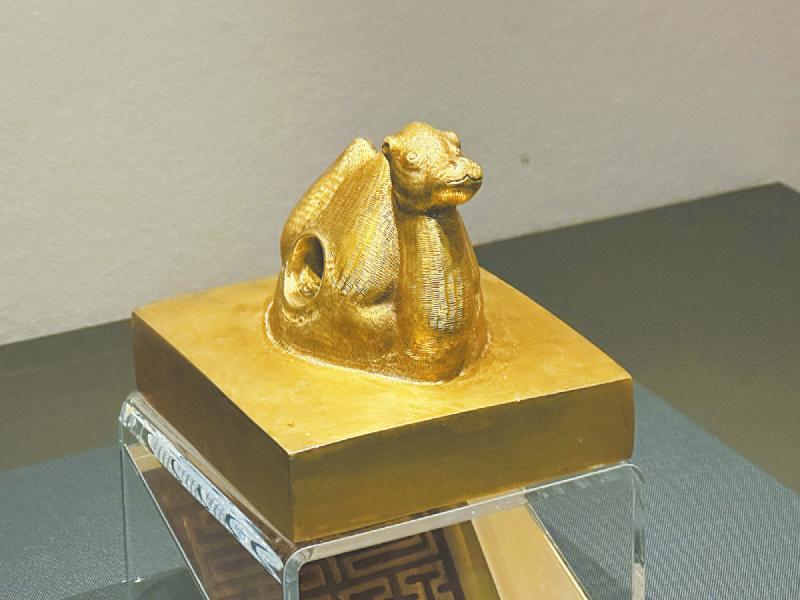
Core Viewpoint - The exhibition titled "The Peak of Snow Mountains and the Source of Great Rivers: The Rise of Civilization and Ethnic Integration on the Tibetan Plateau" showcases 425 precious cultural relics from 29 cultural institutions, revealing the deep history of human survival and cultural exchange on the Tibetan Plateau [8][9]. Group 1: Exhibition Overview - The exhibition officially opened on December 18 at the Sichuan Museum, featuring a wide array of artifacts that illustrate the rich history and cultural diversity of the Tibetan Plateau [8]. - It is the first large-scale thematic exhibition in China focusing on the evolution of civilization and ethnic integration in the Tibetan Plateau [12]. Group 2: Historical Context - The exhibition is divided into three main sections: "The Beginning of Chaos - Prehistoric to Early Civilization," "The Flourishing of Civilization - Tang and Song Periods," and "Central Governance - Yuan, Ming, and Qing Periods," highlighting the timeline of human activity and cultural integration [9][11]. - The first section discusses the arrival of ancient humans on the Tibetan Plateau, showcasing tools like the Acheulean hand axe found at the Pilo site in Sichuan, which provides evidence for human habitation as early as 160,000 years ago [10][11]. Group 3: Key Artifacts - Significant artifacts include the "Nephew A Chai Wang Seal" and gold items from the 2018 Blood Wei No. 1 Tomb in Qinghai, which are crucial for understanding the social structure and burial customs of the Tubo period [11][13]. - The exhibition also features a variety of relics from the Yuan, Ming, and Qing dynasties, including official seals that demonstrate the central government's administrative control over the Tibetan Plateau [11][12]. Group 4: Cultural Significance - The exhibition emphasizes the Tibetan Plateau as a vital ecological barrier and a significant cultural heritage site, showcasing the resilience and brilliance of its civilizations over millennia [9]. - It highlights the continuous cultural exchanges and integrations among various ethnic groups throughout history, as evidenced by the diverse artifacts displayed [9][13].