Workflow
401(k)
icon
Search documents
Here Are 6 Reasons You Might Need a Financial Advisor
Yahoo Finance· 2026-03-31 10:30
Core Insights - The article emphasizes the importance of financial advisors in creating personalized investment strategies that consider individual risk tolerance, financial obligations, and long-term goals [1][3][5] Group 1: Role of Financial Advisors - Financial advisors help assess age, income, net worth, and future financial obligations, which is crucial for building a personalized portfolio [1] - They provide expertise in risk management, ensuring portfolios align with individual risk tolerance by diversifying investments across cash, market assets, and fixed income [3] - Advisors can assist in emergency fund management and liquidity planning, preparing clients for unexpected financial needs [15] Group 2: Investment Strategies - Relying solely on ETFs can be risky due to potential volatility and lack of diversification, especially for those nearing retirement [2][7] - A diversified portfolio is essential to mitigate risks associated with sector downturns, even when investing in broad market ETFs [8][9] - Proper tax planning is critical as income and investments grow, and financial advisors can help navigate the tax implications of various investment vehicles [10][12] Group 3: Long-Term Financial Planning - Long-term thinking is vital in investment strategies, considering life goals such as retirement and healthcare costs [13][14] - Financial advisors can help clients plan for significant life events, including starting a family and managing the associated costs, which can exceed $310,000 for raising a child [17][18] - Inheritance can complicate financial planning, and advisors can assist in integrating inherited assets into a broader financial strategy [19][20][21] Group 4: Savings Habits - Data indicates that many Americans underestimate their retirement needs, but those who adopt a specific habit can double their savings [22][23]
How to roll over a 401(k) into a gold IRA
Yahoo Finance· 2026-03-30 19:09
Core Insights - Retirement accounts vary in structure and investment options, with some offering limited choices while others provide greater control over investments [1][3] - A rollover allows for the transfer of retirement funds between accounts without incurring taxes, provided it adheres to IRS regulations [2][12] - Gold IRAs enable investors to hold physical precious metals, requiring custodians and approved storage facilities [4][8] Group 1: Rollover Process - A rollover involves moving funds from a 401(k) to a gold IRA, allowing for the inclusion of physical gold in retirement portfolios [5][7] - The rollover process typically requires the establishment of an IRA with a custodian that specializes in precious metals [7] - Funds are transferred directly from the 401(k) administrator to the IRA custodian, avoiding tax implications if done correctly [12] Group 2: Investment Structure - Retirement accounts serve as containers for investments, with 401(k)s generally offering a limited selection compared to IRAs [3] - Gold IRAs are a type of self-directed IRA that permits the holding of physical gold, which must meet specific purity standards [4][13] - The investment characteristics of gold differ from traditional assets, as it does not generate income and may behave differently during market fluctuations [14] Group 3: Costs and Considerations - Rolling funds into a gold IRA may incur various fees, including setup, custodian, storage, and dealer premiums, which can impact overall returns [9] - Required minimum distributions (RMDs) apply to IRAs, necessitating the sale or distribution of assets under certain conditions [11] - The duration of a rollover can vary, typically taking a few days to weeks, influenced by the efficiency of the involved institutions [15]
The 401(k) Withdrawal Strategy That Saves High Earners $80,000 in Taxes
Yahoo Finance· 2026-03-29 18:31
Core Insights - A couple retiring at 62 with significant retirement savings faces unexpected tax implications from required minimum distributions (RMDs) starting at age 73, which could push them into a higher tax bracket and trigger Medicare surcharges [2][6] Tax Strategy - The couple has a gap from ages 62 to 72 with no earned income and no RMDs, allowing them to convert $50,000 annually from a traditional 401(k) to a Roth IRA at a lower tax cost, potentially saving significantly over time [3][4] - At the 2026 tax brackets for married filing jointly, a $50,000 conversion falls into the 22% tax bracket, resulting in an annual tax bill of approximately $11,000, leading to a total tax payment of around $110,000 over ten years for a $500,000 conversion [4] RMD Implications - Under SECURE 2.0, RMDs begin at age 73, with a distribution factor of 26.5, leading to a first-year RMD of about $56,600 on a $1.5 million balance, which can increase taxable income and Medicare surcharges [6] - After ten years of conversions, a reduced balance of $1 million results in an RMD of roughly $37,700, decreasing forced ordinary income by nearly $19,000 in the first year [6] Investment Options - Schwab US Dividend Equity ETF (SCHD) yields 3.46% and JPMorgan Equity Premium Income ETF (JEPI) yields approximately 8.5%, providing income that is taxed more favorably than ordinary 401(k) withdrawals, helping to manage modified adjusted gross income (MAGI) during conversion years [7] - Roth conversions during the gap years can lower lifetime taxes by over $80,000 by reducing forced distributions by nearly 40%, while keeping MAGI below $218,000 to avoid Medicare surcharges that can cost $2,297 annually per tier crossed [7]
Could Your Marital Status Be Reducing Your Retirement Savings? Here’s What to Know
Yahoo Finance· 2026-03-29 11:00
Core Insights - A report from the National Institute on Retirement Security (NIRS) indicates that typical retirement balances are significantly lower than what workers should aim to accumulate over time, revealing a stark divide based on marital status [1] Retirement Savings Disparity - Married workers have a median retirement account balance of $20,000, while those who have never married have only $2,000, indicating a tenfold difference [2] - The average retirement account balance for married workers exceeds $147,000, compared to about $59,000 for never-married workers [2] Broader Wealth Gap - When considering total assets, married households report an average of $606,000, whereas never-married workers average about $231,000, nearly a threefold difference [5] - This broader measure includes retirement savings, home equity, businesses, and other financial holdings [5] Structural Factors Influencing Savings - Structural factors such as dual incomes, shared housing costs, and pooled retirement contributions contribute to the wealth gap, with advantages compounding over time, especially in tax-advantaged accounts like 401(k) or IRA [6] Challenges for Divorced and Widowed Workers - Divorced, widowed, and separated workers face the steepest retirement strain, often tapping into retirement funds early [8] - Nearly 9% of divorced, widowed, or separated workers withdrew from defined contribution retirement accounts, compared to 4.8% of never-married workers and 3.9% of married workers, indicating they access their savings at roughly twice the rate of married peers [10]
Many Workers Are Surprised to Have More Value in Their Driveways Than in Retirement Savings
Yahoo Finance· 2026-03-28 21:00
Core Insights - A new analysis from the National Institute on Retirement Security (NIRS) reveals that for many Americans, their car is worth more than their retirement savings, highlighting a significant gap in retirement preparedness [1][2] - The report emphasizes that typical retirement balances are far below the recommended savings targets set by experts, particularly for younger workers [2][6] Retirement Savings Comparison - The NIRS analysis compares defined contribution (DC) retirement account balances to the average value of vehicles owned by households across different age groups, showing that for workers aged 21 to 44, their car is often more valuable than their retirement account [2][3] - On average, no age group has reached even 25% of common retirement savings targets, indicating a widespread shortfall in retirement savings [6][7] Importance of Framing Retirement Shortfalls - When retirement shortfalls are presented in dollar amounts rather than percentages, the gap appears more tangible and urgent, suggesting that small adjustments in contributions and spending can significantly improve long-term outcomes [4][6] - The NIRS report includes all working-age individuals, not just those with retirement accounts, providing a more comprehensive view of retirement savings across the population [7] Retirement Savings Benchmarks - The report compares actual savings to age-based benchmarks from Fidelity, which suggest that by age 30, individuals should aim for savings equal to their annual income, and by age 67, ten times their annual income [8]
401(k) Balances for Your 40s and 50s Compared to Average Savings in Those Years
Yahoo Finance· 2026-03-28 20:15
Core Insights - Early retirement is becoming a more tangible goal for individuals in their 40s and 50s, necessitating careful financial planning [2][3] - The average 401(k) balance increases significantly from the 40s to the 50s, highlighting the importance of contributions over time [4][8] 401(k) Savings Analysis - Average 401(k) balance for individuals in their 40s is $407,675, while the median is $162,143; for those in their 50s, the average is $622,566 and the median is $251,758 [4][5][8] - Median balances provide a more realistic view of savings, indicating that many individuals may fall short of the necessary funds for early retirement [5] Early Retirement Financial Requirements - For early retirement, individuals may need to save eight to ten times their salary by age 50, compared to the standard recommendations of three times by age 40 and six times by age 50 [6][7] - Thoughtful retirement planning should include increasing contributions in the 40s, utilizing catch-up contributions after age 50, and reviewing investment strategies to accommodate a longer retirement [8]
America's retirement system just got a middling review from a global study. These 5 reforms could save it
Yahoo Finance· 2026-03-28 10:00
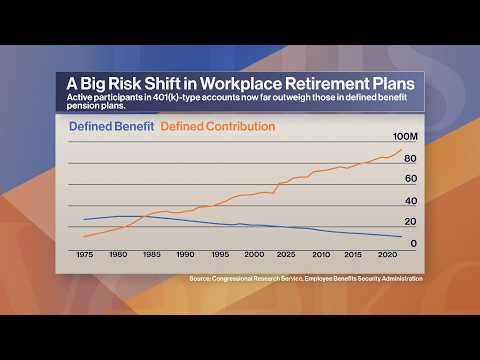
Core Insights - The Mercer CFA Institute Global Pension Index 2025 has rated the U.S. retirement system with a C+ grade and a score of 61.1 out of 100, indicating it is in the middle tier globally [1][2] Retirement System Evaluation - Top-rated countries include Singapore, Iceland, and Denmark, which received A ratings for their robust and trustworthy retirement systems [2] - The U.S. system is characterized by some benefits but also significant flaws, contributing to its C+ rating [2] Changing Responsibilities - There is a growing urgency for Americans to fund their own retirement as employers shift from traditional pensions to defined-contribution plans like 401(k)s, placing the responsibility on workers [3] Savings Discrepancies - Many Americans aim to save $1 million or more for retirement, yet the median retirement savings for working-age Americans is only $955 when including those with no savings [4] - The average 401(k) balance is reported at $146,400, highlighting the unevenness in retirement readiness despite some individuals experiencing rising account balances during strong market years [4] Demographic Challenges - Aging populations, increased life expectancy, and fiscal pressures on government programs are creating significant challenges for retirement security globally [5] - Changes in job mobility, longevity post-retirement, and rising living costs necessitate reforms in the American retirement system [5]
Clients Forced to Make Roth Catch-Up Contributions? Consider HSAs
Yahoo Finance· 2026-03-27 04:02
Core Insights - Health Savings Accounts (HSAs) provide a unique triple tax benefit and are increasingly recognized as valuable retirement planning tools, particularly for high-income earners [2][3] - The current healthcare landscape presents challenges for workers and retirees, but understanding HSAs can empower individuals to maximize their benefits [3] - Recent IRS rule changes have made HSAs more accessible, potentially increasing their popularity among affluent savers [4] Group 1: HSA Benefits - HSAs allow tax-free contributions, growth, and spending on qualifying medical expenses, making them an attractive option alongside 401(k)s and IRAs [3] - For retirees over 65, HSA funds can be used tax-free for Medicare premiums, enhancing their appeal as a retirement savings vehicle [3] Group 2: Legislative and Market Trends - A progressive lawmaker has proposed legislation to limit HSA features due to the significant tax savings they offer to higher-income earners, but the general consensus is that HSAs will remain a viable option [2] - The expectation is that HSAs will gain popularity as more employers contribute to employee accounts, helping individuals build substantial balances [4] Group 3: Strategic Contributions - Affluent savers are increasingly directing catch-up contributions from 401(k) or IRA accounts to HSAs, especially since high-income earners must now use Roth accounts for such contributions [5] - Current regulations require savers aged 50 and above with FICA wages over $150,000 to utilize Roth accounts for catch-up contributions, limiting options for those without a Roth 401(k) [5]
3 Things Financial Advisors Won't Tell You About Retiring in 2026
Yahoo Finance· 2026-03-27 00:07
Group 1 - The retirement planning landscape is increasingly complex, with retirees facing unique challenges such as inflation and economic uncertainty [2][4] - The traditional 4% withdrawal rule may not be suitable in the current environment due to potential lower market returns and higher inflation [5][6] - Financial advisors should tailor withdrawal strategies based on individual investment portfolios rather than relying solely on general rules [6][7] Group 2 - A near-term market crash poses significant risks for retirees, particularly if they are withdrawing from their portfolios during a downturn [8]
How to Recession-Proof Your Retirement Income Before 2026 Ends
Yahoo Finance· 2026-03-26 16:14
Economic Outlook - The possibility of a recession in 2026 is uncertain, influenced by global conflicts, tariff policies, and economic uncertainty [1] Impact on Workers and Retirees - Recessions tend to affect workers more severely than retirees due to job losses, which can impact income levels for those still in the workforce [2] Retirement Income Protection Strategies - Building a larger cash buffer is essential for retirees to cover living costs without liquidating investments during market downturns, ideally enough to cover two years' worth of expenses [5][6] - Diversifying income streams is recommended to reduce vulnerability during a recession, suggesting alternatives like bonds, real estate, part-time work, or annuities for guaranteed income [7][8][9]