Autonomous Delivery Robots

Search documents
SERV Expands to 20 Cities: Is Nationwide Robot Delivery Near?
ZACKS· 2026-03-16 15:22
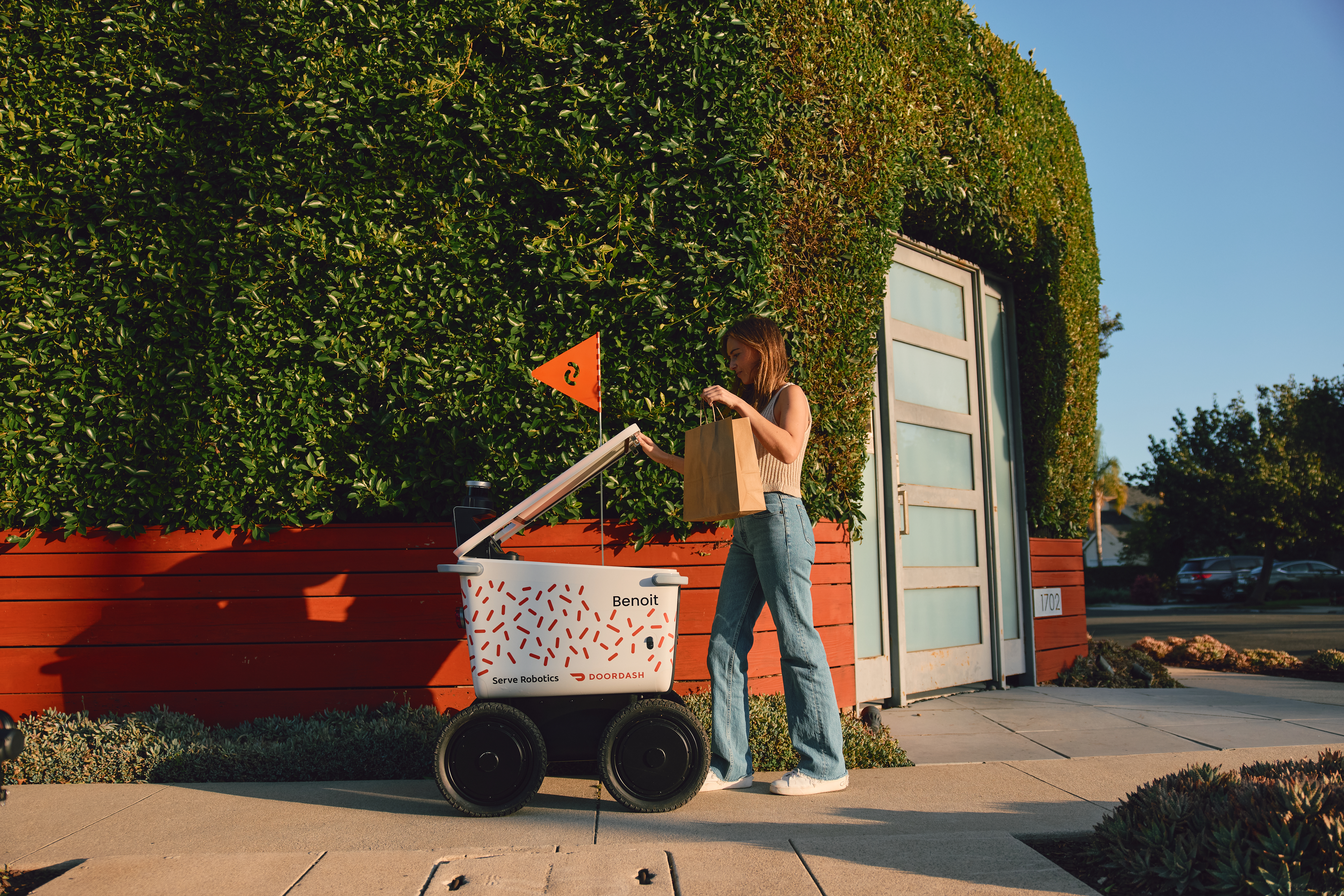
Core Insights - Serve Robotics Inc. (SERV) is rapidly scaling its autonomous delivery network, indicating a potential national rollout of robot-powered last-mile logistics [1] Group 1: Expansion and Technology - Serve expanded from one city to 20, deploying approximately 2,000 autonomous delivery robots across major metropolitan areas such as Atlanta, Dallas, Chicago, and Miami [1][9] - The company is enhancing its AI capabilities by utilizing real-world data from deliveries, which improves the efficiency and safety of its robots in urban environments [2] Group 2: Strategic Partnerships - Serve has formed strategic partnerships with major delivery platforms like Uber Eats and DoorDash, which allows its robots to access a significant portion of the U.S. food delivery market [3] - The company has also expanded its merchant ecosystem to over 4,500 restaurant and retail partners, increasing the locations available for robot deliveries [3] Group 3: Financial Performance - In Q4 2025, Serve generated revenues of approximately $0.9 million, reflecting nearly 400% year-over-year growth, with full-year revenues reaching $2.7 million, surpassing management's guidance [4] Group 4: Future Business Model - Serve is diversifying its business model beyond food delivery by exploring additional revenue streams such as robot advertising, software services, and data monetization [5] - The company is entering healthcare automation through the acquisition of Diligent Robotics, which provides hospital delivery robots and recurring contracts [5] Group 5: Market Position and Valuation - SERV shares have increased by 16.5% over the past year, contrasting with a 25.1% decline in the industry [7] - The stock is currently trading at a forward 12-month price-to-sales (P/S) multiple of 20.65, significantly higher than the industry average of 13 [11]


Serve Robotics to Report Q4 Earnings: Buy Now or Wait for Results?
ZACKS· 2026-03-06 16:01
Key Takeaways SERV to report Q4 2025 results on March 11, with revenues expected to reach $0.8M, up 320.6% year over year.SERV expanded its robot fleet beyond 1,000 units and widened city coverage, driving higher delivery volumes.SERV partnerships with DoorDash and Uber and new branding and software revenues may support growth.Serve Robotics Inc. (SERV) is scheduled to report fourth-quarter 2025 results on March 11, before the opening bell. In the last reported quarter, the company registered an earnings mi ...

Is Serve Robotics' Urban Expansion Supporting Long-Term Demand?
ZACKS· 2026-02-17 14:10
Core Insights - Serve Robotics Inc. (SERV) is expanding its autonomous sidewalk delivery services across various U.S. cities, indicating a shift from limited deployments to broader neighborhood coverage [1][5] - The company achieved its goal of deploying over 2,000 autonomous delivery robots by December 2025, establishing itself as the operator of the largest sidewalk delivery fleet in the U.S. [2] - Urban expansion has been crucial for Serve Robotics, with operations scaled in cities like Los Angeles, Atlanta, and Miami, and plans for additional cities in early 2026 [3] Operational Performance - As the service coverage expanded, delivery activity increased while maintaining stable operating performance, with reliability near full levels and improved average daily operating hours per robot [4][8] - The consistent usage of delivery robots in dense urban areas is seen as a key indicator of long-term demand strength for autonomous delivery services [5] Market Position and Valuation - SERV shares have increased by 6.5% over the past three months, contrasting with a 15% decline in the industry, while other competitors have seen significant declines [6] - The stock is currently trading at a forward 12-month price-to-sales (P/S) multiple of 24.19, significantly higher than the industry average of 13.4, indicating a premium valuation compared to peers [10] Earnings Projections - The Zacks Consensus Estimate indicates that SERV's loss per share for 2026 has widened, with projections showing a 15% decline in earnings [13] - In contrast, other industry players are expected to experience growth in earnings for 2026, with Vertiv, BigBear.ai, and Leidos projected to grow by 39.3%, 72.8%, and 5% respectively [14]

How Transformative Is DoorDash's Partnership for SERV's Growth?
ZACKS· 2026-01-09 14:20
Core Insights - Serve Robotics Inc.'s partnership with DoorDash represents a significant turning point in its growth strategy, transitioning from pilot programs to a scalable delivery platform [2] - The collaboration is expected to enhance fleet utilization and improve unit economics, positioning it as a key catalyst for growth [2][6] Demand Expansion - The partnership with DoorDash significantly broadens Serve's addressable market, as DoorDash and Uber together dominate over 80% of the U.S. food delivery sector, allowing Serve to access more restaurants and consumers without incurring additional customer acquisition costs [3] - With over 1,000 robots currently deployed and a target of 2,000 by year-end, Serve can efficiently integrate DoorDash orders into its existing operations [3] Operational Efficiency - Serve's robots can operate on both DoorDash and Uber platforms within the same delivery cycle, which enhances utilization rates and reduces delivery costs [4] - This flexibility is crucial for improving margins and making the service more appealing to partners through increased efficiency and reliability [4] Data and Learning - The partnership is expected to generate more real-world delivery data, which will enhance the operational capabilities of Serve's fleet, leading to improvements in autonomy, speed, and safety [5] - These operational advancements are anticipated to support a significant revenue increase in 2026 as fleet economics become more favorable [5] Financial Performance - Serve Robotics' stock has increased by 3.4% over the past three months, outperforming the industry average decline of 2.2% [7] - The company's current forward price-to-sales (P/S) ratio stands at 49.87, significantly higher than the industry average of 16.14, indicating a premium valuation [10] - The Zacks Consensus Estimate for Serve's loss per share for 2026 has widened from $1.76 to $1.83 over the past month [14]

Can Serve Robotics Expand Sidewalk Autonomy at Urban Scale in 2026?
ZACKS· 2026-01-02 17:05
Core Insights - Autonomous delivery is experiencing significant growth as advanced robotics meet urban demand, with Serve Robotics Inc. (SERV) aiming to establish a comprehensive sidewalk delivery network in major U.S. cities [1] Operational Performance - In Q3 2025, Serve Robotics reported a substantial increase in delivery volume, maintaining high reliability and a solid safety record [2] - The company expanded its operations into multiple large metropolitan areas, enhancing utilization and operational efficiency through integration with major delivery platforms [2][9] - Serve Robotics achieved its 2025 operational target by deploying over 2,000 autonomous robots, making it the largest sidewalk delivery fleet in the U.S. [3][9] Competitive Landscape - Serve Robotics is competing in the autonomous last-mile delivery sector, which is increasingly influenced by larger players like Uber Technologies (UBER) and DoorDash (DASH) [5] - Uber and DoorDash are investing heavily in automation and robotic delivery, creating competitive pressure for Serve Robotics [6] - The ability of Serve Robotics to compete on speed, reliability, and market coverage against these larger platforms remains a critical question [7] Stock Performance - SERV shares have declined by 45.4% over the past year, contrasting with gains of 26.5% and 29.5% for Uber and DoorDash, respectively [8] Earnings Estimates - The Zacks Consensus Estimate for SERV's 2026 loss per share has widened to $1.83, indicating a larger loss compared to the previous year's estimate of $1.59 [11]

Serve Robotics Builds 2,000 Autonomous Delivery Robots, Creating Largest Sidewalk Delivery Fleet in the U.S.
Globenewswire· 2025-12-12 12:30
Core Insights - Serve Robotics has achieved its 2025 goal of deploying over 2,000 delivery robots, establishing the largest sidewalk delivery fleet in the U.S. [1][15] - The company has expanded its fleet twentyfold within a year, driven by partnerships with major restaurants, retailers, and delivery platforms like Uber Eats and DoorDash [2][4]. Company Growth and Market Expansion - Serve Robotics has rapidly expanded across key U.S. markets, including Los Angeles, Atlanta, Dallas-Fort Worth, Miami, Fort Lauderdale, Chicago, and Alexandria, with plans to launch in additional cities in early 2026 [2][4]. - In 2025, the company expanded service zones in all existing markets, launched in 110 high-density neighborhoods, and introduced Gen 3 robots for higher-volume operations [5]. Technology and Environmental Impact - The robotic fleet operates with Level 4 autonomy, achieving a 99.8% completion rate in complex urban environments, and produces zero tailpipe emissions [3][5]. - Serve Robotics aims to reduce congestion and carbon output in partner cities by replacing traditional delivery vehicle trips with its autonomous robots [3]. Future Opportunities - The market opportunity for autonomous sidewalk delivery is significant, with potential applications in groceries, convenience items, small parcels, and return logistics [5]. - The company anticipates that its robots will become a common part of local logistics over the next five years, enhancing delivery efficiency for various types of goods [5].
SERV's Restaurant Network Scales Up: Can It Drive a New Growth Cycle?
ZACKS· 2025-12-09 14:36
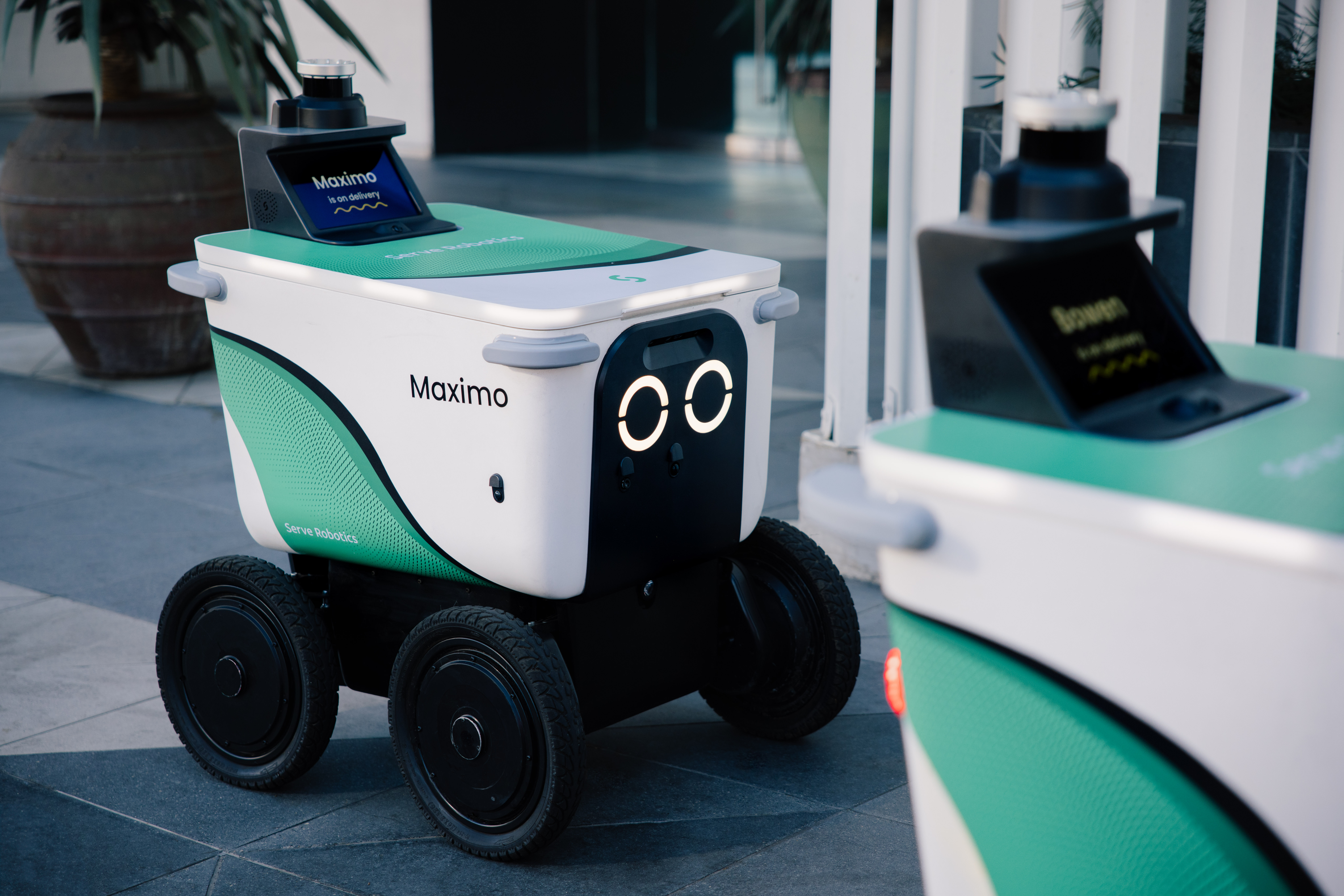
Core Insights - Serve Robotics, Inc. (SERV) is significantly expanding its restaurant partnerships, with deliveries for over 3,600 restaurants, marking a 45% sequential increase and over ninefold growth year over year [1][8] - The company's growth strategy is heavily reliant on deep integrations with Uber and DoorDash, which together dominate over 80% of the U.S. food delivery market, enhancing robot utilization and efficiency [2][8] - New national partnerships, including Jersey Mike's Subs, are diversifying SERV's demand base and contributing to steady order flow across various markets [3][5] Expansion and Utilization - The growing restaurant network is seen as a competitive advantage, with over 1,000 robots deployed and plans to reach 2,000 by the end of 2025, creating the first national autonomous delivery network [4] - Each additional restaurant enhances delivery density and generates valuable sensor data, which improves AI models for safety and reliability [4] Financial Performance - SERV shares have increased by 25.8% over the past three months, outperforming the industry average growth of 0.9% [6] - The stock is currently trading at a forward 12-month price-to-sales (P/S) multiple of 47.67, significantly higher than the industry average of 17.01 [9] - The Zacks Consensus Estimate for SERV's 2026 loss per share has widened from $1.40 to $1.67, indicating potential challenges ahead [10]

Serve Robotics Inc.(SERV) - 2025 Q3 - Earnings Call Transcript
2025-11-12 23:00
Financial Data and Key Metrics Changes - Total revenue for Q3 2025 was $687,000, an increase of 210% compared to the previous year, aligning with guidance provided for the quarter [18] - Fleet revenue was $433,000, with branding revenue jumping 120% sequentially over Q2 [18] - Adjusted EBITDA was negative $24.9 million, driven by operational expansion expected to accelerate efficiency through 2026 [22] Business Line Data and Key Metrics Changes - Delivery volume increased by 66% in a single quarter, with delivery reliability nearly at 100% [8] - The company now delivers for over 3,600 restaurants, a 45% increase from the last quarter and more than a nine-fold increase since last year [8] - Average daily operating hours per robot increased by 12.5% sequentially from Q2, indicating higher value contribution from each unit [20] Market Data and Key Metrics Changes - The fleet size grew 10X, cities expanded 5X, and major platform partners increased 2X within less than a year [9] - The company operates in five fully operational hubs covering over 3 million populations and over 1 million households, a nearly 70% increase in a single quarter [10] Company Strategy and Development Direction - The company aims to build a national interconnected autonomous delivery network, leveraging partnerships with DoorDash and Uber to enhance delivery volume and efficiency [11][12] - The integration of recent acquisitions, including YU Robotics and Vayu, is expected to enhance the company's competitive position and operational metrics [17][18] - The long-term vision includes deploying 1 million robots globally, embedding them into the urban fabric to unlock new possibilities [15][16] Management's Comments on Operating Environment and Future Outlook - Management emphasized the importance of scaling efficiently while maintaining safety and reliability as the fleet expands [37] - The company expects to generate more than $2.5 million in revenue for the full year 2025, with underlying recurring fleet revenues projected to grow 3x year over year [23] - The path to achieving a revenue run rate of $60-$80 million is underway, with expectations for significant growth in 2026 [36][37] Other Important Information - The company entered the quarter with $211 million in cash and marketable securities, and executed a stock sale generating approximately $100 million for working capital and expansion [22] - The integration of AI foundation models and scalable simulation-powered data engines is expected to accelerate operational improvements [14] Q&A Session Summary Question: Do you expect to add more robots in 2026? - Management indicated that while specific numbers are not shared, growth will be pursued with precision and discipline, focusing on efficiency and utilization [25] Question: Could you provide details on robot design simplification and cost reduction? - Management highlighted progress in modular design, improved supply chain, and scaled manufacturing, resulting in a significant reduction in per unit cost [26][27] Question: What are the next steps in your DoorDash relationship? - The focus is on integrating robots into the fleet and planning market rollouts, which will unlock a vast network of restaurants and consumers [28][29] Question: Can you quantify the autonomy effect from Vayu? - Management noted that it is early in the integration process, but the expectation is for robots to become faster and smarter over time [30] Question: What have you learned from new deployments and expansions? - Each city presents unique challenges that enrich the models, leading to improved reliability and efficiency in subsequent launches [31] Question: What can you share about the pipeline for software and data sales? - There is strong interest in the software and data generated by the robots, with ongoing discussions with multiple partners [34] Question: When do you expect to reach the $60 million-$80 million run rate? - Management stated that the path to this run rate is underway, with significant progress expected as the company approaches the end of 2025 [36][37]
DoorDash and Serve Robotics Partner to Bring Serve’s Delivery Robots to the DoorDash Platform
Globenewswire· 2025-10-09 11:30
Core Insights - DoorDash and Serve Robotics have formed a multi-year strategic partnership to implement autonomous delivery robots across the U.S., starting in Los Angeles [1][3][4] Company Overview - DoorDash is a leading local commerce platform that has expanded to over 40 countries since its founding in 2013, utilizing technology and logistics to enhance commerce and access to opportunities [9] - Serve Robotics specializes in AI-powered, low-emission sidewalk delivery robots and was spun off from Uber in 2021, having completed tens of thousands of deliveries for partners like Uber Eats and 7-Eleven [10] Partnership Details - The partnership allows DoorDash customers in Los Angeles to receive deliveries via Serve robots, potentially increasing the volume of orders available for Serve [3][4] - This collaboration is part of DoorDash's broader strategy to create a multi-modal delivery platform that includes Dashers, drones, and autonomous robots, aimed at meeting rising demand while reducing emissions and traffic congestion [4][5] Operational Impact - Serve has a proven track record with over 100,000 successful deliveries from more than 2,500 restaurants in cities like Los Angeles, Miami, Dallas, Chicago, and Atlanta [4] - The partnership is expected to enhance DoorDash's logistics infrastructure and optimize delivery methods, thereby increasing demand for local merchants [5]