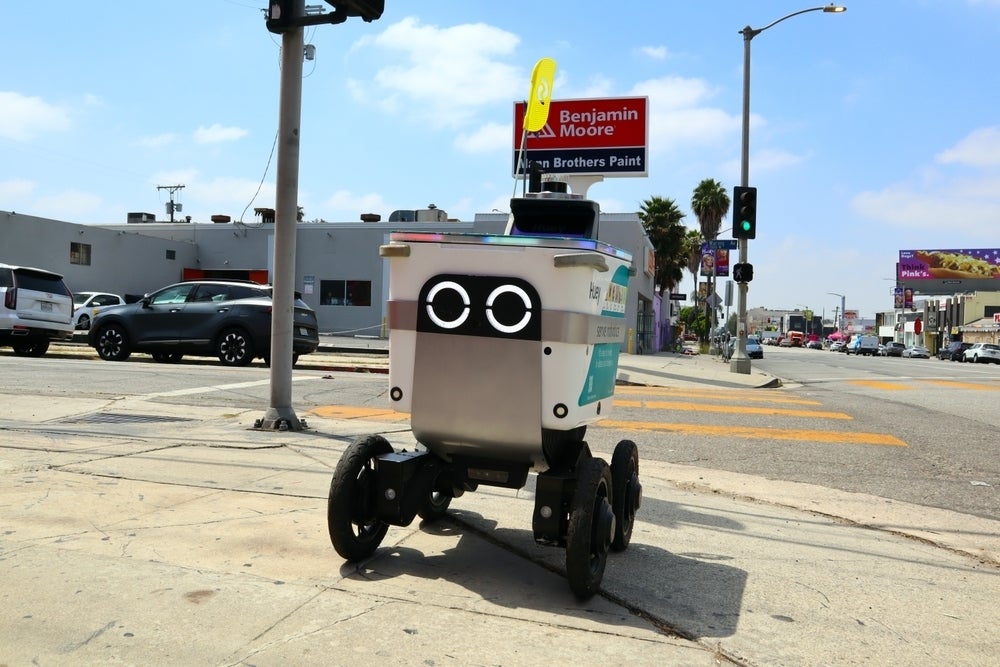
Autonomous Sidewalk Delivery Robots

Search documents
Is Delivery Volume Growth Showing Strong Adoption for Serve Robotics?
ZACKS· 2026-02-03 14:46
Core Insights - Serve Robotics Inc. (SERV) is experiencing increased delivery activity as autonomous sidewalk delivery becomes more accepted in urban markets, indicating a shift from early testing to regular use [1][5] Delivery Performance - In Q3 2025, delivery reliability remained near 100% while delivery volume surged by 66% compared to the previous quarter, demonstrating the reliability of autonomous delivery in live environments [2][8] - The company delivered to over 3,600 restaurants in Q3 2025, reflecting a 45% sequential increase and a more than ninefold increase year-over-year, indicating stronger platform engagement [3][8] Fleet Expansion - The expansion of the robot fleet contributed to higher delivery volumes, allowing the company to serve more neighborhoods without compromising service reliability [4][8] Industry Conditions - The on-demand food delivery market continues to grow, with cities favoring smaller electric delivery options to alleviate congestion and emissions, suggesting a supportive environment for Serve Robotics [5] Stock Performance and Valuation - SERV shares have declined by 11.6% over the past three months, compared to a 9.6% decline in the industry, while other competitors have shown varied performance [6] - The stock is currently trading at a forward 12-month price-to-sales (P/S) ratio of 28.37, significantly higher than the industry average of 14.72, indicating a premium valuation [10] Earnings Estimates - The Zacks Consensus Estimate for SERV's 2026 loss per share has widened, with projections indicating a 15% decline in earnings, contrasting with expected growth for other industry players [12][13]


SERV vs. UBER: Which Autonomous Delivery Stock Has More Upside?
ZACKS· 2025-12-19 17:16
Core Insights - Autonomous delivery is transitioning from experimentation to early commercialization, driven by advancements in AI, robotics, and computing, alongside rising labor costs and urban congestion [1] - Serve Robotics and Uber represent two distinct approaches to automation in last-mile logistics, with Serve Robotics focusing on AI-powered sidewalk delivery robots and Uber integrating autonomy into a broader delivery platform [1][2] Serve Robotics Overview - Serve Robotics is a first-mover in autonomous sidewalk delivery, targeting short-distance urban trips where robots can replace car-based delivery [4] - The company has deployed over 1,000 robots across five major U.S. cities, serving over 3,600 restaurants as of Q3 2025 [4] - In Q3 2025, delivery volume increased by 66% sequentially, and revenues rose 209% year over year to $687,000, indicating strong operational momentum [5] - Serve Robotics benefits from partnerships with Uber and DoorDash, enhancing its addressable order volume and leveraging AI advancements through collaborations with NVIDIA [6] - Despite rapid growth, Serve Robotics faces significant challenges, including deep losses, capital-intensive scaling, and regulatory hurdles, with projected revenue growth of 10X in 2026 but uncertain profitability [7] Uber Overview - Uber's approach to autonomous delivery is as an extension of its profitable global platform, integrating autonomous vehicles while maintaining human drivers [8][10] - In Q3 2025, Uber reported a 33% increase in adjusted EBITDA, with delivery bookings up 25% year over year, highlighting its strong performance [9] - Uber's hybrid strategy allows it to benefit from autonomy without the full capital burden, creating a flexible operational model [10] - The company's scale enhances its optionality, with cross-platform users spending three times more than single-product users, reinforcing network effects [11] - Uber is generating substantial free cash flow, providing it with the flexibility to invest in autonomy as it matures [11] Stock Performance and Valuation - Serve Robotics shares have declined 25% year to date, reflecting investor caution regarding valuation and ongoing losses, while Uber's stock has risen 32.1% year to date [13] - Serve Robotics trades at a high forward price-to-sales ratio of 35.05X, indicating aggressive growth assumptions, while Uber trades at a modest 2.76X despite strong revenue growth [16] - Earnings revisions show a widening loss estimate for Serve Robotics, contrasting with positive revisions for Uber, which indicates stronger earnings momentum [19][21]

Serve Robotics Expands to D.C. Area Bringing Autonomous Delivery to the City of Alexandria, Va.
Globenewswire· 2025-12-10 21:30
Core Insights - Serve Robotics Inc. has launched an on-demand robotic delivery service in Alexandria, Virginia, in partnership with Uber Eats, allowing residents and businesses in specific neighborhoods to receive orders via autonomous robots [1][2][4] - This expansion is part of Serve's nationwide rollout aimed at providing sustainable delivery solutions in urban markets, reducing costs, traffic, and emissions [2] - The launch aligns with Alexandria's commitment to innovative mobility and enhances access to everyday goods for the community [2] Company Overview - Serve Robotics develops AI-powered, low-emissions sidewalk delivery robots, focusing on sustainable and economical delivery solutions [6] - The company was spun off from Uber in 2021 and has completed over 100,000 deliveries for partners like Uber Eats and 7-Eleven [6] - Serve has multi-year contracts, including an agreement to deploy up to 2,000 delivery robots across various U.S. markets [6] Future Plans - Serve Robotics plans to continue expanding its market presence across the U.S. throughout 2026, following successful launches in cities like Los Angeles, Chicago, and Miami [3] - The deployment in Alexandria is expected to enhance convenience for residents and businesses while supporting the city's transportation and environmental goals [2][3]

Why Is Serve Robotics Soaring Thursday? - DoorDash (NASDAQ:DASH)
Benzinga· 2025-10-09 16:30
Core Insights - DoorDash and Serve Robotics have entered a multi-year agreement to expand autonomous sidewalk deliveries in the U.S., starting in Los Angeles [1] - The partnership aims to integrate Serve's robots into DoorDash's logistics network, enhancing delivery speed and reducing emissions as order volumes increase [1][4] Company Developments - Serve Robotics has already completed over 100,000 deliveries from more than 2,500 restaurants in cities like Los Angeles, Miami, Dallas, Chicago, and Atlanta [2] - The collaboration allows DoorDash to optimize order fulfillment by matching each order with the most efficient delivery option, whether it be a robot, drone, or human Dasher [3] Strategic Goals - DoorDash's Autonomous Delivery Platform is designed to coordinate various delivery modes, leveraging its logistics infrastructure to commercialize autonomous delivery across different markets [4] - The partnership with Serve Robotics is expected to enhance delivery capacity for merchants and provide consumers with more fulfillment options, thereby improving reliability and reducing last-mile delivery costs [6] Market Reaction - Following the announcement, DoorDash shares fell by 1.4% to $277.10, while Serve Robotics shares surged by 28.01% to $17.60 [6]

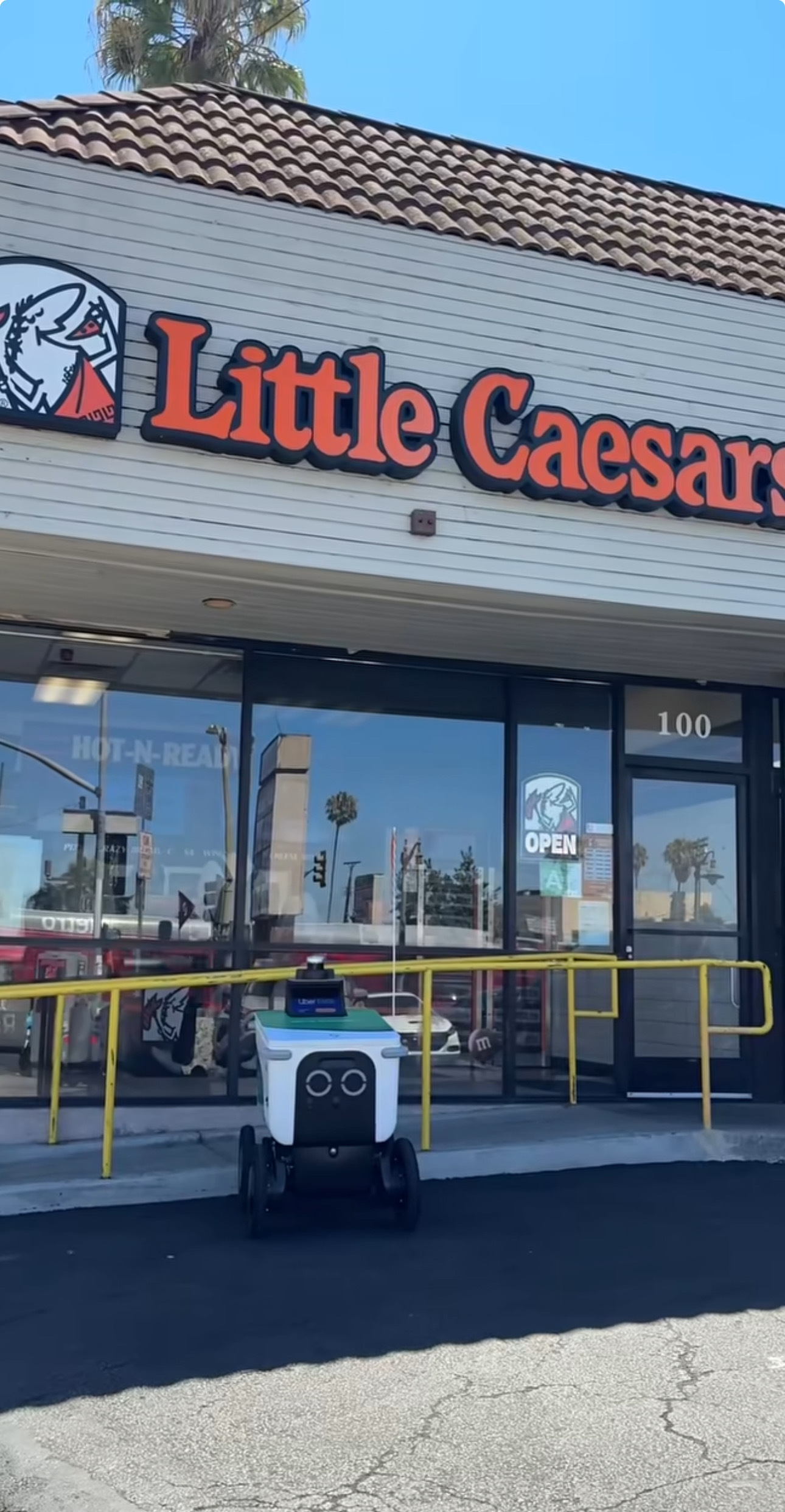
Serve Robotics and Little Caesars Launch Autonomous Robot Delivery Via Uber Eats
Globenewswire· 2025-08-05 20:15
Core Insights - Serve Robotics and Little Caesars have partnered to deliver pizzas using autonomous delivery robots in Los Angeles via Uber Eats [1][2][4] - Serve's third-generation robots can carry up to four large 16-inch pizzas along with additional items while maintaining food quality [3] - The partnership aims to enhance customer delivery experience and align with Little Caesars' commitment to innovation and sustainability [4] Company Overview - Little Caesars is the third-largest pizza chain globally, founded in 1959, with a presence in all 50 U.S. states and 30 countries [5][7] - The brand is known for its HOT-N-READY® pizza and innovative services like the Pizza Portal® pickup [6] - Little Caesars emphasizes quality ingredients and aims to reduce its environmental footprint through technology [4][6] Industry Context - The partnership with Serve Robotics is part of a broader trend in the $150 billion global pizza industry towards automation and enhanced delivery solutions [7][9] - Serve Robotics, spun off from Uber in 2021, focuses on sustainable and economical delivery solutions, having completed tens of thousands of deliveries [9]