
BMN333

Search documents
围攻侏儒症“药王”
3 6 Ke· 2026-02-27 13:17
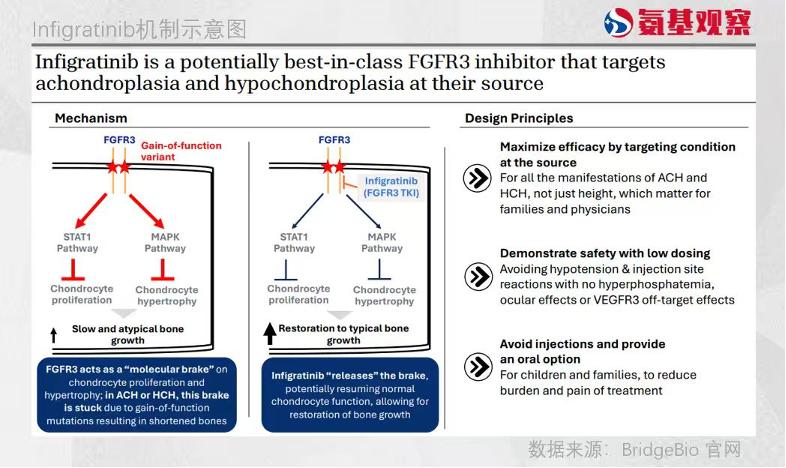
Core Insights - The treatment landscape for achondroplasia (ACH) is undergoing significant transformation with the introduction of new therapies challenging the existing market leader, Vosoritide [1][4][10] Group 1: Current Market Dynamics - Vosoritide, developed by BioMarin, was the first approved drug for ACH, projected to generate sales of $927 million by 2025, reflecting a 26% year-over-year growth [1][3] - The drug's mechanism involves a C-type natriuretic peptide analog that promotes growth by inhibiting FGFR3 activity, leading to an average height increase of 1.57 cm per year in clinical trials [3][4] - Despite its success, Vosoritide faces competition from several emerging therapies, including Ascendis' TransCon-CNP and BridgeBio's Infigratinib, which are designed to improve efficacy and patient compliance [1][4][10] Group 2: Emerging Competitors - Infigratinib, a small molecule drug from BridgeBio, targets FGFR3 directly and has shown superior clinical results, with an average height increase of 2.1 cm per year, and a more convenient oral administration route [4][7] - The drug's clinical trials reported no serious adverse effects, enhancing its appeal compared to Vosoritide, which requires daily injections [7][9] - Ascendis' TransCon-CNP aims for weekly dosing and has demonstrated an annual height increase of 2.29 cm, indicating a potential edge over Vosoritide [10][11] Group 3: Future Developments - The competitive landscape is intensifying with multiple next-generation therapies in development, including high-selectivity FGFR inhibitors and nucleic acid-based treatments [11][12] - The market is expected to evolve rapidly, with each incremental improvement in efficacy and administration method potentially reshaping the treatment paradigm for ACH [12][13] - The industry is witnessing a shift from overlooked rare diseases to a focus on developing targeted therapies, highlighting the growing recognition of the ACH market's potential [12][13]


BioMarin Pharmaceutical(BMRN) - 2025 FY - Earnings Call Transcript
2025-09-04 13:47
Financial Data and Key Metrics Changes - The company has undergone an organizational transformation focusing on operating margins and prioritizing high-impact programs for genetically defined conditions [6][15] - The company has reported positive cash flow and is in a good position to seek additional innovations [11] Business Line Data and Key Metrics Changes - The company is advancing several key programs, including BMN 333 for long-acting CNP, with pivotal studies expected to begin in the second half of next year [8][25] - The Palynziq project for PKU is set for adolescent expansion filing, indicating progress in their pipeline [7] Market Data and Key Metrics Changes - The company is actively exploring external innovation opportunities alongside internal R&D efforts, indicating a dual approach to growth [10][11] - The company is focusing on the unmet needs in various markets, particularly in rare diseases, which is reflected in their strategic direction [21][88] Company Strategy and Development Direction - The company is committed to developing therapies for genetically defined conditions and shaping the medical landscape for these diseases [15] - There is a strong emphasis on leveraging both internal and external scientific advancements to enhance their product offerings [9][10] Management's Comments on Operating Environment and Future Outlook - Management expressed confidence in the potential of their long-acting CNP program, predicting significant growth benefits based on animal model data [22][24] - The regulatory landscape is perceived to be more flexible, allowing for a one-year endpoint for pivotal studies, which could expedite the approval process [55][56] Other Important Information - The company is preparing for a registration study for BMN 333, which will not include a placebo arm to facilitate patient enrollment [52][60] - The company is also advancing its DMD asset, BMN 351, with data expected by the end of the year, aiming for a significant dystrophin level increase [62][68] Q&A Session Summary Question: Can you discuss the significance of the recent data generated for Voxogo? - Voxogo is seen as a safe and effective therapy for achondroplasia, with ongoing efforts to communicate its value to patients beyond just growth metrics [17][18] Question: How does the company prioritize assets in R&D? - The company applies rigorous scientific standards and market research to prioritize programs, ensuring they align with patient needs and market demands [12][13] Question: What are the expectations for the upcoming BMN 351 data? - The company aims for a 10% dystrophin level in muscle tissue, with initial results expected to show a 3% to 5% range at the six-month mark [67][68] Question: How does the company view the combination of CNP with growth hormones? - Management expressed skepticism about the efficacy of growth hormones in achondroplasia, emphasizing the need for targeted therapies instead [43][44] Question: What is the bar for success in the hypochondroplasia study? - The study is powered to measure growth velocity acceleration similar to Voxogo, with expectations for potentially larger effects based on prior data [91][92]