
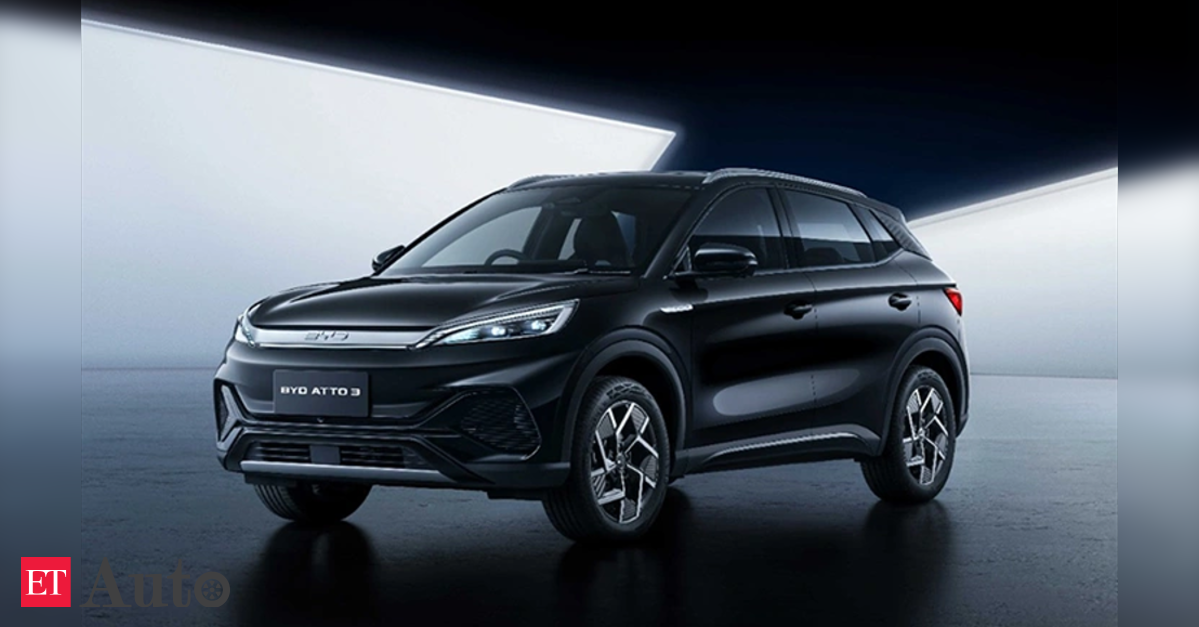
BYD Atto 3

Search documents
Malaysia vehicle sales surge 27% in January
Yahoo Finance· 2026-02-17 10:06
Market Overview - Malaysia's new vehicle market rebounded by 27% to 64,298 units in January 2026, compared to 50,449 units in January 2025, driven by additional working days due to the Lunar New Year timing [1] - The vehicle market was supported by high registrations of vehicles purchased before the end of 2025, new locally produced models, and aggressive year-end promotions by dealers [2] Economic Context - Consumer sentiment has improved, contributing to economic growth of 6.3% year-on-year in Q4 2025, up from 5.4% in Q3, driven by stronger domestic consumption, investment, and exports [2] - The overall economy expanded by 5.2% in 2025, slightly up from 5.1% in 2024 [2] Vehicle Sales Breakdown - Light passenger vehicle sales increased by 28% year-on-year to 60,369 units, while commercial vehicle sales rose by 15% to 3,929 units [3] - Battery electric vehicle (BEV) sales surged to 6,239 units from 1,691 units a year earlier, with the Proton eMas 5 leading at 3,068 units sold [3] Production and Future Outlook - Vehicle production in Malaysia rose by 6% to 60,866 units in January 2026, compared to 57,450 units in January 2025 [4] - The vehicle market is expected to weaken in February 2026 due to the Lunar New Year holidays, with GlobalData forecasting a 3.2% decline in light vehicle sales to 801,000 units for the entire year [4] Company Performance - Perodua's sales increased by 12% to 26,130 units in January 2026, supported by the launch of the new Traz compact SUV and its first BEV model [5] - Proton reported a 35% increase in global vehicle sales to 19,833 units, with the Saga being the best-selling model [5] - UMW Toyota experienced a nearly 23% rise in wholesale deliveries to 6,598 units, with the Vios and Hilux as top sellers [6]
BYD explores local assembly options to fuel EV growth in India
ETAuto.com· 2026-01-28 02:37
Core Viewpoint - BYD Co. is exploring options to expand its operations in India, including local assembly, due to rising demand for its electric vehicles (EVs) amid strict import restrictions [1][4]. Group 1: Expansion Plans - The company is considering semi-knocked-down (SKD) assembly models and is working on obtaining local safety and regulatory certifications for additional models, although these plans are still in the exploratory phase [2][15]. - Following the rejection of a full-scale manufacturing facility proposal by India, BYD is now looking at local assembly of semi-finished components, which is viewed as a more cost-effective and regulatory-friendly option [3][15]. Group 2: Market Demand and Sales Performance - Demand for BYD's vehicles in India has surged, with dealers reportedly holding hundreds of customer bookings and much of the inventory for the December quarter already sold out [4][15]. - BYD's sales in India increased by approximately 88% last year, reaching around 5,500 units, despite facing import duties of up to 110% on fully built vehicles [5][15]. Group 3: Tariff and Pricing Strategy - Local SKD assembly could lower applicable tariffs from 70% to around 30%, enhancing pricing flexibility for BYD's vehicles [6][15]. - BYD's competitive pricing has allowed it to gain traction in the premium segment of India's mass-market EV market, contrasting with Tesla's strategy of offering discounts to stimulate demand [7][15]. Group 4: Product Offerings - Currently, BYD sells the Atto 3 compact e-SUV and the eMax7 MPV in India, both of which are approved for imports beyond the standard quota, along with the Sealion 7 and the Seal sedan [9][15]. - The Atto 3 starts at approximately ₹25 lakh, positioning it competitively against models from Tata Motors and Mahindra, while the Sealion 7 is priced between ₹49 lakh and ₹55 lakh, undercutting Tesla's Model Y, which starts at about ₹60 lakh [8][15]. Group 5: Strategic Importance and Challenges - Diversifying operations outside of China is crucial for BYD as growth in its domestic market slows due to reduced EV subsidies and increasing competition [10][15]. - Despite some signs of improved relations between India and China, policy support for Chinese automakers in India remains inconsistent, posing regulatory challenges for BYD as it seeks to expand in this rapidly growing automobile market [11][12][15].


Will Tesla's Model Y Discounts Be Enough to Spark India Demand?
ZACKS· 2026-01-15 16:15
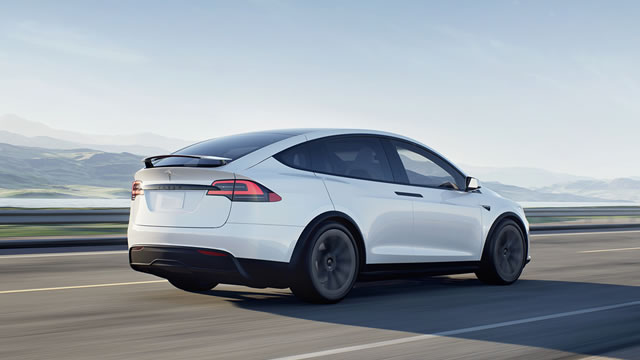
Core Insights - Tesla's entry into the Indian market with the Model Y SUV has faced significant challenges, leading to targeted discounts to manage excess inventory [1][11] Group 1: Inventory and Sales Performance - After launching in mid-2025, Tesla imported approximately 300 Model Y units to India, with nearly one-third remaining unsold months later [2] - To address the inventory issue, Tesla is offering discounts of up to Rs 2 lakh ($2,200) on select Model Y variants, indicating a tactical approach rather than a broad promotional campaign [2] - Reports indicate that only about 227 Tesla vehicles were registered in India throughout 2025, falling short of earlier expectations of nearly 600 bookings, with many early reservations canceled [4] Group 2: Pricing and Market Position - The Model Y is priced between Rs 60-68 lakhs ex-showroom, significantly impacted by India's 110% import tariff on completely built units (CBUs), making it less competitive against locally assembled vehicles [3][5] - The high pricing, starting near US$70,000 after import duties, has led to muted demand, as many Indian buyers find the imported electric SUV prohibitively expensive [4][5] Group 3: Strategic Approach - Tesla has no immediate plans to manufacture vehicles locally in India and continues to rely on imports, despite the Indian government's incentives for local production [6][7] - The company is pursuing a "retail-first" strategy, expanding showrooms and service hubs in major cities while building its Supercharger network [6] Group 4: Competitive Landscape - Competition is intensifying as legacy automakers and global EV brands introduce more affordable, locally assembled offerings, diminishing the appeal of the Model Y for aspirational buyers [8] - BYD Co. has achieved over 10,000 electric vehicle deliveries in India, establishing a strong presence with a diverse portfolio [9] - Mercedes-Benz has also strengthened its EV presence, selling approximately 19,000 cars in 2025, with a 12% year-over-year growth in battery electric vehicle sales [10]

BYD Brings Price War to Japan in Bid to Win Over Customers
Yahoo Finance· 2025-09-28 22:00
Core Viewpoint - BYD Co. is struggling to gain traction in the Japanese electric vehicle market despite its efforts, including opening new sales locations and introducing new models [1][2][5]. Sales Performance - The company sold only 5,300 vehicles in Japan from January 2023 to June 2023, even after launching its 45th sales location and a fourth EV model [2]. - Discounts of up to ¥1 million ($6,700) are being offered to boost sales, which can reduce prices by as much as 50% when combined with government subsidies [3]. Market Challenges - The Japanese market shows strong loyalty to local brands like Toyota, making it difficult for foreign automakers like BYD to penetrate [5]. - The practice of discounting may backfire, potentially alienating early buyers and affecting resale values [4]. Strategic Outlook - Despite the current challenges, BYD sees long-term opportunities in Japan, where EV sales are expected to grow from just 3.4% of new car sales this year [6]. - The company aims to establish a presence in Japan to gain recognition among discerning customers, even if immediate economic returns are not evident [7].