
BYD Sealion 7

Search documents
China's BYD confident of reaching 1.5 million unit overseas sales in 2026
Reuters· 2026-03-30 13:37
Group 1 - BYD is "highly confident" of achieving its overseas sales target of 1.5 million vehicles by 2026, potentially exceeding this figure [1] - The company anticipates that overseas markets could account for about 50% of its total business [2] - BYD's export target for 2026 was initially set at 1.6 million vehicles but has been revised down to 1.3 million for this year [2] Group 2 - Overseas sales as a share of total sales more than doubled to 22.7% last year and further increased to 50% in January-February [2] - The company reported a larger-than-expected profit drop for 2025 due to domestic price wars and competition, indicating a challenging year ahead [3] - BYD aims to avoid competing through price wars, focusing instead on technology and innovation with ongoing R&D investments [4]


BYD February vehicle sales fall at steepest pace since pandemic
Reuters· 2026-03-01 12:04
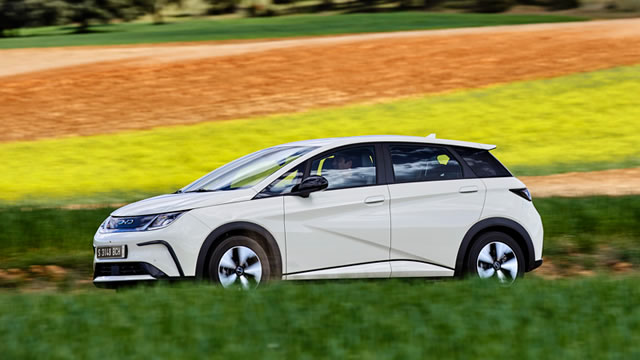
Group 1 - BYD experienced a significant decline in global vehicle sales, with February sales dropping by 41.1% year-over-year, marking the largest decrease since February 2020 [1] - This decline represents the sixth consecutive month of falling sales for BYD, indicating a troubling trend for the company [1] - The reported sales figures reflect the most substantial downturn in the company's performance in six years, raising concerns about its market position and future growth prospects [1]
BYD explores local assembly options to fuel EV growth in India
ETAuto.com· 2026-01-28 02:37
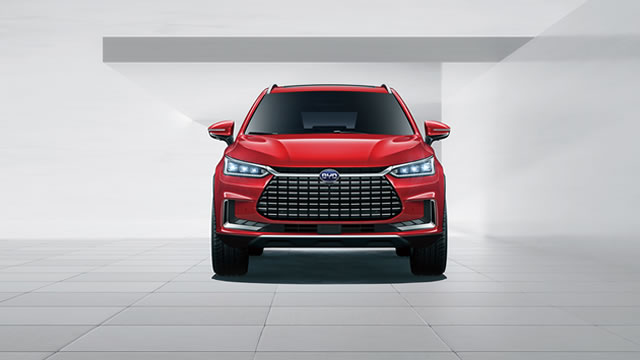
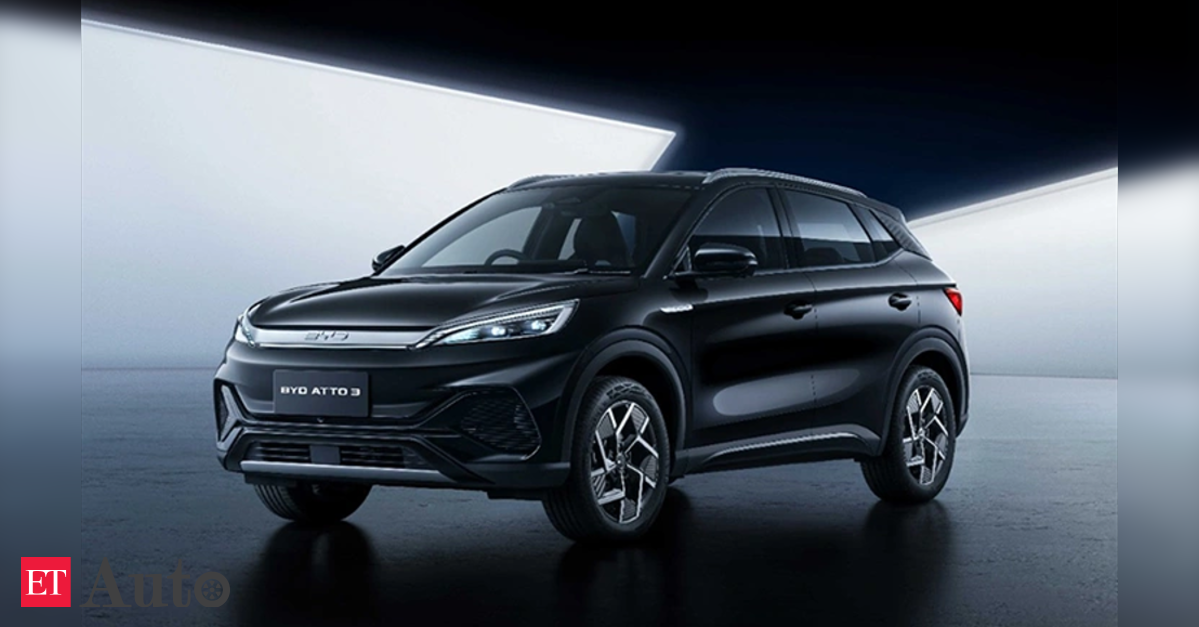
Core Viewpoint - BYD Co. is exploring options to expand its operations in India, including local assembly, due to rising demand for its electric vehicles (EVs) amid strict import restrictions [1][4]. Group 1: Expansion Plans - The company is considering semi-knocked-down (SKD) assembly models and is working on obtaining local safety and regulatory certifications for additional models, although these plans are still in the exploratory phase [2][15]. - Following the rejection of a full-scale manufacturing facility proposal by India, BYD is now looking at local assembly of semi-finished components, which is viewed as a more cost-effective and regulatory-friendly option [3][15]. Group 2: Market Demand and Sales Performance - Demand for BYD's vehicles in India has surged, with dealers reportedly holding hundreds of customer bookings and much of the inventory for the December quarter already sold out [4][15]. - BYD's sales in India increased by approximately 88% last year, reaching around 5,500 units, despite facing import duties of up to 110% on fully built vehicles [5][15]. Group 3: Tariff and Pricing Strategy - Local SKD assembly could lower applicable tariffs from 70% to around 30%, enhancing pricing flexibility for BYD's vehicles [6][15]. - BYD's competitive pricing has allowed it to gain traction in the premium segment of India's mass-market EV market, contrasting with Tesla's strategy of offering discounts to stimulate demand [7][15]. Group 4: Product Offerings - Currently, BYD sells the Atto 3 compact e-SUV and the eMax7 MPV in India, both of which are approved for imports beyond the standard quota, along with the Sealion 7 and the Seal sedan [9][15]. - The Atto 3 starts at approximately ₹25 lakh, positioning it competitively against models from Tata Motors and Mahindra, while the Sealion 7 is priced between ₹49 lakh and ₹55 lakh, undercutting Tesla's Model Y, which starts at about ₹60 lakh [8][15]. Group 5: Strategic Importance and Challenges - Diversifying operations outside of China is crucial for BYD as growth in its domestic market slows due to reduced EV subsidies and increasing competition [10][15]. - Despite some signs of improved relations between India and China, policy support for Chinese automakers in India remains inconsistent, posing regulatory challenges for BYD as it seeks to expand in this rapidly growing automobile market [11][12][15].
Will Tesla's Model Y Discounts Be Enough to Spark India Demand?
ZACKS· 2026-01-15 16:15
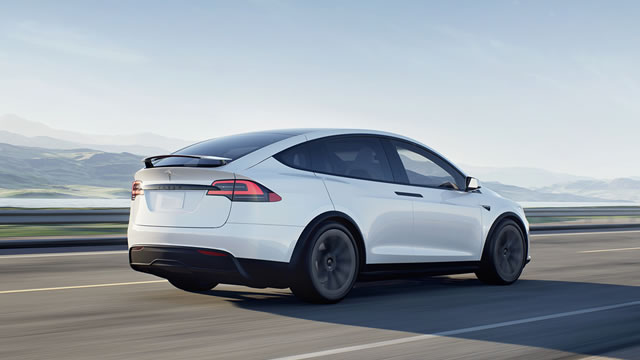
Core Insights - Tesla's entry into the Indian market with the Model Y SUV has faced significant challenges, leading to targeted discounts to manage excess inventory [1][11] Group 1: Inventory and Sales Performance - After launching in mid-2025, Tesla imported approximately 300 Model Y units to India, with nearly one-third remaining unsold months later [2] - To address the inventory issue, Tesla is offering discounts of up to Rs 2 lakh ($2,200) on select Model Y variants, indicating a tactical approach rather than a broad promotional campaign [2] - Reports indicate that only about 227 Tesla vehicles were registered in India throughout 2025, falling short of earlier expectations of nearly 600 bookings, with many early reservations canceled [4] Group 2: Pricing and Market Position - The Model Y is priced between Rs 60-68 lakhs ex-showroom, significantly impacted by India's 110% import tariff on completely built units (CBUs), making it less competitive against locally assembled vehicles [3][5] - The high pricing, starting near US$70,000 after import duties, has led to muted demand, as many Indian buyers find the imported electric SUV prohibitively expensive [4][5] Group 3: Strategic Approach - Tesla has no immediate plans to manufacture vehicles locally in India and continues to rely on imports, despite the Indian government's incentives for local production [6][7] - The company is pursuing a "retail-first" strategy, expanding showrooms and service hubs in major cities while building its Supercharger network [6] Group 4: Competitive Landscape - Competition is intensifying as legacy automakers and global EV brands introduce more affordable, locally assembled offerings, diminishing the appeal of the Model Y for aspirational buyers [8] - BYD Co. has achieved over 10,000 electric vehicle deliveries in India, establishing a strong presence with a diverse portfolio [9] - Mercedes-Benz has also strengthened its EV presence, selling approximately 19,000 cars in 2025, with a 12% year-over-year growth in battery electric vehicle sales [10]

A tough sell for Elon Musk? Tesla has a cold start in India
The Economic Times· 2026-01-15 11:08
Core Insights - Tesla is facing significant challenges in the Indian market, struggling to sell about one-third of the initial batch of vehicles imported last year, with around 100 unsold Model Y SUVs remaining after four months [1][23] - The slow sales highlight a disconnect between Tesla's global brand strength and the realities of the Indian automotive market, where pricing and competition are critical factors [2][21] Sales Performance - Tesla registered only 227 vehicles in India during 2025, indicating a significant gap between bookings and actual sales [5][23] - Many customers who placed early deposits are hesitant to complete purchases, particularly for the lower-priced Model Y variant, while interest in the more expensive long-range version has also been slow [5][21] Pricing Challenges - Imported vehicles in India face customs duties as high as 110%, which significantly inflates prices and challenges Tesla's brand appeal strategy [6][21] - The price gap between the Model Y and competing electric SUVs has led many buyers to consider alternatives that offer better value or features [7][21] Competitive Landscape - Tesla's performance contrasts sharply with competitors like BMW and BYD, which have seen substantial growth in EV sales in India, with BMW's sales increasing nearly 200% and BYD's registrations rising 88% [9][10][21] - Buyers often prefer alternatives like BMW's iX1 or BYD models due to lower prices and richer feature sets, exposing Tesla's limited product portfolio in the region [11][21] Infrastructure and Brand Presence - Tesla's limited physical presence and sparse service infrastructure hinder brand traction, with only a few showrooms and no local manufacturing [12][24] - The company has hired a new local operations head to strengthen its appeal to luxury buyers, but rebuilding confidence in after-sales support will take time [13][24] Market Dynamics - The broader Indian EV market is rapidly growing, with electric vehicle retail sales increasing 16.37% year-on-year, driven by competitive pricing and improved product quality from mass-market manufacturers [14][15][24] - This growth raises expectations for affordability and localized offerings, areas where Tesla is currently lagging [16][24] Strategic Initiatives - Tesla is working on developing an EV ecosystem in India, including plans to install charging points at various locations to support adoption [17][24] - The company expects Indian consumers to recover a significant portion of the Model Y's price through savings on fuel and maintenance over time, although the effectiveness of this strategy remains uncertain [18][24] Trade and Regulatory Environment - Tesla's future in India may depend on ongoing trade negotiations that could reduce import duties, with discussions around a US-India bilateral trade agreement and an India-Europe free trade agreement potentially impacting costs [19][20][24] - Until these changes occur, Tesla's pricing disadvantage is likely to persist, limiting sales volumes and necessitating reliance on discounts to move inventory [20][24] Long-term Outlook - Tesla's initial struggles do not necessarily indicate long-term failure but highlight the challenges of entering a complex, cost-sensitive market [21][24] - The company's ability to convert early interest into sustained demand will depend on localizing its strategy, expanding infrastructure, and adapting its product mix to meet evolving customer expectations [22][24]
