Baby Powder

Search documents
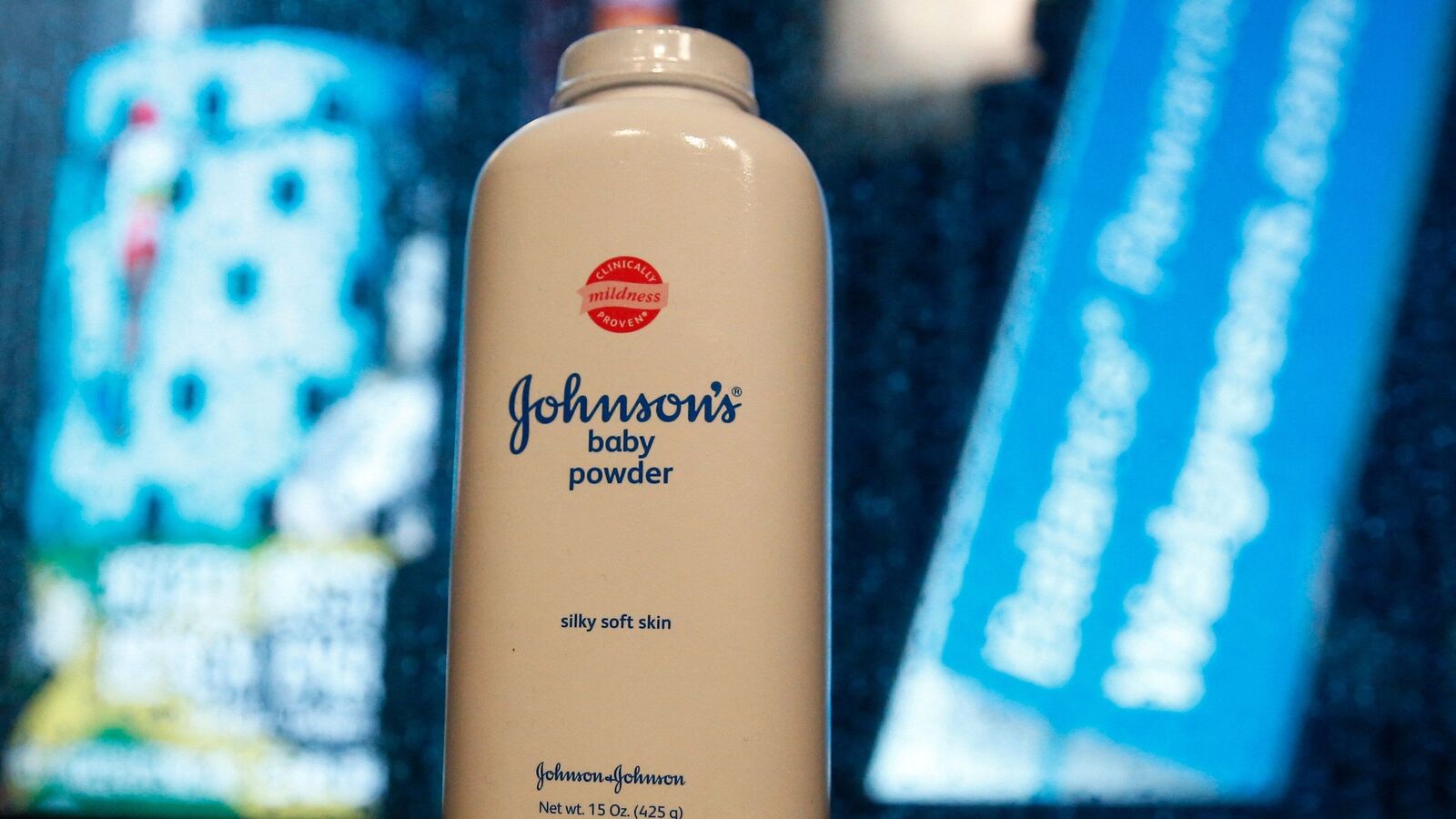
Johnson & Johnson ordered to pay $40 million to 2 women: What is baby powder cancer case?
MINT· 2025-12-15 09:23
Core Viewpoint - A California jury awarded $40 million to two women who claimed that long-term use of Johnson & Johnson's baby powder led to their ovarian cancer, marking a significant legal development for the company [1][2]. Group 1: Legal Outcome - The jury ordered Johnson & Johnson to pay $18 million to Monica Kent and $22 million to Deborah Schultz and her husband, after determining that the company was aware of the potential harm of its talc-based products for years [3]. - Kent was diagnosed with ovarian cancer in 2014, while Schultz received her diagnosis in 2018 [3]. Group 2: Company Response - Johnson & Johnson plans to appeal the jury's decision regarding both liability and compensatory damages [2]. - The company maintains that its products are safe and do not cause cancer, despite facing lawsuits from over 67,000 individuals claiming cancer development due to its talc products [6]. Group 3: Historical Context - The attorney for the plaintiffs stated that Johnson & Johnson had known since the 1960s about the potential cancer risks associated with its talc products [4]. - Johnson & Johnson ceased selling talc-based baby powder in the US in 2020 and ended global sales in 2023, transitioning to a cornstarch-based formula [6]. Group 4: Defense Arguments - Johnson & Johnson's attorney argued that the link between talc and cancer is not supported by major US health authorities and that no studies have shown talc traveling from the skin to reproductive organs [5].


U.S. pulls back on asbestos protections again—this time in your cosmetics
Fastcompany· 2025-11-28 17:45
Core Viewpoint - The Trump administration has withdrawn a proposed FDA rule requiring testing for asbestos in talc-based cosmetics, signaling a shift in regulatory focus away from asbestos concerns [2][8]. Regulatory Changes - The proposed rule, initiated by the Biden administration, aimed to mandate manufacturers to test for asbestos in cosmetics and maintain compliance records [3][4]. - The FDA's withdrawal is attributed to the need to reconsider the best methods for addressing asbestos exposure and to develop a more comprehensive approach to cosmetics regulation [5][9]. Health Concerns - Asbestos exposure is linked to serious health issues, including lung cancer and mesothelioma, with no safe level of exposure established by health agencies [3][11]. - Consumer advocates express concern that the withdrawal of the testing requirement could lead to increased risk of asbestos contamination in cosmetics, which poses a significant health threat [11]. Industry Implications - The FDA plans to propose a new rule under the Modernization of Cosmetics Regulation Act of 2022, which aims to identify safer alternatives to asbestos and reduce related illnesses [8][9]. - The current regulatory environment reflects a broader trend of rolling back protections against asbestos, contrasting with the Biden administration's previous efforts to ban its use [10]. Global Context - The U.S. remains out of step with over 50 countries that have completely banned asbestos, raising concerns about the safety of cosmetics manufactured in regions where asbestos is still permitted [10].
J&J’s $966 Million Baby Powder Settlement Spotlights Racial Health Equity
Forbes· 2025-10-09 00:30
Core Insights - A Los Angeles jury has ordered Johnson & Johnson to pay $966 million to the family of Mae Moore, who died from mesothelioma linked to asbestos-contaminated talc exposure, marking a significant moment in public health and corporate accountability [1] - The verdict includes $16 million in compensatory damages and $950 million in punitive damages, aimed at punishing the company [3] - The case highlights ongoing racial health disparities, particularly affecting Black women, who were targeted by J&J's marketing strategies [6][7] Company Background - Johnson & Johnson began selling its Baby Powder in 1894, but safety concerns regarding talc emerged as early as the 1950s, with the first lawsuit linking talc to ovarian cancer filed in 2009 [2] - The company has faced numerous lawsuits related to its talc products, with a proposed $6.475 billion settlement to address approximately 99.75% of ovarian cancer-related lawsuits [4] Legal and Financial Implications - The Moore verdict serves as a reminder of J&J's ongoing talc liabilities, despite the company's shift towards pharmaceuticals and medical technology [9] - J&J recorded a $2.7 billion charge last year to increase its talc-related reserves to $11 billion, indicating the scale of its financial exposure [9] - The punitive damages awarded in Moore's case approach 15% of the company's talc reserve, raising concerns about the potential impact of additional verdicts on J&J's financial stability [10] Health Equity and Marketing Strategies - Internal documents revealed that J&J identified Black women in "under-developed geographical areas" as key targets for Baby Powder sales, reinforcing product loyalty in communities already facing health disparities [6] - Investigations indicated that J&J was aware of the asbestos content in its talc products for decades but continued to market them as safe, particularly in minority communities [7] Future Outlook - The Moore verdict represents not just compensation but also acknowledgment of historic harm, with J&J planning to appeal the decision, calling the award "egregious and unconstitutional" [11] - The case underscores the willingness of juries to impose significant financial penalties on J&J, even as the company seeks to resolve numerous claims through mass settlements [11]