Batteries for Electric Vehicles

Search documents
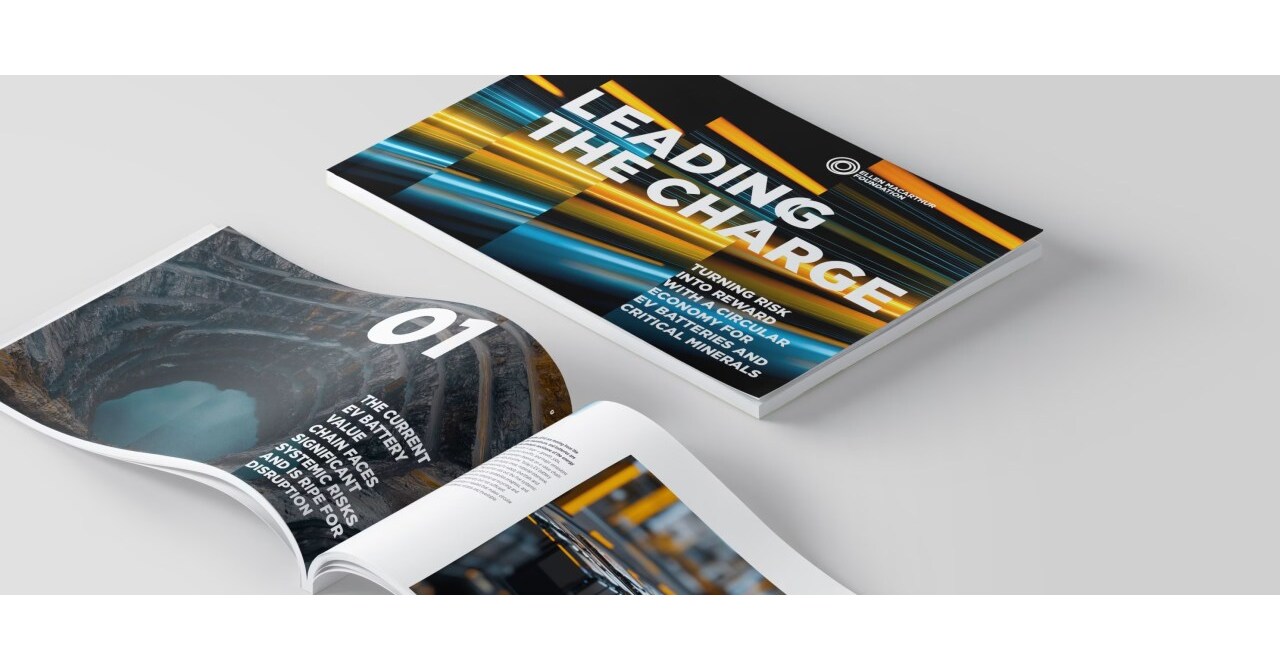
CATL a Nadace Ellen Macarthurové vytyčily v průlomové bílé knize směr pro cirkulární baterie do elektromobilů
Prnewswire· 2026-01-25 03:28
Core Insights - The article discusses a white paper released by the Ellen MacArthur Foundation during the World Economic Forum 2026, which presents an integrated and actionable plan for a circular economy in electric vehicle (EV) batteries and critical minerals, marking a significant milestone in collaboration between CATL and the foundation [1][2]. Group 1: Circular Economy Framework - The report outlines a clear, industry-backed direction for designing, using, recycling, and reusing EV batteries to maximize their value and reduce systemic risks across the value chain [2]. - CATL, as a founding strategic partner of the Critical Minerals Mission, has closely collaborated with the foundation and other industry stakeholders to translate circular economy principles into practical, actionable measures based on real operational experiences [2][3]. - The roadmap supports CATL's global commitment to circular energy, aiming to decouple battery production growth from the extraction of new raw materials [2][3]. Group 2: Environmental and Economic Benefits - The circular battery system for EVs is expected to bring opportunities in environmental sustainability, economic growth, product innovation, and broader value creation [2]. - By keeping batteries and their critical minerals in use for multiple life cycles, the demand for newly mined materials decreases, emissions are reduced, and the integration of renewable energy sources is supported [2][3]. - Economic value is enhanced through improved material efficiency, reduced waste, and operational costs, while new revenue sources are created [2][3]. Group 3: Implementation and Practices - CATL has already implemented these systemic practices across all its operations, managing batteries as centrally managed assets to increase utilization, enable planned maintenance, and ensure predictable returns at the end of their life cycle [4]. - The company operates over 1,000 battery swapping stations for passenger vehicles and more than 300 for commercial vehicles, supported by a growing ecosystem of over 100 partners [4][5]. - CATL's recycling operations achieve a recycling rate of 99.6% for nickel, cobalt, and manganese, and 96.5% for lithium, with processing capacity expanding to 270,000 tons per year [5]. Group 4: Strategic Recommendations - The white paper identifies five interconnected measures necessary for maintaining high material value in batteries and enhancing system resilience [3][7]. - These measures include designing batteries with a focus on circular economy principles, reassessing battery service within optimized energy mobility systems, expanding circular business models treating batteries as long-term assets, building and co-financing regional circular infrastructure, and enabling circular operational systems through data, standards, and policies [7]. Group 5: Future Directions - CATL emphasizes the need to expand circular battery systems across regions, industries, and applications, adapting to various market conditions [8]. - The agenda is a foundational aspect of CATL's journey towards carbon neutrality, following its achievement of carbon neutrality in all battery manufacturing plants and aiming for carbon neutrality across the entire value chain by 2035 [8].