Battery Energy Storage System (BESS)

Search documents
Matrix and EDF optimise 500MW BESS in Scotland
Yahoo Finance· 2026-03-30 12:59
Core Insights - Matrix Renewables has signed a long-term battery optimisation agreement with EDF for a 500MW/1GWh battery energy storage system in Eccles, Scotland, aimed at enhancing the UK electricity system's flexibility and supporting grid operations [1][2]. Project Overview - The battery storage project, set to be completed in summer 2027, will capture surplus renewable energy and release it during peak demand periods, facilitating the integration of more renewables into the national grid [2]. - This initiative marks Matrix Renewables' first standalone battery storage development in the UK and is expected to be one of the largest in the British electricity system [2]. Agreement Details - Under the agreement, EDF will provide route-to-market services and manage the battery's performance across UK power markets once operational [3]. - EDF's commercial director emphasized the importance of flexible assets for building an Electric Britain, stating that the project will enhance grid stability and manage peak demand [3][4]. Strategic Importance - The Eccles facility is strategically located between key transmission routes linking Scotland and England, playing a crucial role in bolstering grid resilience and facilitating efficient electricity distribution [4]. - This project aligns with Matrix Renewables' broader goals to expand its battery storage portfolio and support the UK's transition to a cleaner power system, contributing to the Clean Power 2035 goals and Net Zero 2050 target [5]. Future Plans - Matrix Renewables is actively expanding its battery storage and generation initiatives in the UK, with plans to develop over 3GW of capacity nationwide in the coming years [6]. - The company has previously signed a comprehensive EPC contract with Tesla to build, design, and commission a standalone BESS located in Eccles, highlighting its commitment to large-scale battery storage projects [7].
中国人工智能基础设施:AI 需求增长下变压器持续短缺,伊朗局势推高储能需求-AI Infrastructure - China (H_A)_ Ongoing shortage of transformers amid growing AI; Iran tension pushes ESS needs
2026-03-30 05:15
Summary of Key Points from Conference Call Industry Overview - **Industry Focus**: AI Infrastructure, Energy Storage Systems (ESS), Cooling Sector - **Key Trends**: Ongoing shortages in transformers, increasing demand for energy security, and rising AI capital expenditures AI Infrastructure - **Transformer Shortage**: Transformers are the most in-demand power equipment, with shortages expected to last until at least 2029. High-voltage transformer lead times can extend up to 3 years [1][21] - **Demand Distribution**: AI data centers (AIDC) account for approximately 10% of equipment demand, while grid demand exceeds 50% [1] - **China's Grid Capex**: China plans to increase grid capital expenditures (capex) by 40% in the 15th Five-Year Plan (FYP), with an expected RMB 715 billion in 2026, representing a 12% year-over-year growth [1][9] - **Export Opportunities**: Chinese transformer exports are projected to grow by 25-30% in 2026, driven by global demand and supply shortages in the U.S. and Europe [1][22] Energy Storage Systems (ESS) - **Increased Demand**: Middle East tensions are expected to heighten the need for ESS, with global battery energy storage system (BESS) installations forecasted to reach 425 GWh in 2026, a 39% year-over-year increase [2][54] - **Top Pick**: Sungrow is identified as a leading player in the ESS market due to its strong brand, capacity expansion potential, and attractive valuation [2][49] Cooling Sector - **Growth Drivers**: The cooling sector is expected to benefit from rising AI capex, with global AI capex projected to reach USD 1.4 trillion by 2030 [3][59] - **Company Performance**: Envicool's earnings for FY26/27 are raised by 21%/38%, and the price objective is lifted by 62% to RMB 128, reflecting strong demand for cooling solutions [3][6] - **Market Sentiment**: NVIDIA's increased revenue outlook for data centers indicates a significant rise in cooling needs, reinforcing investment in advanced cooling technologies [3][62] Company-Specific Insights - **Sieyuan**: Price objective raised to RMB 242, with expected earnings growth of 49%/42% in 2026/27. The company is well-positioned in power transmission and distribution equipment [1][30] - **Huaming**: FY25 NPAT reached RMB 710 million, with a 16% year-over-year increase. The company is expected to benefit from rising demand in its niche market [36][37] - **Jinpan**: FY25 results showed sales of RMB 7.295 billion, with a 5.7% year-over-year increase. The company maintains a price objective of RMB 104, supported by strong overseas exposure [39][40] - **Dongfang Electric**: Expected to benefit from global gas turbine orders, with a reiteration of the Buy rating due to its leading position in China [43] Additional Insights - **Supply Chain Dynamics**: China's comprehensive supply chain is expected to fill gaps in the overseas market, particularly in transformer exports [22] - **Market Conditions**: The recent rally in lithium prices poses short-term margin concerns for battery manufacturers, but it is anticipated that these costs will be passed upstream in the mid-term [2][49] This summary encapsulates the critical insights and projections from the conference call, highlighting the dynamics within the AI infrastructure, energy storage, and cooling sectors, along with specific company performances and market trends.




esVolta secures $139.6m to support storage project construction
Yahoo Finance· 2026-03-25 11:19
Financing and Project Details - esVolta has secured $139.6 million in project financing from MUFG Bank for the Boxcar Energy Storage project in Wylie, Texas, which is designed to provide 150MW of power and 300 MWh of energy storage [1] - The financing includes a tax equity bridge loan, a construction loan, letters of credit, and term loan facilities [1] Demand and Capacity Expansion - esVolta has signed a long-term offtake agreement with a corporate customer for the Boxcar project, indicating strong demand for energy storage solutions from commercial and industrial sectors [2] - Upon completion, the Boxcar project will increase esVolta's total energy storage capacity within the ERCOT market to approximately 1.6 GWh [2] Growth in Texas Market - The transaction represents a significant step in esVolta's growth in Texas, where battery storage is increasingly utilized to manage electricity supply and demand and support renewable energy integration [3] - By the time the Boxcar project begins operation in 2027, esVolta's Texas portfolio is expected to reach 1.56 GWh across five battery storage projects [3] Strategic Support and Industry Recognition - MUFG Bank's support for the Boxcar project reflects strong confidence in both the project and esVolta's platform, as stated by esVolta's CFO Justin Johns [4] - MUFG recognizes the critical role of energy storage technology and infrastructure in the growth of clean energy and aims to strategically support projects in key markets like ERCOT [5] Historical Context - esVolta has been developing and operating stand-alone battery energy storage assets across North America since 2017 [5] - In January 2025, esVolta completed a preferred equity transaction totaling $243 million, facilitated by Captona, an energy transition investment firm [6]
ACME Solar adds 155MW BESS in Rajasthan, India
Yahoo Finance· 2026-03-24 13:21
Group 1: Company Developments - ACME Solar has commissioned an additional 155MW/470.25MWh of battery energy storage system (BESS) capacity in Rajasthan, increasing total commissioned BESS capacity to 297.67MW/951.74MWh out of a planned total of 835MW/3.11GWh [1] - The company has a diverse renewable energy portfolio totaling 8.07GW, which includes solar, wind, storage, firm and dispatchable renewable energy, and hybrid solutions [3] - ACME Solar's operational contracted capacity stands at 2.97GW, with approximately 1GWh of BESS capacity, and 5.09GW of contracted capacity under construction, including around 16GWh of BESS installations [3] Group 2: Project Details - The newly commissioned BESS systems are integrated with the existing inter-state transmission system in Rajasthan and will operate on a merchant basis, generating revenue by capitalizing on price differences between peak and non-peak electricity demand hours [2] - The BESS projects are designed to improve grid reliability and optimize power use by storing energy during low-demand periods and discharging it during high-demand periods, thus balancing electricity supply and demand [2][3] - A signed power purchase agreement portfolio currently under construction amounts to 3.29GW, including a 25-year agreement for a 200MW solar project with an integrated 100MW energy storage system at a tariff of Rs3.42 ($0.03) per unit [4]
大规模火烧测试纳入强制性要求!第六版UL 9540A正式发布
中关村储能产业技术联盟· 2026-03-20 07:17
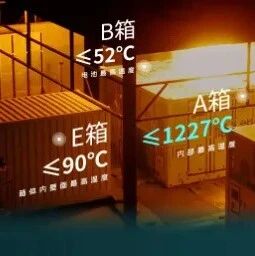
Core Viewpoint - The article discusses the recent updates to the UL 9540A standard for battery energy storage systems (BESS), emphasizing the importance of large-scale fire testing and system-level safety in the energy storage industry [3][4][6]. Summary by Sections Event Announcement - The 9th Frontier Technology Conference on Energy Storage will be held on April 1-2, 2026, during the 14th International Energy Storage Summit and Exhibition (ESIE 2026), featuring international experts discussing fire safety and regulatory frameworks in energy storage [3][19]. Standard Update - The sixth edition of the UL 9540A standard, titled "Test Methods for Evaluating Fire Propagation in Battery Energy Storage Systems," was officially released on March 13, 2026. This version sets a new precedent in testing and certification for energy storage systems, focusing on thermal runaway and fire propagation risks [3][4]. Testing Enhancements - The new version of UL 9540A expands the testing scope by including large-scale fire testing (LSFT), which evaluates system-level safety by igniting a storage unit and observing fire spread without fire suppression systems. This change addresses limitations of previous versions and emphasizes the importance of system-level safety [4][6]. Industry Trends - There is a growing industry focus on large-scale fire testing, with five leading domestic energy storage companies conducting such tests in early 2026. These tests are centered on ultra-large capacity battery systems, with some cells reaching capacities of 1,175Ah [4][5]. Performance Data - Key performance data from large-scale fire tests conducted by various companies in early 2026 show promising results, such as maintaining structural integrity and low temperatures in adjacent cells during fire events. For instance, Haibo's test showed a maximum temperature of only 56°C in neighboring cells [5]. Regulatory Compliance - The updated UL 9540A meets the safety testing requirements of the NFPA 855 standard, but regulatory bodies may still require additional performance data for site assessments. The new version incorporates spacing and propagation considerations into the certification framework, which were not included in previous versions [6][7]. Complementary Standards - The CSA/ANSI C800:25 standard, which assesses the reliability of energy storage systems, complements UL 9540A by providing additional performance metrics such as heat release rates and gas composition, aiding in site evaluations and regulatory reviews [6][7].

Bimergen Awards Construction Contract for 40 MW / 80 MWh Texas Battery Energy Storage System to TruGrid
Globenewswire· 2026-03-19 10:30
Core Insights - Bimergen Energy Corporation has awarded a construction contract to TruGrid for battery energy storage projects in Texas, enhancing its operational capabilities and project execution efficiency [1][4][5] Company Overview - Bimergen Energy Corporation is a U.S.-based independent power producer focused on developing, owning, and operating battery energy storage systems (BESS) [6] - The company specializes in utility-scale and distributed storage projects aimed at improving grid reliability and renewable energy integration [6] Project Details - The Texas projects include a total capacity of 40 megawatts (MW) and 80 megawatt hours (MWh), with Bimergen acquiring eight late-stage 9.9 MW distributed generation battery energy storage projects in the ERCOT South region [2] - The partnership with TruGrid is expected to facilitate efficient project delivery and enhance grid reliability across Texas [3][5] Financial Outlook - Bimergen is advancing a development pipeline of an additional 2 gigawatt hours (GWh) in BESS projects, which could generate approximately $150 million in revenue from project development [5] - The company aims to achieve $300 to $400 million in annual energy arbitrage revenue within the next three to four years [5]
e-STORAGE to Deliver 2.5 GWh Battery Energy Storage System Supporting U.S. Data Center Power Demand
Prnewswire· 2026-03-17 11:00
Core Viewpoint - Canadian Solar's subsidiary e-STORAGE has secured a supply agreement for a 500MW/2,493 MWh DC battery energy storage system to support U.S. data center power demand, highlighting the company's role in addressing the increasing electricity needs driven by AI and hyperscale data centers [1][3]. Group 1: Project Details - e-STORAGE will supply approximately 500 SolBank 3.0 containers, with shipments expected to commence in March 2027 and conclude by July 2027 [2]. - The project aims to enhance regional grid capacity, ensuring reliable power for emerging loads associated with data centers [3]. Group 2: Company Background - Canadian Solar is a leading global solar technology and renewable energy company, having delivered nearly 170 GW of solar photovoltaic modules globally since its inception in 2001 [4]. - As of September 30, 2025, e-STORAGE has shipped over 16 GWh of battery energy storage solutions and has a contracted backlog valued at $3.1 billion as of October 31, 2025 [4]. Group 3: e-STORAGE Overview - e-STORAGE specializes in designing, manufacturing, and integrating battery energy storage systems for utility-scale applications, with an annual battery energy storage system capacity of 15 GWh [5]. - The company operates state-of-the-art manufacturing facilities and offers comprehensive EPC services aimed at improving grid operations [5].


Econergy secures €31m project financing for its 60MW Ovidiu PV project in Romania
Globenewswire· 2026-03-16 08:48
Core Insights - Econergy Renewable Energy Ltd. has signed a €31 million project finance agreement with Kommunalkredit for its ~60MW Ovidiu PV project in Romania, marking a significant step in the company's expansion in the region [1][3] - The financing will cover development and construction costs, as well as refinance related shareholder loans, facilitating the project until it reaches commercial operation [1] - The company plans to integrate a Battery Energy Storage System (BESS) at the Ovidiu site, with construction expected to start by the end of the year, aligning with its hybridization strategy [2] Company Strategy and Market Position - The Ovidiu financing enhances Econergy's capital structure and supports its strategy of scaling bankable, execution-ready renewable assets across Europe [4] - Romania is identified as a core growth market for Econergy, which has a diversified pipeline of solar and storage assets at various development stages [4] - The transaction represents the second project finance agreement with Kommunalkredit, indicating the bank's confidence in Econergy's project quality and execution capabilities in the Romanian market [3] Company Overview - Econergy Group is a leading European Independent Power Producer (IPP) and developer specializing in solar PV, wind, and energy storage projects across key European markets, including Romania, the UK, Italy, Germany, Poland, Spain, and Greece [4] - The company has a robust project pipeline exceeding ~13GW, positioning it at the forefront of Europe's renewable energy transition [4]

PPC Group, METLEN sign JVA for 1.5GW BESS projects
Yahoo Finance· 2026-03-05 15:36
Core Viewpoint - PPC Group and METLEN have formed a joint venture to develop battery energy storage systems in Romania, Bulgaria, and Italy, targeting 1.5GW capacity and aiming to implement 1GW within the next year [1][4]. Group 1: Joint Venture Details - The joint venture will involve a 50% stake from both PPC Group and METLEN, establishing a new company to oversee the projects [1][2]. - The energy storage facilities will utilize two-hour liquid-cooled battery systems with innovative LFP technology to enhance energy output and operational safety [2]. Group 2: Project Objectives and Benefits - The energy storage stations are designed to support nearby solar and wind parks by storing excess energy for grid injection during low production periods [3][5]. - The initiative aims to stabilize electricity systems, optimize renewable energy management, and maximize contributions from renewable sources [3][5]. Group 3: Strategic Importance - The partnership aligns with METLEN's strategy to strengthen its presence in European energy storage markets and supports its medium-term business plan focused on clean energy transition [6][7]. - PPC Group's existing operations in the target countries are expected to facilitate swift project development and effective energy management [2][4].
Enel Chile(ENIC) - 2025 Q4 - Earnings Call Transcript
2026-03-03 14:02
Financial Data and Key Metrics Changes - In 2025, Enel Chile's EBITDA totaled $1,473 million, an increase of $52 million compared to 2024, reflecting operational resilience despite challenging conditions [19][15] - Net income for 2025 was $538 million, a 14% decrease from the previous year, primarily due to higher depreciation and bad debt expenses [23] - The company's gross debt decreased by 2% to $3.8 billion as of December 2025, with an average cost of debt slightly reduced from 5% to 4.9% [26][51] Business Line Data and Key Metrics Changes - Net production in 2025 decreased by 12% compared to 2024, driven by lower hydro dispatch due to extreme drought and maintenance activities [18] - Energy sales amounted to 30 terawatt-hours in 2025, down from 33.3 terawatt-hours in 2024, with free market sales remaining stable at 19.4 terawatt-hours [18] - The grids business saw increased investment in digitalization and automation, enhancing service quality and network resilience [19] Market Data and Key Metrics Changes - Chile's energy landscape is evolving rapidly, with a significant increase in renewable energy capacity and a growing demand for electricity, particularly from data centers [10][11] - By 2025, connected capacity associated with data centers reached 325 megawatts, expected to rise to around 1,200 megawatts by 2030 [10] Company Strategy and Development Direction - Enel Chile's strategic focus includes enhancing flexibility and resilience in its portfolio, optimizing commercial strategies, and investing in renewable energy and digitalization [28][29] - The company plans to allocate approximately $1.6 billion in CapEx from 2026 to 2028, prioritizing battery energy storage systems (BESS) and new wind projects [35][43] - The strategic plan aims for renewables to constitute around 80% of the generation mix by 2028, enhancing competitiveness and supporting the energy transition [35] Management's Comments on Operating Environment and Future Outlook - Management emphasized the importance of a robust regulatory framework to sustain long-term investments in Chile's electricity sector [12] - The company remains confident in its ability to navigate challenges and deliver value, supported by a disciplined approach to capital management and operational execution [15][28] Other Important Information - Enel Chile confirmed its dividend policy for 2025, reaffirming its commitment to financial stability and sustainable value creation for shareholders [15] - The company is actively engaged in regulatory discussions to ensure that the evolving needs of the distribution business are met [39] Q&A Session Summary Question: Gas supply volumes and indexation - The majority of thermal gas needs for the year are secured through firm Argentina gas contracts and LNG contracts, with most exposure already locked in [58] Question: Cost risk related to gas contracts - Currently, there is no material cost risk as firm gas supply agreements with Argentina are structured at fixed prices [59] Question: Impact of geopolitical tensions on the Chilean spot market - Geopolitical uncertainty may influence expectations for higher spot prices, but the impact on Enel Chile is limited due to contracted gas supply [60] Question: Updates on the concession revocation process - No notifications have been received regarding potential forfeiture of the concession, and the company is closely monitoring the situation [71][72] Question: CapEx per megawatt trends - The lower CapEx per megawatt is attributed to a higher mix of BESS, with prices for BESS expected to decrease [74] Question: Dividend payout expectations - The current policy is to maintain a minimum payout of 50%, with potential for increase depending on future opportunities [76]