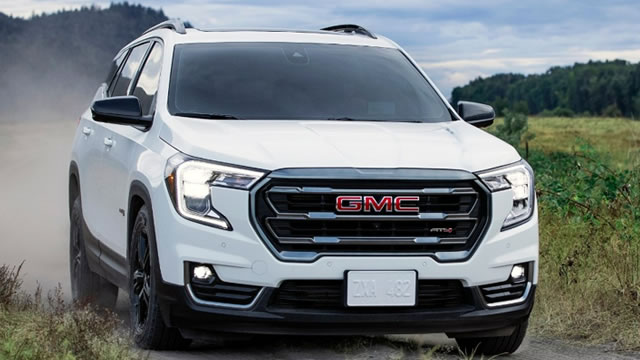
Buick Envision

Search documents
How America's EV retreat is increasing China's control of global markets
CNBC· 2026-02-06 14:19
Core Viewpoint The U.S. electric vehicle (EV) industry is facing a significant crisis as American automakers retreat from EV production, while Chinese manufacturers rapidly advance in the global market, raising concerns about the future competitiveness of U.S. companies in the automotive sector. Group 1: U.S. Automakers' Challenges - Stellantis announced a $26 billion charge due to a major business overhaul, including a reduction in EV production, leading to a stock drop of over 20% [2] - U.S. automakers like General Motors and Ford have lost billions on EVs and are shifting focus back to larger gas-powered vehicles due to the loss of federal tax credits and weak consumer demand [3] - Tesla has been surpassed by BYD in EV sales, indicating a decline in its market share and appeal, particularly in Europe [4] Group 2: Chinese Automakers' Growth - Chinese automakers have increased their global market share from less than 3% to an estimated 11.1% from 2019 to 2025, while U.S. automakers' share has dropped from 21.4% to 15.7% [12] - The global market share of Chinese brands has surged nearly 70% in five years, with significant growth in EV sales, which increased from approximately 572,300 in 2020 to 4.95 million in 2025 [5][11] - Chinese EV sales outside of China have also seen a remarkable increase of over 1,300%, from less than 33,000 to more than 474,000 [11] Group 3: Market Dynamics and Future Outlook - The U.S. automotive industry, which constitutes about 5% of the country's GDP, is concerned about the long-term implications of Chinese competition, especially as Chinese brands expand into markets traditionally dominated by U.S. automakers [6] - Experts highlight that the combination of government support, vertically integrated supply chains, and rapid execution in China poses an existential threat to traditional U.S. automakers [8] - GlobalData forecasts that Chinese EV sales will continue to grow, reaching approximately 6.5 million units by 2030 and nearly 8.5 million by 2035 [16] Group 4: Strategic Responses from U.S. Automakers - GM is adjusting its EV strategy to align with natural demand rather than regulatory pressures, while Ford is pivoting towards smaller, more affordable electric models to compete with Chinese manufacturers [22][24] - The Alliance for Automotive Innovation is advocating for protective measures against Chinese government-backed auto manufacturers to maintain competitiveness in the U.S. market [19] - The U.S. EV market saw a peak of 10.3% in September, but demand has since plummeted to an estimated 5.2% in the fourth quarter [21]


General Motors (NYSE:GM) Maintains Strong Position Amid Strategic Shifts
Financial Modeling Prep· 2026-01-23 17:00
Core Viewpoint - General Motors (GM) is undergoing strategic changes in its production and has received a positive outlook from Barclays, which maintains an "Overweight" rating and raises the price target for GM stock. Group 1: Company Performance and Stock Information - GM's stock is currently priced at $81.14, reflecting a slight increase of 0.26% from the previous session, with a trading range today between $80.76 and $82.28 [4] - Over the past year, GM's stock has fluctuated between a high of $85.18 and a low of $41.60, with a market capitalization of approximately $75.69 billion [4] - Barclays has raised its price target for GM from $85 to $100, indicating confidence in the company's future performance [1][5] Group 2: Strategic Changes in Production - GM is shifting vehicle production from China and Mexico to its Kansas factory, which will result in the end of Chevrolet Bolt EV production at the Fairfax Assembly Plant [2][5] - The decision to relocate production is influenced by economic and political factors, including tariff policies and the conclusion of the federal EV tax credit, which have increased production costs in China and Mexico [2] - The 2027 Chevy Bolt EV, priced at $29,990, is one of the most affordable electric vehicles in the U.S., but its production is expected to cease in about 18 months [3][5] Group 3: Future Manufacturing Plans - GM plans to produce the next-generation Buick Envision at the Kansas facility, indicating a shift in its manufacturing strategy to adapt to market conditions and consumer preferences [3]
GM To End Production Of Its Most Affordable EV, Move Buick From China To US: Report - General Motors (NYSE:GM)
Benzinga· 2026-01-23 05:29
Group 1 - General Motors Co. will end production of the Chevrolet Bolt EV, its most affordable electric vehicle, and shift Buick production from China to Kansas [1][3] - The production of the gas-powered Chevrolet Equinox will also be moved from Mexico to Fairfax, Kansas, with plans for the Equinox to be produced there by mid-2027 [2][3] - The company has recently relocated to a new headquarters in Detroit, which is expected to enhance collaboration among teams [4] Group 2 - CEO Mary Barra reaffirmed GM's commitment to electric vehicles despite laying off over 3,400 workers and incurring a $6 billion charge related to EVs, in addition to a previously reported $1.6 billion charge [5] - GM's stock price increased by 0.26% to $81.14 at market close and saw a slight rise to $81.15 in after-hours trading [6]
GM to end Chevy Bolt EV production next year, move China-made Buick to U.S. factory
TechCrunch· 2026-01-22 23:55
Core Insights - General Motors is shifting vehicle production from China and Mexico to a factory in Kansas, ending the production of the Chevrolet Bolt EV at the Fairfax Assembly Plant [1][4] - The economic and political landscape, influenced by the Trump administration's tariff policies and the cessation of the federal EV tax credit, has increased production costs for vehicles made in China and Mexico [2] - The production of the 2027 Chevy Bolt EV is expected to conclude in approximately 18 months, with its price set at $29,990, making it one of the most affordable EVs in the U.S. market [3] Production Changes - The next-generation Buick Envision will be produced at the Kansas facility starting in 2028, while the gas-powered Chevrolet Equinox will transition from Mexico to Kansas by mid-2027 [4] - GM has indicated that the Bolt will have a limited production run, with plans already in place for the Equinox to replace it at the Fairfax plant [5] Future Investments - GM has committed to future investments in the Fairfax Assembly Plant for the development of new affordable EVs, although the timeline for these investments remains uncertain [5]