Car loan

Search documents
What is interest and how does it work?
Yahoo Finance· 2026-03-09 17:27
Group 1 - Interest represents the cost of borrowing money or the reward for saving or investing, depending on the transaction side [2] - Borrowers pay interest as a percentage of the loan amount, known as the interest rate, while investors receive interest in the form of an annual percentage yield (APY) [2][3] - Understanding interest is crucial for making informed financial decisions, including loans, credit cards, and savings accounts [4] Group 2 - When borrowing, the principal amount must be repaid along with interest, which is typically an annual percentage of the principal [5] - For example, borrowing $10,000 at a 10% interest rate over five years results in approximately $2,748.23 in interest paid over the loan's life [6] - It is advisable to compare annual percentage rates (APRs) among lenders, as APR includes both interest rates and additional fees, providing a clearer comparison of total costs [7] Group 3 - Interest can be charged on borrowed money or earned on savings products like high-yield savings accounts, money market accounts, or certificates of deposit [8] - Borrowing through credit cards or loans incurs interest charges, while savings accounts yield interest for the depositor [8]
Her Husband Refinanced Their Car And Now They're Stuck With A Terrible APR. 'The Dealership Will Always Be Happy To Refinance At 25% APR'
Yahoo Finance· 2026-02-09 14:16
Core Insights - A financial decision to refinance a car loan led to a significant increase in the annual percentage rate (APR) from 14% to 25%, creating a substantial financial burden for the family [3][4] - The family's total debt is approximately $70,000, which matches their annual income, indicating a precarious financial situation [6] - The couple's options for resolving their financial issues are limited due to lack of savings and poor credit, necessitating aggressive action to improve their financial standing [7] Group 1 - The refinancing of the car loan resulted in a new loan balance between $17,000 and $18,000, while the car's value is only about $7,200, leaving the family roughly $10,000 underwater [4] - The husband's attempt to secure a personal loan for $3,000 was denied due to poor credit, leading to the decision to refinance the car instead [3] - Cathy was not involved in the refinancing decision, which highlights a lack of communication in financial decision-making within the family [4][5] Group 2 - The family's income is primarily from the husband's job as a garbage truck driver, earning about $70,000 annually, while Cathy stays home to homeschool their children [6] - With no savings and only one vehicle, the family's financial options are severely restricted, making it difficult to refinance through a credit union [6][7] - Experts suggest that the husband should seek ways to generate additional income to address the financial shortfall of $18,000 [7]
'That's insanity': Ramsey blows his top over $80K car debt cosigned by grandma, and issues warning about predatory loans
Yahoo Finance· 2026-01-30 18:00
Core Insights - A 24-year-old caller named Noel from San Antonio, Texas, revealed he has a car loan payment of $1,200 a month and owes $80,000 on the loan, raising concerns about his financial situation and ability to buy a home [1][3] - Financial experts Dave Ramsey and Rachel Cruze advised Noel to pay off or sell the car before considering home ownership, highlighting the unsustainable nature of his current debt [2][4] - The situation was exacerbated by family pressure, as Noel's decision to take on the loan was influenced by his parents and involved his grandmother cosigning, which puts her at financial risk [5][6] Financial Analysis - Noel's annual income is $60,000, which raises questions about how he secured such a large auto loan given his financial profile [3] - The caller's previous car was $30,000 underwater, indicating a significant financial misstep that contributed to his current debt situation [4] - Ramsey emphasized the dangers of cosigning loans, particularly for family members, as it can lead to financial entrapment for those who may not be financially responsible [6]
The ‘6-Year Car Loan Trap’: Why It Quietly Costs Drivers Thousands
Yahoo Finance· 2026-01-27 11:50
Core Insights - Extending the duration of a car loan may lower monthly payments but introduces significant financial drawbacks Group 1: Financial Implications of Longer Loans - Borrowers may overspend due to lenders offering higher loan amounts for longer terms, leading to potential financial strain [2] - Over the life of the loan, borrowers will pay significantly more in interest; for example, a $30,000 loan at 8% interest would cost $5,155 in interest over four years, $6,498 over five years, and $7,872 over six years, resulting in an additional $2,717 in interest for the six-year option [3] - Longer loans often come with higher interest rates, further increasing the total cost of borrowing [4] Group 2: Depreciation and Asset Value - Cars depreciate quickly, and extending the loan term increases the risk of being upside-down on the debt, meaning the borrower owes more than the car's worth [4][5] - This situation can lead to financial difficulties if the car needs to be sold or if it is totaled in an accident, as insurance may not cover the outstanding loan amount [5] Group 3: Long-Term Financial Health - A prolonged debt horizon can lead to "forever debt," where borrowers remain in debt for extended periods, increasing maintenance and repair costs for older vehicles [6] - Ongoing monthly payments from extended loans can limit access to other forms of credit, such as home mortgages, due to higher existing debt levels [7]
3 Underrated Tips For Paying Off Debt In 2026, According to Experts
Yahoo Finance· 2026-01-19 12:58
Core Insights - The article emphasizes the importance of understanding different types of debt and suggests strategies for paying it off effectively in 2026 Group 1: Understanding Debt - Not all debt is equal; categorizing debt into "less ideal" and "necessary" helps in deciding repayment strategies [2] - "Less ideal debt" includes loans for depreciating assets or high-interest debt, while "necessary debt" pertains to loans for appreciating assets or future income [2] Group 2: Repayment Strategies - Credit card debt should be prioritized for repayment due to its high interest and non-deductibility at tax time [3] - The snowball method, which focuses on paying off the smallest debts first, can be motivating for some individuals [3] - The avalanche method, which targets the highest interest rates first, is recommended for those looking to minimize interest payments [4] Group 3: Tax Considerations - It is crucial to consider the tax implications of debt; some interest is tax-deductible while others, like credit card interest, are not [5] - For example, mortgage interest can be deducted if itemized, up to $750,000 in mortgage debt [5] - Evaluating balance transfer cards involves weighing fees against potential interest savings [6]
'We End Up Going From Crisis To Crisis,' Ramsey Says As 36-Year-Old With 2 Kids Juggles $3.2K Monthly Income, $1.9K Bills And A $16K Car
Yahoo Finance· 2026-01-18 14:16
Financial Situation Overview - A single mother from Lexington, Kentucky, named Charlotte, struggles financially despite working two jobs, earning approximately $3,200 monthly while managing inconsistent child support [1][2] - Monthly debt payments total around $1,900, which includes a $560 mortgage, indicating a tight financial margin [3] Debt Breakdown - Charlotte's debts include $16,000 for a car loan, $16,000 in student loans, $6,000 in medical bills, $3,200 for braces, $1,600 from a cruise, $700 for tires, and $200 for a mattress [4] - The accumulation of these debts has made it challenging for her to stay current on bills and start an emergency fund [2][4] Financial Advice and Recommendations - Personal finance expert Dave Ramsey emphasized that Charlotte's financial situation requires major changes rather than minor adjustments, suggesting that selling her car may be necessary due to affordability issues [6] - Ramsey pointed out that Charlotte has been living on the financial edge for a long time, which has contributed to her current stress [5]
Taxpayers could hit a dead end with car loan interest deduction
Yahoo Finance· 2026-01-08 21:13
Core Points - The new tax deduction for car loan interest applies only to new cars assembled in the United States, excluding leases and used car loans [10][12][14] - The deduction allows taxpayers to deduct up to $10,000 in car loan interest, potentially resulting in tax savings ranging from $300 to $900 for many new car buyers [12][13] - Higher-income households may face limitations on the deduction, with phase-out thresholds set at $150,000 for single filers and $250,000 for joint filers [17][18] Group 1: Tax Deduction Eligibility - The car loan interest deduction is only available for loans on new cars with final assembly in the U.S., and it does not apply to leases or used car loans [10][14] - Taxpayers must include the Vehicle Identification Number (VIN) on Schedule 1-A to claim the deduction, and the VIN must be accurate [27][29] - The deduction is available for tax years 2025 through 2028, but it may not cover the entire duration of a car loan [14][16] Group 2: Leasing and Financing Trends - Leasing is particularly popular in states like Michigan, where nearly 53% of new vehicles sold in Q3 2025 were leased, compared to 5% or fewer in states like Alaska and Arkansas [3][4] - Many consumers are trading in vehicles with negative equity, which complicates the deduction process as interest on negative equity rolled into new loans is not deductible [20][22] - The average amount owed on upside-down loans reached a record $6,905 in Q3 2025, indicating a growing trend of negative equity among new car buyers [23] Group 3: Documentation and Compliance - Taxpayers should prepare documentation early, including original loan agreements and interest statements, to facilitate claiming the deduction [26][34] - Lenders are expected to provide a vehicle loan interest statement (1098-VLI) starting in 2026, but for 2025, this is optional [32][33] - Proof of personal use of the vehicle is required to claim the deduction, with more than 50% of the expected use needing to be personal [36]
Bought a new car last year? Here's how to qualify for a car loan interest deduction.
Yahoo Finance· 2026-01-08 14:00
Core Points - The One Big Beautiful Bill Act introduces a tax deduction for car loan interest, allowing eligible taxpayers to deduct up to $10,000 from their federal taxes for tax years 2025 through 2028 [2][14] - The deduction is an above-the-line deduction, meaning it can be claimed regardless of whether the taxpayer itemizes deductions or takes the standard deduction [2] Eligibility Criteria - To qualify for the full deduction, single filers must have a taxable income not exceeding $100,000, while married couples filing jointly must not exceed $200,000; the deduction phases out for incomes above these thresholds [3] - The vehicle must be for personal use, purchased new after December 31, 2024, and have its final assembly location in the U.S. [7][16] Calculation of Deduction - The deduction is based on the interest paid on the car loan, not the total loan payment; for example, if a taxpayer paid $2,418 in interest, this amount would reduce their taxable income, not their tax bill directly [8][10] - Taxpayers must file Schedule 1-A to report the deduction, including the amount of interest paid and the vehicle's VIN [12][15] Additional Information - Electric vehicles qualify for the deduction if they meet the same criteria as other vehicles [16] - Business-related car loan interest deductions are also available for self-employed individuals or business owners, following existing rules prior to the OBBB [18][19]
Are lower loan interest rates coming in 2026? Here’s what experts expect.
Yahoo Finance· 2025-12-22 15:13
Core Insights - Experts predict a slight decrease in loan rates for 2026, but not a significant drop, influenced by a slowing economy and expected Federal Reserve rate cuts [3][4][5] Interest Rate Trends - The Federal Reserve reduced rates three times in 2025, with the current federal funds rate between 3.5% and 3.75%, and a median forecast of 3.4% by the end of 2026 [4] - Personal loan rates, currently averaging 11.14%, may become more attractive if the Fed reduces rates further in 2026 [5][6] - Auto loan rates are less directly impacted by the federal funds rate, with only a minor decrease observed since September 2024 [7][8] - Private and refinanced student loan rates could see a small dip, while federal student loan rates are set by Congress and may remain high unless Treasury yields drop [9][10][11] Factors Influencing Interest Rates - Macro factors such as Federal Reserve policies, inflation, economic growth, and unemployment rates significantly affect interest rates [12][13][14] - Individual factors like credit score, income, debt-to-income ratio, and loan type also play a crucial role in determining the interest rates offered to borrowers [15][16] Recommendations for Borrowers - Borrowers should monitor interest rate trends and consider locking in competitive rates rather than waiting for significant decreases [18][19] - Improving credit scores and reducing debt-to-income ratios can help secure better loan terms [19] - Shopping around with multiple lenders and comparing repayment terms is essential for finding the best rates [19]
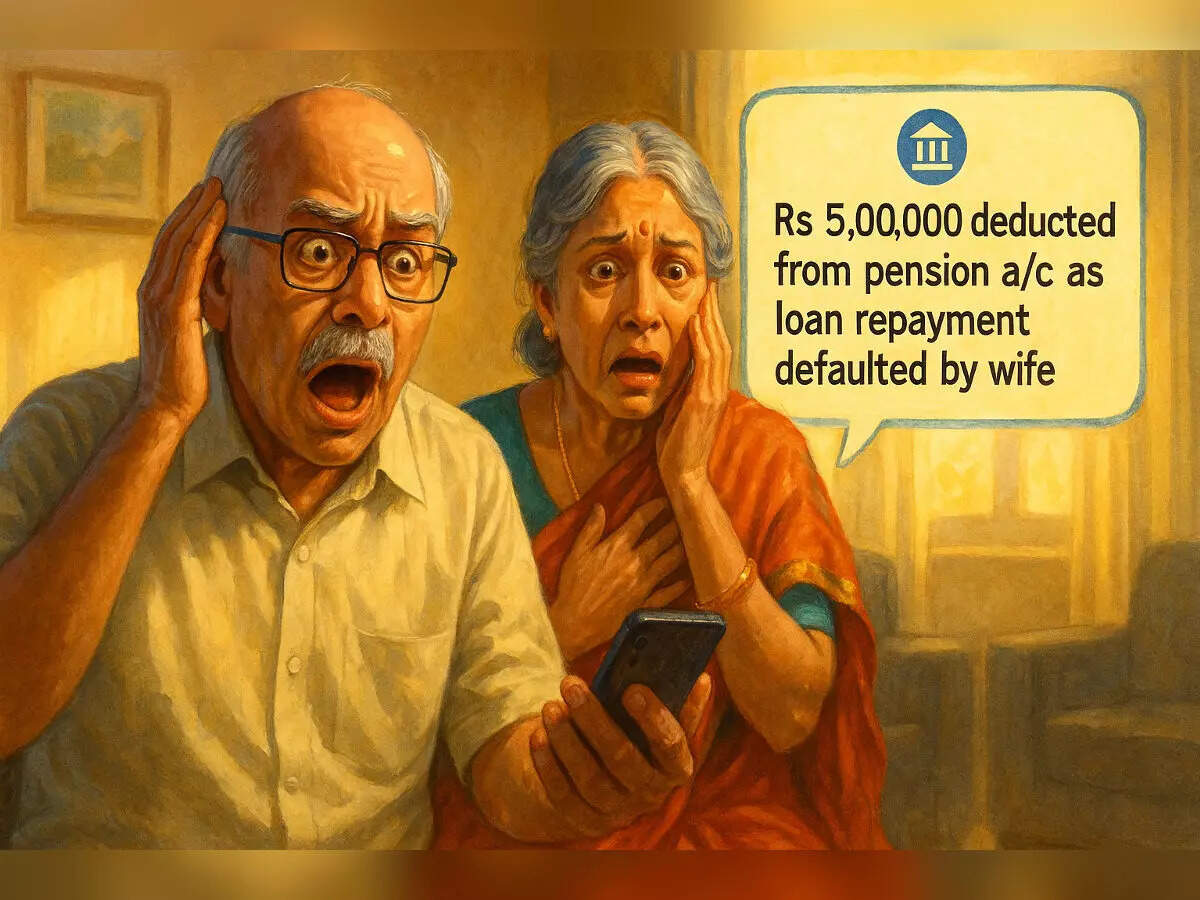
Wife misses loan payments, bank recovers dues from husband's pension kept in joint bank a/c; Odisha HC tells bank to return money
The Economic Times· 2025-11-18 05:50
Core Viewpoint - The Odisha High Court ruled that a bank cannot unilaterally deduct money from a pensioner's account to recover dues from a borrower's default, emphasizing the protection of pension funds as a fundamental right under Article 21 of the Constitution of India [7][24][27]. Summary by Sections Case Background - Mr. Mallick, a retired employee, acted as a guarantor for his wife's loans totaling Rs 21.35 lakh, which included two transport vehicle loans and a car loan [2][3]. - The loans defaulted, leading to their classification as Non-Performing Assets (NPA) on November 7, 2018 [3]. Bank's Actions - The bank debited Rs 5 lakh from the joint account of Mr. Mallick and his wife without prior notice, claiming it was to settle the defaulted loans [4][5]. - The bank argued that the joint account was not solely a pension account and that Mr. Mallick had been withdrawing his pension regularly [6]. Court's Findings - The court highlighted that pension funds are protected under various legal provisions, including Section 60(1)(g) of the Code of Civil Procedure, which exempts government pensions from attachment [9][27]. - The court ruled that the bank's action of debiting the account without a court order or prior notice violated the principle of due process [13][27]. Legal Precedents - The judgement referenced previous cases, including Radhey Shyam Gupta v. Punjab National Bank and State of Jharkhand v. Jitendra Kumar Srivastava, reinforcing that pension is considered property and cannot be taken without legal authority [10][12][27]. - The court noted that pension funds retain their protected status even when deposited in a joint account, and contractual agreements cannot waive this exemption [14][17]. Conclusion and Directives - The Odisha High Court ordered the bank to reverse the Rs 5 lakh deduction within four weeks and prohibited any future deductions from Mr. Mallick's pension without due process [24][28]. - The judgement clarified that while the bank retains the right to recover outstanding dues, it must do so through lawful means and cannot directly appropriate pension funds [24][25].