Children's clothing

Search documents
Citi Trends(CTRN) - 2026 Q4 - Earnings Call Transcript
2026-03-17 14:02
Financial Data and Key Metrics Changes - In Q4 2025, comparable store sales grew by 8.9%, with a two-year growth of 15.3%, marking the sixth consecutive quarter of positive comparable sales [4][19] - EBITDA for Q4 reached $11.9 million, a 67% increase year-over-year, while total sales increased by 9.1% to $230.4 million [4][19] - For the full year 2025, net sales totaled $820 million, with comparable store sales increasing by 9.7% and 13.1% on a two-year basis [10][21] - Gross margin improved by 210 basis points to 39.6% for the year, driven by fewer markdowns and lower shrink [22] Business Line Data and Key Metrics Changes - The Children's category posted high single-digit growth, becoming a cornerstone of the company [6] - Men's category also showed solid growth, with a balanced approach to product offerings [7] - Women's footwear began to show progress, indicating potential for future growth in the broader footwear category [7] Market Data and Key Metrics Changes - Customer traffic was a significant driver of growth, with transaction counts increasing in the mid- to upper-single digits [4] - The company reported a strong performance in the Family Basics and sleepwear categories, contributing to overall sales growth [8] Company Strategy and Development Direction - The company executed a three-phase strategy framework: repair, execute, and optimize, focusing on restoring business fundamentals and improving operational disciplines [9] - A clear focus on serving Black customers, leveraging neighborhood-based locations, and enhancing merchandising strategies are key differentiators [11][12] - The company plans to open approximately 25 new stores in 2026 and remodel 50 locations, with a disciplined approach to growth [27][36] Management's Comments on Operating Environment and Future Outlook - Management expressed confidence in the company's long-term growth trajectory, supported by a clear strategic direction and operational improvements [3][29] - The outlook for fiscal 2026 includes total sales growth of 6%-8% and comparable same-store sales growth of 5%-7% [25][26] - Management emphasized the importance of consistent execution and the potential for significant profit growth in 2026 [30][34] Other Important Information - The company ended the year with a healthy balance sheet, including $66 million in cash and no debt [23] - A new loyalty program is currently in testing, with plans for a full rollout in the latter half of the year [59] Q&A Session Summary Question: Can you discuss the impact of weather on sales in January and February? - Management acknowledged that January weather negatively impacted sales but noted a recovery in February, aided by tax refunds [42][43] Question: What is the current status of closeouts as a percentage of sales? - Closeouts vary by category, with shoes having a high penetration, and management sees potential for growth in this area [44][45] Question: Can you provide more details on potential acquisitions? - Management is in early stages of exploring synergistic acquisition opportunities but emphasized a selective approach [46][47] Question: How do you anticipate comp trends for Q1? - Management expects high single-digit growth for Q1, considering various factors including tax refunds [52] Question: What is the expected cadence for new store openings? - The company plans to open stores in three strategic time periods throughout the year to align with peak shopping seasons [55][56] Question: What is the status of the loyalty program? - The loyalty program is in testing, with plans to refine messaging before a full rollout later in the year [58][60]

Carter’s Plans to Lay Off 15% of Staff as a Crutch Against Impact of Tariffs
Yahoo Finance· 2025-10-29 21:19
Core Insights - Carter's is experiencing significant turmoil due to tariffs, with expectations of continued challenges into 2026 [1] - The company reported a drastic decline in net income, down approximately 80% year-on-year to $11.6 million for Q3 2024, compared to $58.3 million in 2023 [1] Cost-Saving Measures - As part of its transformation under CEO Douglas Palladini, Carter's plans to save about $45 million annually starting in 2026, primarily by eliminating 15% of corporate roles [2] - Approximately 300 employees will be laid off by the end of the year, expected to save the company $35 million annually [3] Store Closures - Carter's plans to close 150 stores across North America by 2026, increasing from an earlier plan to close 100 stores, which accounted for about $110 million in revenue over the past year [4] - The company will halt further store expansion as part of its cost-saving strategy [4] Long-Term Strategy - CEO Palladini emphasized that while store closures will lead to short-term revenue loss, there will be long-term benefits through digital platforms and existing stores [5] - Carter's aims to reduce its overall product assortment by 20 to 30% to enhance agility in responding to market challenges [6]

Children's clothing retailer Carter's closing 150 stores, cutting 300 jobs
Yahoo Finance· 2025-10-28 21:41
Core Insights - Carter's, a children's clothing retailer, plans to close 150 stores and cut 300 jobs over the next three years due to low margins and increased costs driven by tariffs [1][2][4] Store Closures and Job Cuts - The company will close approximately 100 stores by 2026, primarily as leases expire, and will reduce office-based roles by 15%, resulting in annual savings of $35 million [1][5][6] - The decision to suspend new openings of U.S. locations and reduce product offerings by 20-30% is part of the strategy to enhance operational efficiency [1][6] Financial Impact of Tariffs - Higher tariffs have significantly impacted the company's margins, with estimates indicating a net impact of $25 million to $35 million on fourth-quarter earnings [2][4] - Gross margins were affected by $20 million in Q3 2025, with expectations of a $40 million impact in Q4 [4][6] Strategic Focus - The CEO emphasized the need to enhance a performance-driven culture, aiming for greater ownership and accountability among fewer employees [5][6] - Due to ongoing uncertainties regarding tariffs, the company has opted not to provide sales and earnings guidance for 2025 [6]
Cheap For A Reason? Why Investors Are Avoiding Gap
Forbes· 2025-07-15 12:35
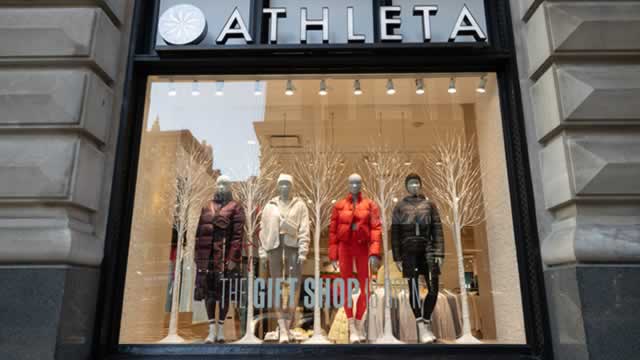
Core Viewpoint - Gap Inc. stock is facing investor avoidance despite a strong Q1 performance due to underlying issues such as tariff concerns, stagnant guidance, and declining consumer confidence [2][3][4] Financial Performance - In Q1 2025, Gap reported a revenue increase of 2.2% year-over-year to $3.46 billion and earnings per share of $0.51, surpassing expectations [5] - Gross margin improved to 41.8% and operating margin to 7.7%, resulting in a net income increase of 22% to $193 million [5] - Comparable sales rose by 5% for the Gap brand and 3% for Old Navy, while Banana Republic remained flat and Athleta's sales dropped by about 8% [5] - Online sales accounted for 39% of total revenue, increasing by 6% [5] Tariff and Cost Concerns - Gap disclosed full-year gross tariff costs between $250 million and $300 million, with $100 million to $150 million impacting the bottom line [3] - Recent court decisions reinstating Trump-era tariffs have heightened these concerns [3] Consumer Confidence - The U.S. Consumer Confidence Index fell to 93.0 in June from 98.4 in May, significantly lower than the pre-pandemic level of 132.6 in February 2020 [4] - A decrease in the number of Americans expecting job market improvements (15.4%, down from 18.6%) and business conditions (16.7% vs. 19.9%) indicates a weakening spending environment [4] Valuation Metrics - Gap is trading at a price-to-sales ratio of 0.6, price-to-free cash flow of 9.9, and price-to-earnings of 9.4, all significantly lower than the S&P 500 [6] - These valuation metrics suggest a potential bargain but also reflect investor skepticism regarding the company's fundamentals [6] Growth and Profitability - Over the last three years, Gap's revenue has contracted at an average annual rate of 2.1%, contrasting with the S&P 500's 5.5% increase [7] - The operating margin stands at 7.7% and net margin at 5.8%, both trailing behind industry peers [7] Balance Sheet Analysis - Gap has $5.5 billion in debt against an $8 billion market cap, resulting in a debt-to-equity ratio of 63.4%, which is over three times the S&P 500 average [8] - The company maintains a healthy cash-to-assets ratio of 19.2%, providing a buffer against cost pressures [8] Conclusion - Despite appearing inexpensive, the stock's valuation reflects valid concerns regarding tariff risks, lukewarm guidance, and a deteriorating consumer environment [9]