Container shipping service

Search documents
Hapag-Lloyd profits tumbled in 2025 despite carrying more cargo
Yahoo Finance· 2026-03-26 17:39
Core Insights - Hapag-Lloyd experienced solid growth in container volumes in 2025, but profits declined significantly due to lower ocean shipping rates and increased costs [1][2] Financial Performance - Liner shipping revenues rose to $20.6 billion in 2025 from $20.3 billion in 2024, while EBITDA fell to $3.5 billion from $4.9 billion, and EBIT dropped to $1 billion from $2.7 billion [2] - The average freight rate decreased by 8% to $1,376 per TEU, attributed to growing capacity and trade imbalances [3] Operational Highlights - Container volumes increased by 8% to 13.5 million TEUs, supported by a partnership with Maersk on the Gemini service [3] - Cost savings related to the Gemini service began to materialize in the second half of 2025 and are expected to be fully realized in 2026 [4] Future Outlook - The company forecasts pre-tax earnings for 2026 to range from -$1.5 billion to $500 million, indicating significant uncertainty due to volatile freight rates and geopolitical conflicts [4] - CEO Rolf Habben Jansen noted that 2025 was a strong year for Hapag-Lloyd, with volume growth and high customer satisfaction, while emphasizing investments in fleet efficiency and modernization [4]
Maersk Slashes 1,000 Staff as Slumping Freight Rates Sink Earnings
Yahoo Finance· 2026-02-05 18:51
Core Insights - Maersk is reducing its workforce by approximately 1,000 jobs, which is nearly 17 percent of its corporate positions, in response to anticipated declines in freight rates and potential impacts from a broader return to the Red Sea [1] - The company reported a total revenue decline of 8.7 percent to $13.3 billion for the fourth quarter, with net losses of $27 million, primarily due to a 23 percent year-over-year drop in average freight rates [2] - Maersk's CEO indicated expectations for adverse developments in container shipping rates through 2026, attributing the decline to trade volatility and increasing supply overcapacity [3] Financial Performance - The decline in average freight rates to $2,046 per 40-foot container had a significant impact, contributing to a 94 percent decrease in pre-tax profit to $118 million, equating to a $2.1 billion loss in revenue [2] - The company's headcount reduction is expected to save $180 million annually, representing less than 1 percent of its total workforce of over 107,000 employees [1] Market Trends - The Drewry's World Container Index reported a 7 percent decrease in ocean spot freight rates to $1,959 per 40-foot container, with expectations for further declines due to weak demand ahead of the Lunar New Year holiday in China [4] - Maersk is adjusting its shipping routes, including a return to the Suez Canal, which is projected to shorten transit times but may also exert downward pressure on freight rates [5][6] Future Outlook - The company’s guidance for 2026 includes various scenarios regarding the return to the Red Sea, with potential implications for freight rates depending on the speed and scale of the return [6]
Demand, capacity “don’t stack up” on U.S. container trades
Yahoo Finance· 2025-12-12 16:03
Core Insights - The ongoing supply and demand imbalance is leading to a decline in container prices on U.S. trade routes as ocean carriers increase ship deployment in a soft market [1] Pricing Trends - Spot rates from Asia to the U.S. West Coast decreased by 2%, or $33 per forty-foot equivalent unit (FEU), to $1,861 per FEU as of December 11 [1] - Month-on-month rates have dropped approximately 22%, or $511 per FEU, from November 11, indicating a significant loss of pricing power for carriers [2] - On the Asia-U.S. East Coast route, weekly rates fell by 1.5%, or $41 per FEU, to $2,709 per FEU, with a month-on-month decrease of about 9%, or $257 per FEU [2] Supply and Demand Dynamics - The fundamentals of supply and demand for major fronthaul trades are misaligned, necessitating adjustments in the market [3] - Carriers are expected to attempt further rate increases in mid-December, but these may be short-lived due to increasing supply pressures [4] - Capacity for Asia-U.S. West Coast increased by 1.7%, or 5,300 twenty-foot equivalent units (TEUs), with no signs of supply reduction [4] Capacity Insights - Month-on-month capacity saw a slight increase of 0.4%, or 1,300 TEU, benefiting shippers amid lower rates [5] - On Asia-U.S. East Coast services, capacity rose by 10% week-on-week to 17,400 TEU, with a month-on-month growth of 16% to 26,300 TEU [5] Regional Developments - There are signs of a gradual return of container ships to the Red Sea region, which may further exert downward pressure on rates, especially for trades from the Far East to the U.S. East Coast and Europe [6] - Analysts estimate that up to 2 million TEUs in annual capacity could return to the Red Sea-Suez Canal route following a transition period [6]
美线航运价格飙升!货代:“都在抢时间出货,未来还会涨”
21世纪经济报道· 2025-05-24 09:43
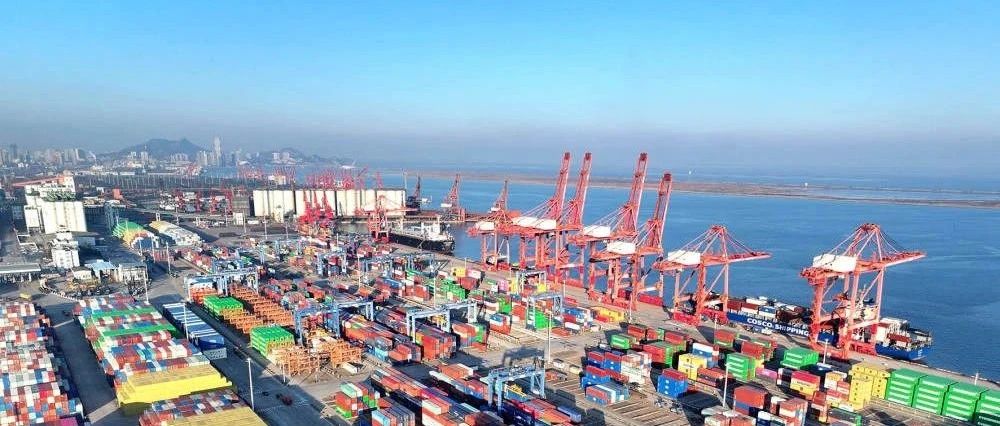
Core Viewpoint - The article discusses the rapid increase in shipping demand to the United States due to the recent suspension of tariffs, leading to a surge in shipping prices and a competitive rush among foreign trade companies to fulfill orders within a 90-day window [4][6][10]. Group 1: Shipping Demand and Price Surge - Following the announcement of tariff suspensions, shipping demand to the U.S. has significantly increased, with companies racing to fulfill previously paused orders [4][6]. - Shipping prices have risen sharply, with costs for a 40-foot container to the U.S. increasing by over $1,000, reaching approximately $4,000 for the West Coast and $5,000 for the East Coast [4][6]. - The Shanghai Shipping Exchange reported a decline in container shipping prices from February to April, but a notable recovery began after May 12, with spot rates for shipping from Shanghai to Los Angeles rising by 16% [5][6]. Group 2: Impact on Port Operations - The surge in shipping demand is expected to impact port operations, with major ports like Guangzhou and Ningbo responding to increased activity and anticipating a rise in throughput by late May to early June [10][12]. - In the first quarter, major ports such as Shanghai and Ningbo achieved container throughput exceeding 10 million TEUs, indicating robust trade activity [12]. - Ports are expanding their shipping routes, particularly towards Southeast Asia and Africa, as part of a strategy to mitigate risks from traditional markets like North America [2][12][14]. Group 3: Future Market Trends - Companies are focusing on developing new markets in Southeast Asia and Latin America to diversify their business and reduce reliance on North American markets, which currently account for about 15% of their foreign trade [2][14]. - The shipping industry anticipates continued price increases due to supply and demand dynamics, especially as peak shipping season approaches in the latter half of the year [7][8].