Electronics Components

Search documents
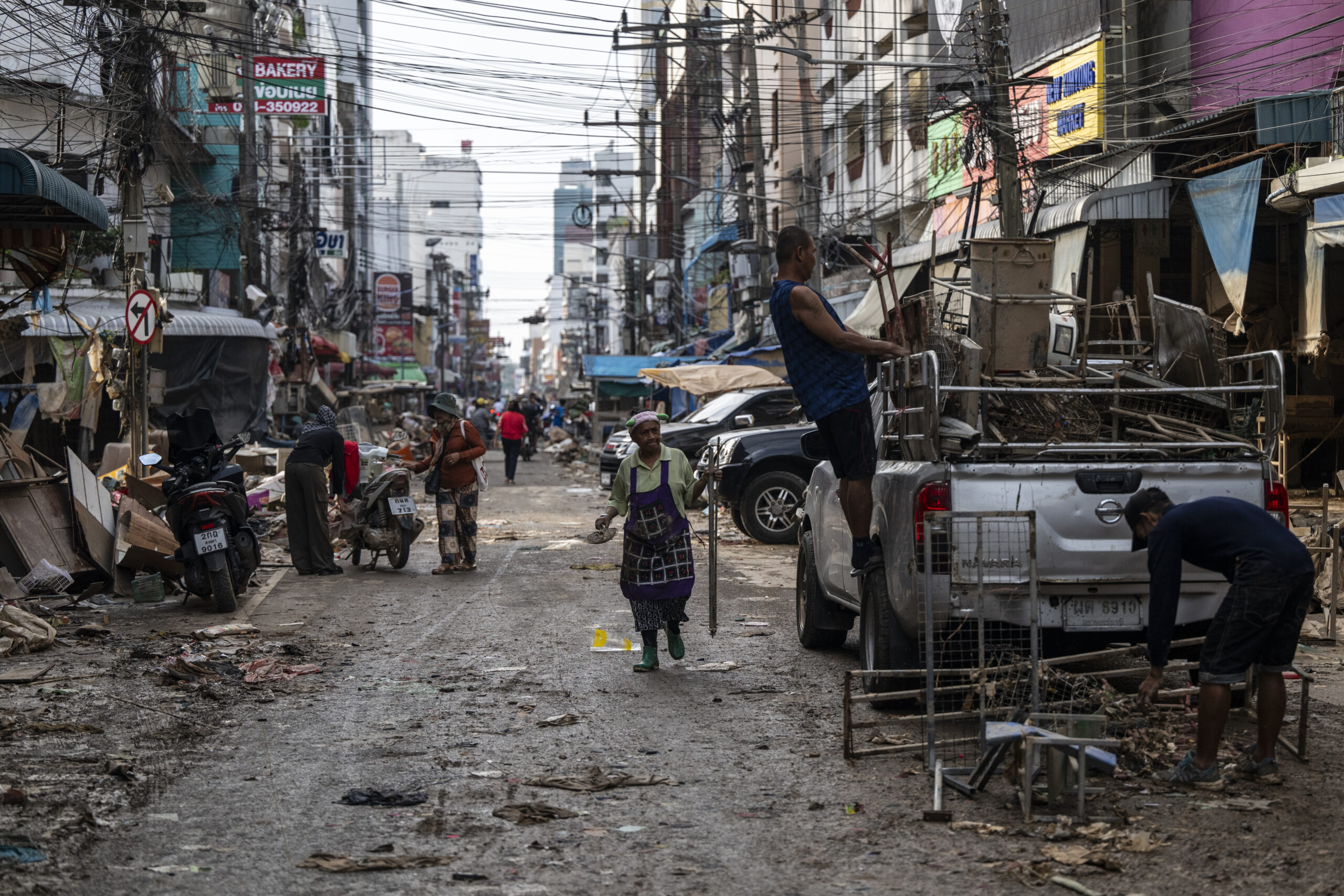
Losses top $20B in Asia floods as climate risks grow
Digital Insurance· 2025-12-04 17:51
Core Insights - The devastating floods in South and Southeast Asia have resulted in over 1,300 fatalities and at least $20 billion in economic losses, highlighting the increasing risks posed by climate change and extreme weather to the region's growing populations and economies [1][8]. Economic Impact - A series of three tropical cyclones coincided with the northeast monsoon, leading to unprecedented rainfall and widespread destruction from Sri Lanka to Indonesia, affecting homes, infrastructure, and agricultural output [2]. - The total economic losses from the recent floods are estimated at $20 billion, with last year's seasonal floods causing approximately $25 billion in losses across the Asia-Pacific region [8]. - Thailand's economy may face additional losses of up to $400 million per month due to paralyzed high-value exports, while Indonesia's losses are estimated at over $4 billion, accounting for 0.29% of its GDP [15][16]. Climate Change and Resilience - Climate change is identified as a significant factor exacerbating flooding in Southeast Asia, with research indicating that "compound disasters" are likely to occur more frequently, increasing the overall damage [3][4]. - The region has a high percentage of its population living in flood-prone areas, with 21% in Malaysia and around 20% in Indonesia, indicating a growing vulnerability as global warming accelerates [4][5]. - Despite the risks, progress in building climate resilience is lagging, as many Southeast Asian countries prioritize growth over disaster preparedness [6]. Infrastructure and Recovery - The recent floods have led to a significant pause in infrastructure projects in the Philippines due to a corruption scandal, impacting investor confidence and economic growth [7]. - Recovery efforts will require substantial fiscal outlays to strengthen infrastructure and build resilience, particularly for poorer economies facing difficult budgetary choices [12]. Sector-Specific Effects - The floods have caused delays in manufacturing growth in Vietnam, with storm damage estimated at $3.2 billion this year, nearing the record losses from Super Typhoon Yagi in 2024 [18]. - Coffee producers in Vietnam are still on track for higher production and exports despite the flooding, indicating some resilience in specific sectors [10].



Deadly Floods’ $20 Billion Toll Shows Asia’s Rising Climate Risk
Insurance Journal· 2025-12-04 06:44
Core Insights - The recent floods in South and Southeast Asia have resulted in over 1,300 fatalities and at least $20 billion in economic losses, highlighting the increasing risks posed by climate change and extreme weather events in the region [1][8] Economic Impact - A series of three tropical cyclones combined with the northeast monsoon have caused unprecedented rainfall and destruction across multiple countries, affecting homes, infrastructure, and agricultural output [2] - The estimated economic losses from last month's floods are based on government and analyst assessments, which may be revised as further damage assessments are conducted [8] - Thailand's economy could face additional losses of up to $400 million per month if flooding conditions persist, particularly affecting high-value exports like electronics and auto parts [15] - Indonesia has experienced losses exceeding $4 billion, accounting for approximately 0.29% of its GDP, due to damage to infrastructure and agricultural output [16] Climate Change and Resilience - Climate change is identified as a significant factor exacerbating flooding risks in Southeast Asia, with predictions of more frequent "compound disasters" in the future [4][19] - The region has a high percentage of its population living in flood-prone areas, with 21% in Malaysia and around 20% in Indonesia, indicating a growing vulnerability as global warming accelerates [5] - Despite the risks, many Southeast Asian countries are lagging in building climate resilience, often prioritizing economic growth over necessary adaptation efforts [6] Political and Social Factors - In the Philippines, a corruption scandal related to flood mitigation funding has led to a pause in infrastructure projects, negatively impacting investor confidence and economic growth [7] - The intersection of political issues and inadequate climate adaptation efforts is particularly acute in the Philippines, affecting overall disaster response and recovery [7][12] Industry Response - While the immediate impact on industrial output from the recent storms has been limited, the long-term effects on supply chains and manufacturing remain uncertain [10][11] - Vietnam's economy has incurred approximately $3.2 billion in losses due to storm damage this year, nearing the record losses from previous severe weather events [18]
Russia plans new tax on electronics to boost its defence capacity
Yahoo Finance· 2025-11-18 16:04
Core Points - Russia is introducing a new tax on electronics, primarily targeting imported consumer items, with an expected revenue of $2.7 billion to support the domestic electronics industry, including defense [1][2][4] - The new tax is part of broader fiscal measures, including VAT increases and taxes on small businesses, aimed at balancing the state budget amid high military spending and declining energy revenues [2][3] - The tax will be implemented in September 2026, with a focus on imported smartphones and notebooks, and will later extend to their components [3][4] Industry Implications - The electronics industry is deemed strategic for Russia, with import substitution being critical for maintaining the country's defense capabilities [3][4] - The lack of access to modern electronics has hindered Russia's competitiveness in artificial intelligence development, which relies heavily on advanced computing power [2] - The government plans to allocate tax proceeds to special funds dedicated to supporting domestic producers in the electronics sector [4]
OMNI-LITE INDUSTRIES REPORTS THIRD QUARTER AND YEAR-TO-DATE FISCAL 2025 RESULTS
Globenewswire· 2025-11-10 12:00
Core Insights - Omni-Lite Industries Canada Inc. reported a revenue of approximately US$4.0 million for Q3 fiscal 2025, marking a 7.0% increase year-over-year and a 16.8% increase quarter-over-quarter [3][8] - The adjusted EBITDA for the same period was approximately US$325,000, up from US$187,000 in Q3 fiscal 2024, driven by increased revenue and improved margins [4][9] - The company achieved bookings of US$5.5 million in Q3 2025, resulting in a historical backlog of US$7.1 million, with a book-to-bill ratio of 1.36 [5][8] Financial Performance - Revenue for Q3 2025 was US$4,041,000 compared to US$3,778,000 in Q3 2024, and year-to-date revenue reached US$10,807,000, down from US$12,385,000 in the previous year [9] - Adjusted EBITDA for the nine months ended September 30, 2025, was approximately US$828,000, compared to US$1,623,000 for the same period in 2024 [9] - Free cash flow for Q3 2025 was approximately US$116,000, with a year-to-date free cash flow of US$627,000, down from US$1,596,000 in the previous year [9] Management Commentary - The CEO expressed satisfaction with exceeding the US$4.0 million revenue mark and achieving strong bookings, particularly in the fastener and electronics sectors, while anticipating improved pricing from a renegotiated contract for jet engine components [6][8] - The company expects increased activity from its newly acquired eComp business and anticipates growth driven by electronic system modernization programs and Defense Logistics Agency requirements [6]


OMNI-LITE INDUSTRIES REPORTS THIRD QUARTER AND YEAR-TO-DATE FISCAL 2025 RESULTS
Globenewswire· 2025-11-10 12:00
Core Insights - Omni-Lite Industries Canada Inc. reported a revenue of approximately US$4.0 million for Q3 fiscal 2025, marking a 7.0% increase year-over-year and a 16.8% increase compared to the previous quarter [3][8] - The adjusted EBITDA for the same period was approximately US$325,000, up from US$187,000 in Q3 fiscal 2024, driven by increased revenue and improved margins [4][9] - The company achieved bookings of US$5.5 million in Q3 2025, resulting in a historical backlog of US$7.1 million, with a book-to-bill ratio of 1.36 [5][8] Financial Performance - Revenue for Q3 2025 was US$4.0 million, compared to US$3.8 million in Q3 2024 and US$10.8 million for the nine months ending September 30, 2025 [9] - Adjusted EBITDA for Q3 2025 was approximately US$325,000, compared to US$187,000 in Q3 2024, and for the nine months, it was approximately US$828,000 [9] - Free Cash Flow for Q3 2025 was approximately US$116,000, with a total cash balance of US$3.0 million, an increase of approximately US$416,000 from the previous year [5][9] Management Commentary - The CEO expressed satisfaction with exceeding the US$4.0 million revenue mark and achieving strong bookings, particularly in the fastener and electronics sectors [6] - The company anticipates benefits from a new long-term pricing agreement for jet engine components, which is expected to enhance future revenue [6] - There is an expectation for increased activity from the newly acquired eComp business, driven by electronic system modernization programs and Defense Logistics Agency requirements [6]