HASTE

Search documents
Rocket Lab Successfully Launches 85th Mission and First Dedicated Launch for European Space Agency
Globenewswire· 2026-03-28 10:39
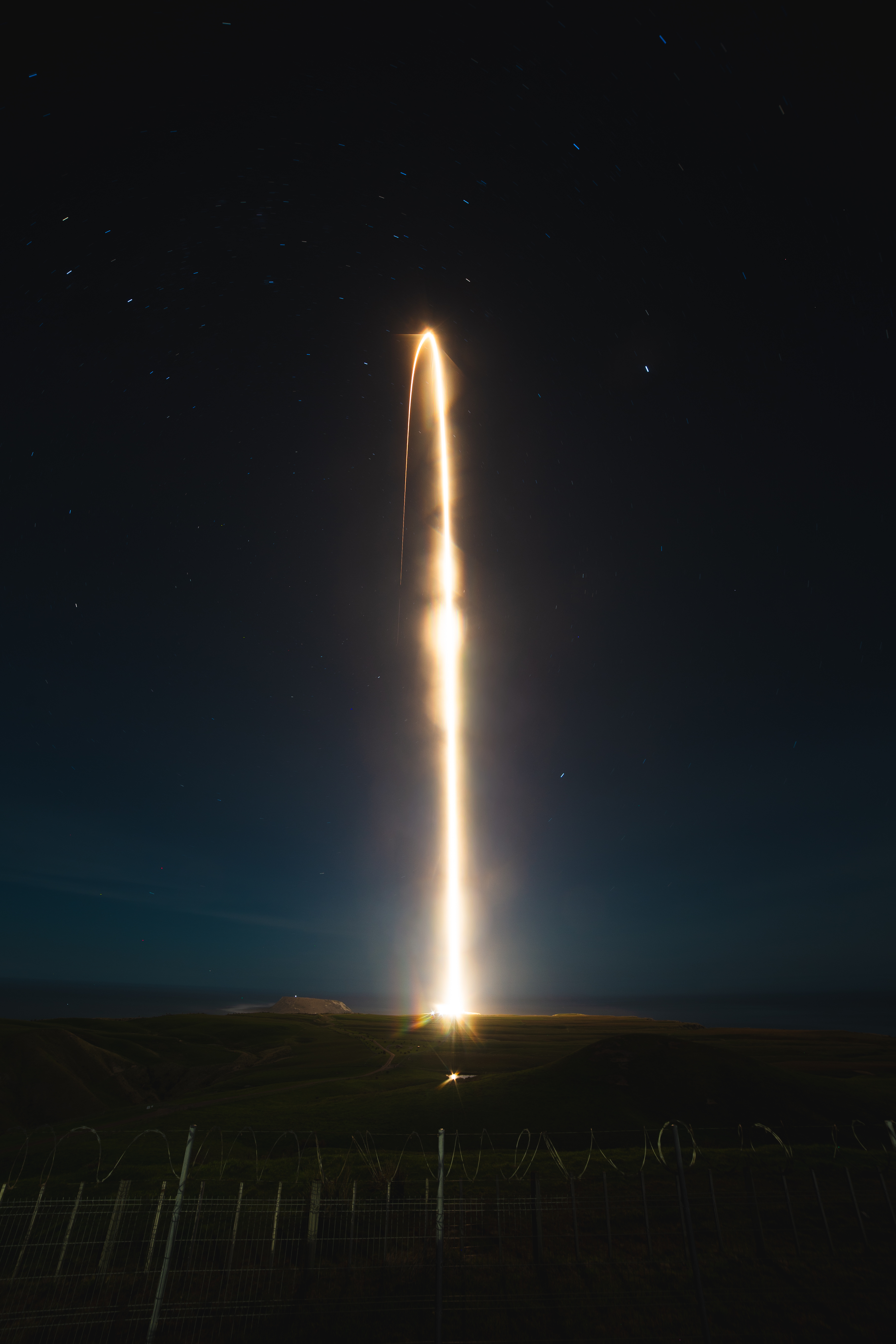
Rocket Lab Electron Launch For European Space Agency Rocket Lab Electron Launch For European Space Agency MAHIA, New Zealand, March 28, 2026 (GLOBE NEWSWIRE) -- Rocket Lab Corporation (Nasdaq: RKLB) (“Rocket Lab” or the “Company”), a global leader in launch services and space systems, today successfully completed its first dedicated launch for the European Space Agency (ESA), demonstrating Electron’s key and growing role in supporting space agency missions with repeatable and reliable commercial launch ...


Is Rocket Lab Corporation (RKLB) A Good Stock To Buy Now?
Yahoo Finance· 2026-03-21 20:12
Core Thesis - Rocket Lab Corporation (RKLB) is positioned as a leading vertically integrated space company, demonstrating strong operational execution and strategic positioning, making it a compelling investment opportunity [2][5]. Financial Performance - In Q4 2025, Rocket Lab reported revenue of $179.7 million, reflecting a year-over-year increase of 35.7% and a sequential increase of 15.8%, driven by a 79% rise in Launch Services revenue and nearly 30% growth in Space Systems [2][3]. - Full-year 2025 revenue reached $601.8 million, with GAAP gross margins at 34.4% and non-GAAP gross margins at 39.7%, supported by improved fixed-cost absorption and operational leverage [3]. - The company's backlog reached approximately $1.85 billion, with 37% expected to convert into revenue within 12 months, bolstered by a significant $816 million SDA Tranche III award [3]. Operational Highlights - Rocket Lab's Electron and HASTE launches are occurring at an unprecedented rate, with launches every 11–13 days, enhancing schedule reliability and strengthening defense relationships [4]. - Despite a delay in the Neutron program's first launch to Q4 2026 due to a Stage 1 tank issue, management indicated that the problem was isolated and that automated production will mitigate future risks and costs [4]. Strategic Positioning - The company has a strengthened cash position of $1.1 billion and has significantly reduced debt, positioning it well for both organic and inorganic growth [5]. - Strategic acquisitions, including OSI and PCL, have enhanced Rocket Lab's capabilities in optical payload and precision manufacturing, with potential expansion into optical inter-satellite communications through Mynaric [4][5].
Rocket Lab USA(RKLB) - 2025 Q4 - Earnings Call Transcript
2026-02-26 23:02
Financial Data and Key Metrics Changes - Rocket Lab achieved a record annual revenue of $602 million in 2025, representing a 38% year-on-year growth compared to 2024 [5] - Q4 revenue reached $180 million, up 36% from Q4 last year, marking a record quarter [5] - The backlog at the end of Q4 was $1.85 billion, a 73% increase from the same time in 2024 [6] - Q4 GAAP gross margin was 38%, while non-GAAP gross margin was 44%, indicating strong profitability [6][41] Business Segment Data and Key Metrics Changes - The Space Systems segment generated $103.8 million in revenue for Q4, reflecting a sequential decrease of 9.1% [39] - Launch services revenue was $75.9 million, representing an 85% quarter-over-quarter increase due to an increase in launches from four to seven [39] - The overall revenue for 2025 was $602 million, with significant contributions from both business segments [40] Market Data and Key Metrics Changes - Rocket Lab remains the leader in small launch services, having launched 21 missions in 2025, including a record seven in Q4 [9] - The company signed over 30 new launches to its manifest, indicating a diversified customer base [10] - The U.S. government has prioritized hypersonic testing, with Rocket Lab being the only provider capable of delivering this capability [9] Company Strategy and Development Direction - Rocket Lab's strategy includes vertical integration through recent acquisitions, enhancing capabilities in payloads and optical systems [8][23] - The company aims to expand its presence in the space solar power market, introducing space-optimized silicon solar arrays [19][20] - Rocket Lab is positioning itself as a disruptive leader in the aerospace sector, focusing on national security and defense programs [25] Management's Comments on Operating Environment and Future Outlook - Management expressed confidence in the company's ability to deliver on critical national security and defense programs, highlighting recent contract wins [25] - The company anticipates continued revenue growth and margin expansion, with a strong pipeline of contracts expected to convert into revenue [43][44] - Management noted that the development of Neutron is on track, with the first launch now targeted for Q4 2026 [30] Other Important Information - The company reported a GAAP EPS loss of $0.09 per share for Q4, compared to a loss of $0.03 per share in the previous quarter [48] - Cash equivalents and marketable securities totaled approximately $1.1 billion at the end of Q4, bolstered by proceeds from stock sales [51] - Adjusted EBITDA loss for Q4 was $17.4 million, which was below guidance, driven by revenue and gross margin improvements [52] Q&A Session Summary Question: Can you provide details on the backlog composition? - All SDA contracts were added to the backlog, with no revenue recognized from Tranche 3 yet [59] Question: What is the expected cadence for Neutron launches? - The company is building additional Neutron tail numbers and expects a faster convergence into subsequent flights [62] Question: How are discussions on space data centers progressing? - Early discussions are ongoing, with a focus on overcoming challenges related to cost, heat rejection, and power requirements [69] Question: What is the outlook for Rocket Lab in Europe? - Europe presents a significant opportunity for Rocket Lab, with a growing appetite for indigenous launch capabilities [78]
Rocket Lab USA(RKLB) - 2025 Q4 - Earnings Call Transcript
2026-02-26 23:02
Financial Data and Key Metrics Changes - Rocket Lab achieved a record annual revenue of $602 million in 2025, representing a 38% year-on-year growth compared to 2024 [5] - Q4 revenue reached $180 million, up 36% from Q4 last year, with a backlog of $1.85 billion, a 73% increase from the same time in 2024 [6][5] - Gross margins in Q4 were 38% GAAP and 44% non-GAAP, with a full-year GAAP gross margin of 34.4%, an increase of 780 basis points year-on-year [6][41] Business Segment Data and Key Metrics Changes - The Space Systems segment generated $103.8 million in Q4 revenue, reflecting a sequential decrease of 9.1%, primarily due to performance in satellite platforms and solar businesses [39] - Launch services revenue was $75.9 million in Q4, representing an 85% quarter-over-quarter increase due to an increase in launches from four to seven [39] Market Data and Key Metrics Changes - Rocket Lab remains the leader in small launch services, launching 21 missions across Electron and HASTE in 2025, with seven missions in Q4 alone [8][9] - The company signed over 30 new launches in 2025, indicating a diversified customer base including U.S. national security and defense, commercial constellations, and international organizations [10] Company Strategy and Development Direction - Rocket Lab's strategy includes vertical integration through recent acquisitions, such as Geost and Optical Support Inc., to enhance capabilities in payloads and optical systems [8][23] - The company aims to disrupt traditional aerospace players by providing innovative solutions in space and defense, as evidenced by significant contract wins with the Space Development Agency [12][15] Management's Comments on Operating Environment and Future Outlook - Management expressed confidence in the company's ability to meet the growing demand for hypersonic testing and small satellite launches, highlighting the urgency of these needs in the current market [9][10] - The outlook for 2026 includes expectations for continued revenue growth, with Q1 2026 revenue projected between $185 million and $200 million, reflecting a 57% year-on-year increase [52] Other Important Information - The company reported a GAAP EPS loss of $0.09 per share in Q4, attributed to increased operating expenses related to Neutron development [48] - Cash equivalents and marketable securities totaled approximately $1.1 billion at the end of Q4, bolstered by proceeds from equity offerings [51] Q&A Session Summary Question: Can you provide details on the backlog composition? - Management confirmed that all SDA contracts were added to the backlog, with no revenue recognized from Tranche 3 yet, and several flights for Neutron are included in the launch backlog [58][59] Question: What is the expected cadence for Neutron launches? - Management indicated that while the first launch is now targeted for Q4 2026, subsequent flights may converge faster due to ongoing production efforts [60][61] Question: How are discussions going regarding space data centers? - Management noted that while early discussions are ongoing, significant challenges remain, including cost, heat rejection, and power requirements [67][68] Question: What is the outlook for Rocket Lab in Europe? - Management sees Europe as a significant opportunity for growth, emphasizing the need for indigenous capabilities and the potential for collaboration with European programs [76][78]
Rocket Lab USA(RKLB) - 2025 Q4 - Earnings Call Transcript
2026-02-26 23:00
Financial Data and Key Metrics Changes - Rocket Lab achieved a record annual revenue of $602 million in 2025, representing a 38% year-on-year growth compared to 2024 [4] - Q4 revenue reached $180 million, up 36% from Q4 last year, marking a record quarter [4] - The backlog at the end of Q4 was $1.85 billion, a 73% increase from the same time in 2024 [4] - GAAP gross margin for Q4 was 38%, while non-GAAP gross margin was 44%, reflecting improvements from the previous quarter [35] Business Line Data and Key Metrics Changes - The Space Systems segment generated $103.8 million in revenue for Q4, a sequential decrease of 9.1% primarily due to performance in satellite platforms and solar businesses [33] - Launch services revenue was $75.9 million, representing an 85% quarter-over-quarter increase due to an increase in launches from four to seven [34] - The company launched a record number of missions in 2025, with 21 missions across Electron and HASTE [6] Market Data and Key Metrics Changes - Rocket Lab remains the leader in small launch services globally, with no successful orbital launches from new U.S. or European small launch vehicles in 2025 [7] - The U.S. government has prioritized hypersonic testing, and Rocket Lab is positioned as a credible provider for this capability [7] Company Strategy and Development Direction - The company is focused on expanding its capabilities through acquisitions, including Geost and Optical Support Inc., to enhance its payload offerings [6][19] - Rocket Lab aims to disrupt traditional aerospace primes by securing significant contracts, such as the $816 million contract with the Space Development Agency [10] - The introduction of space-optimized silicon solar arrays is part of the strategy to serve the growing satellite market and future space-based data centers [15][17] Management's Comments on Operating Environment and Future Outlook - Management expressed confidence in the company's ability to deliver on critical national security and defense programs, highlighting the importance of recent contract wins [11][20] - The company anticipates continued revenue growth and margin expansion, with expectations for Q1 2026 revenue between $185 million and $200 million [46][47] - Management noted that the development of Neutron is progressing, with the first launch now targeted for Q4 2026 [25][26] Other Important Information - The company ended Q4 with approximately $1.1 billion in cash equivalents, driven by proceeds from stock sales [45] - GAAP operating cash flow was a use of $64.5 million in Q4, with cash consumption expected to remain elevated due to ongoing investments in Neutron development [43][44] Q&A Session Summary Question: Can you provide details on the backlog composition? - All SDA contracts were added to the backlog, with no revenue recognized from Tranche 3 yet [52][53] Question: What is the expected cadence for Neutron launches? - The second tank is being produced on the AFP machine, which allows for faster production and lower costs [54][55][57] Question: How are discussions going regarding space data centers? - Early discussions are ongoing, with a focus on overcoming challenges related to cost, heat rejection, and power requirements [61][62] Question: What is the outlook for Rocket Lab in Europe? - Europe presents a significant opportunity for Rocket Lab, with a growing appetite for indigenous launch capabilities [70][72]
Two Launches in Two Days from Two Hemispheres: Rocket Lab Beats Annual Launch Record with Back-To-Back Electron Missions
Globenewswire· 2025-11-20 14:35
Core Insights - Rocket Lab Corporation has achieved a new annual launch record with 18 successful Electron launches in 2025, marking a 100% mission success rate [1][3] - The recent "Follow My Speed" mission successfully deployed a payload for a confidential commercial customer, demonstrating the company's capability to conduct rapid launches from different hemispheres [2][4] - The Electron rocket has seen a 1,700% increase in annual launch cadence over the past decade, highlighting its leadership in the small orbital rocket market [3] Company Overview - Rocket Lab is a leading space company providing launch services, spacecraft, payloads, and satellite components for commercial, government, and national security markets [5] - The Electron rocket is recognized as the world's most frequently launched small orbital rocket, while the HASTE rocket offers hypersonic test launch capabilities [5] - The company has supported over 1,700 missions across various sectors, including commercial and defense, with ongoing development of the Neutron launch vehicle for medium launch capabilities [5]
Rocket Lab USA(RKLB) - 2025 Q3 - Earnings Call Transcript
2025-11-10 23:02
Financial Data and Key Metrics Changes - The company reported a record revenue of $155 million for Q3 2025, reflecting a year-over-year growth of 48% and a sequential increase of 7.3% [5][30] - GAAP gross margin for Q3 was 37%, at the high end of prior guidance, while non-GAAP gross margin was 41.9%, exceeding previous expectations [31][39] - The company ended Q3 with a total backlog of approximately $1.1 billion, with launch backlog accounting for 47% and space systems for 53% [32] Business Line Data and Key Metrics Changes - The Space Systems segment generated $114.2 million in revenue, a sequential increase of 16.7%, driven by strong performance in satellite manufacturing [30] - The Launch Services segment reported $40.9 million in revenue, a decline of 12.3% quarter-over-quarter due to fewer launches caused by customer spacecraft delivery delays [31] Market Data and Key Metrics Changes - The company secured 17 dedicated Electron launches in just three months, indicating strong demand, particularly from international customers [9][30] - The company is seeing increased interest from space agencies, which are beginning to standardize on the Electron as a launch platform [45] Company Strategy and Development Direction - The company aims to maintain its position as a leading end-to-end space company, focusing on scaling products and services across launch and space systems [8][12] - The company is actively pursuing M&A opportunities, with over $1 billion in liquidity available for strategic acquisitions [12][38] Management's Comments on Operating Environment and Future Outlook - Management expressed confidence in the company's ability to meet demand for Electron, citing that over 90% of production is in-house [46] - The company anticipates a strong return to sequential revenue growth in the Launch Services segment in Q4, supported by a busy launch manifest [31][40] Other Important Information - The company is on track to launch its Neutron rocket in Q1 2026, with a focus on thorough testing and qualification processes [18][29] - The company has made significant investments in Neutron development, with capital expenditures expected to remain elevated [36][38] Q&A Session Summary Question: Can you share insights on the recent strong bookings and backlog for launches? - Management noted that the increase in backlog includes both strong commercial bookings and interest from space agencies standardizing on Electron as a launch platform [45] Question: How is the supply chain positioned to meet demand for Electron? - Management indicated that the supply chain is robust, with the factory designed to produce 52 rockets annually [46] Question: Can you clarify the one-time events affecting launch gross margins? - Management explained that the gross margin improvement was influenced by a mix of contract terms and the transition to over-time revenue recognition for certain missions [47][49] Question: What is the revenue recognition timeline for the SDA Tranche 2 award? - Management confirmed that revenue recognition is on track, with a pattern of 10% in the first year, followed by 40% in subsequent years [52][54] Question: What is the expected launch cadence for Neutron after its first flight? - Management stated that the launch cadence will depend on the success of the first flight, with a potential for three launches in the first year following the test launch [56][58] Question: How soon can Neutron launch after arriving at the complex? - Management indicated that the timeline depends on the outcomes of operational tests and any issues that may arise during the process [70][71] Question: Can you quantify the cumulative catch-up adjustment for the quarter? - Management clarified that a contract closeout contributed approximately $5 million to the quarter's results, alongside other adjustments related to revenue recognition [72][73]
Rocket Lab USA(RKLB) - 2025 Q3 - Earnings Call Transcript
2025-11-10 23:02
Financial Data and Key Metrics Changes - The company reported a record revenue of $155 million for Q3 2025, reflecting a year-over-year growth of 48% and a sequential increase of 7.3% [5][30] - GAAP gross margin for Q3 was 37%, at the high end of prior guidance, while non-GAAP gross margin was 41.9%, exceeding previous expectations [31][39] - The company ended Q3 with a total backlog of approximately $1.1 billion, with launch backlog accounting for about 47% and space systems for 53% [32] Business Line Data and Key Metrics Changes - The Space Systems segment generated $114.2 million in revenue, a sequential increase of 16.7%, driven by strong performance in satellite manufacturing [30] - The Launch Services segment reported $40.9 million in revenue, a decline of 12.3% quarter-over-quarter due to fewer launches caused by customer spacecraft delivery delays [31] Market Data and Key Metrics Changes - The company secured 17 dedicated launches in Q3, indicating strong demand for the Electron launch vehicle, particularly from international customers [9][30] - The company is seeing a shift in space agencies standardizing on the Electron as a preferred launch platform, enhancing its market position [45] Company Strategy and Development Direction - The company aims to maintain its position as a leading end-to-end space company, focusing on scaling products and services across launch and space systems [8][12] - The company is actively pursuing M&A opportunities, with over $1 billion in liquidity available for strategic acquisitions [12][38] - The company is committed to a rigorous testing and qualification process for the Neutron rocket, prioritizing reliability and safety over speed to market [29][39] Management's Comments on Operating Environment and Future Outlook - Management expressed confidence in the strong demand for Electron and the ability to meet this demand due to in-house production capabilities [46] - The company anticipates a strong return to sequential revenue growth in the Launch Services segment in Q4, supported by a busy launch manifest [31][40] - Management highlighted the importance of maintaining a disciplined approach to acquisitions and integration to enhance competitive capabilities [13][39] Other Important Information - The company is preparing for the first flight of the Neutron rocket in Q1 2026, with a focus on thorough testing to ensure readiness [18][29] - The company has made significant investments in infrastructure and development, with capital expenditures expected to remain elevated as it approaches Neutron's first flight [36][38] Q&A Session Summary Question: Can you provide insights on the recent strong bookings and backlog for launches? - Management noted that the bookings included both commercial and government contracts, with space agencies increasingly standardizing on the Electron platform [45] Question: How is the supply chain positioned to meet demand for Electron? - Management indicated that over 90% of Electron is built in-house, minimizing supply chain challenges [46] Question: Can you clarify the one-time events affecting launch gross margins? - Management explained that the changes were due to contract terms and the transition to over-time revenue recognition for certain missions, which provided a more stable revenue contribution [47][49] Question: What is the revenue recognition timeline for the SDA Tranche 2 award? - Management confirmed that revenue recognition is on track, with a pattern of 10% in the first year and 40% in subsequent years [52][54] Question: What is the expected launch cadence for Neutron after its first flight? - Management stated that the cadence will depend on the success of the first flight, with a potential for three launches within a 12-month window thereafter [56][58] Question: How soon after Neutron arrives at the complex can it realistically launch? - Management indicated that the timeline will depend on the results of pre-launch tests, with a quick turnaround possible if all tests are successful [70][71]
Rocket Lab USA(RKLB) - 2025 Q3 - Earnings Call Transcript
2025-11-10 23:00
Financial Data and Key Metrics Changes - Rocket Lab reported a record revenue of $155 million for Q3 2025, reflecting a year-over-year growth of 48% and a sequential increase of 7.3% [5][30] - GAAP gross margin for Q3 was 37%, at the high end of prior guidance, while non-GAAP gross margin was 41.9%, exceeding previous expectations [31][32] - The company ended Q3 with approximately $1.1 billion in total backlog, with launch backlog accounting for about 47% and space systems representing 53% [32] Business Line Data and Key Metrics Changes - The Space Systems segment generated $114.2 million in revenue, a sequential increase of 16.7%, driven by strong performance in satellite manufacturing [30][31] - The Launch Services segment reported $40.9 million in revenue, a decline of 12.3% quarter-over-quarter due to fewer launches caused by customer spacecraft delivery delays [31] Market Data and Key Metrics Changes - Rocket Lab secured 17 new Electron launch contracts in Q3, indicating strong demand, particularly from international customers [9][30] - The company is seeing increased interest from space agencies, which are beginning to standardize on Electron as a preferred launch platform [45] Company Strategy and Development Direction - Rocket Lab aims to maintain its position as a leading end-to-end space company, focusing on scaling products and services across launch and space systems [8][12] - The company is actively pursuing M&A opportunities, with over $1 billion in liquidity available for strategic acquisitions [12][38] - The development of Neutron is a key focus, with the first launch targeted for Q1 2026, emphasizing a rigorous testing and qualification process [18][28] Management's Comments on Operating Environment and Future Outlook - Management expressed confidence in the company's ability to meet demand for Electron, citing a robust in-house manufacturing capability [46] - The company anticipates a strong return to sequential revenue growth in the Launch Services segment in Q4 2025, driven by a busy launch manifest [31][40] - Management remains optimistic about the potential for future contracts, particularly in national security and defense sectors, following the GEOS acquisition [80] Other Important Information - The company is experiencing elevated capital expenditures due to ongoing investments in Neutron development and infrastructure expansion [36][38] - GAAP EPS for Q3 was a loss of $0.03 per share, an improvement from a loss of $0.13 per share in the previous quarter, primarily due to a $41 million tax benefit [37] Q&A Session Summary Question: Can you share insights on the recent strong bookings and backlog for launches? - Management noted that the increase in backlog includes both strong commercial bookings and interest from space agencies, indicating a shift towards Electron as a preferred platform [45] Question: How is the supply chain positioned to meet demand for Electron? - Management stated that over 90% of Electron is built in-house, minimizing supply chain challenges [46] Question: Can you clarify the one-time events affecting launch gross margins? - Management explained that the changes in revenue recognition for HASTE missions contributed to the margin fluctuations, with strong contract terms providing protection against cancellations [47][48] Question: What is the revenue recognition timeline for the SDA Tranche 2 award? - Management confirmed that revenue recognition is on track, with a pattern of 10% in the first year and 40% in subsequent years [52][53] Question: What is the expected launch cadence for Neutron after its first flight? - Management indicated that the launch cadence would be assessed after the first flight, with a potential for three launches in the first year depending on the timing [56][58] Question: How does the GEOS acquisition impact national security defense opportunities? - Management highlighted that the acquisition has significantly enhanced relationships within the national security sector, allowing for deeper mission discussions and opportunities [80]
Where Will Rocket Lab Be in 5 Years? My Best Guess
The Motley Fool· 2025-10-15 09:05
Core Insights - Rocket Lab is positioned for significant growth over the next 12-24 months, driven by key developments in its operations and market demand [1] Group 1: Company Developments - Rocket Lab's stock recently surpassed $66, indicating strong market performance [1] - The upcoming first flight of the Neutron rocket is a critical inflection point for the company [1] - There is an increasing demand for HASTE (High Altitude, Small Satellite Transport) services, which could enhance revenue streams [1] Group 2: Financial Outlook - A shift towards higher-margin systems revenue is expected to positively impact Rocket Lab's financial performance [1] - The timing of these developments is crucial for potential stock re-rating [1]