
HKC M10 Ultra显示器

Search documents
CES 2026:京东方、TCL华星、惠科等10家面板企业新品一览
WitsView睿智显示· 2026-01-07 11:23
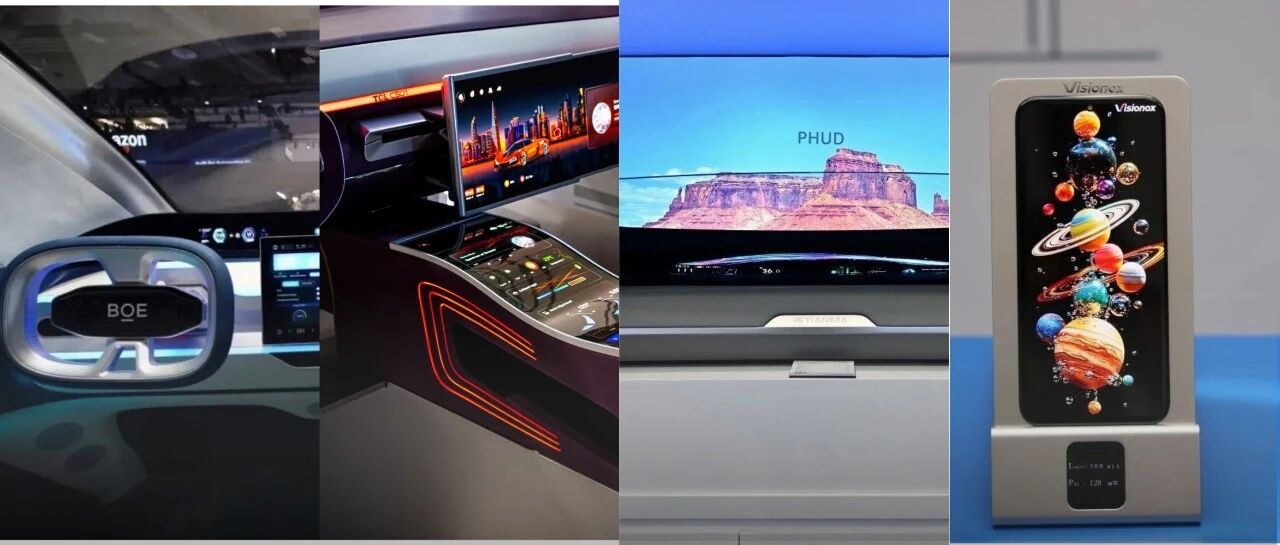
Core Viewpoint - The CES 2026 showcased significant advancements in display technologies, particularly in the automotive display sector, with a strong emphasis on OLED and Micro LED technologies, indicating a competitive landscape among leading panel manufacturers [87]. Group 1: Automotive Display Innovations - Major panel companies focused on automotive displays, with OLED technology emerging as a preferred choice due to its lightweight, flexible, and high-quality characteristics [2]. - BOE introduced the "HERO 2.0 smart cockpit," featuring the world's first Micro LED PHUD with a brightness of 50,000 nits and AI capabilities for voice and gesture control [3][5]. - Deepinma showcased a 49.6-inch panoramic "Tianxuan" screen, integrating various cockpit functions into a single display with a peak brightness of 10,000 nits [10][12]. - TCL Huaxing presented the HVA Ultra P-HUD system, which includes three LCD screens with a brightness of 11,000 nits and a 7.5% transmittance rate [14][15]. - Visionox introduced a flexible AMOLED dual-curved display solution that can bend to save space when not in use [20]. Group 2: Display Technology Developments - BOE displayed two large Micro LED products, including a P0.9 ultra-thin HDR Micro LED integrated machine with a peak brightness of 2,000 nits and a contrast ratio of over 20,000:1 [38]. - Deepinma launched the world's first fully laser giant transfer 108-inch seamless Micro-LED screen with a peak brightness of 1,500 nits and a contrast ratio of 1,000,000:1 [40]. - TCL Huaxing introduced a 98-inch HVA Ultra television display with over 18,000 backlight partitions and a BT2020 coverage rate exceeding 96% [44]. - Visionox unveiled a "glare-free AMOLED laptop solution" that significantly reduces eye strain by minimizing environmental light reflection [50][51]. - LG Display presented an 83-inch WOLED TV panel with a peak brightness of 4,500 nits and 99.5% DCI color gamut coverage [76]. Group 3: Industry Trends and Future Outlook - The competition among panel manufacturers is intensifying, with companies like AUO and Innolux focusing on Micro LED technology, while TCL Huaxing and Hehui Optoelectronics are deepening their expertise in OLED [87]. - The display industry is expected to enter a new development phase as demand for automotive, commercial, and consumer electronics continues to evolve [88].



显示技术新纪元 HKC让RGB-MiniLED迎来高光时刻
Huan Qiu Wang· 2025-12-17 10:03
Core Viewpoint - The launch of the HKC M10 Ultra monitor, featuring RGB-MiniLED technology, marks a significant advancement in display technology, promising enhanced color purity and energy efficiency compared to traditional MiniLED and OLED displays [1][2][5]. Technology Innovation - The M10 Ultra monitor utilizes a revolutionary RGB-MiniLED structure that independently drives red, green, and blue light, eliminating the need for secondary color conversion, thus achieving "native purity" in color [2][4]. - The monitor boasts a control zone of 4788, with a color accuracy of 114 bits, significantly surpassing the 58 bits of traditional high-end MiniLED displays [2]. Color Performance - The M10 Ultra achieves 100% coverage of four major color gamuts: 100% sRGB, 100% DCI P3, 100% Adobe RGB, and 100% BT2020, catering to professional creators and high-end gamers [3]. - The monitor can reach a peak brightness of 1600 nits and a full-screen brightness of 1000 nits, meeting monitor-grade brightness standards [3]. Energy Efficiency - The RGB-MiniLED technology allows for reduced power consumption, as the backlight can lower its output to one-third when displaying single colors, leading to significant energy savings and reduced heat generation [4]. - This advancement not only extends the lifespan of the monitor but also allows for thinner and lighter designs, enhancing user convenience [4]. Market Impact - The introduction of RGB-MiniLED technology in the HKC M10 Ultra is expected to disrupt the current high-end display market, which is predominantly dominated by OLED technology, positioning HKC as a key player in this transformation [5][6]. - The company has consistently focused on customer experience and technological innovation since its establishment in 2001, aiming to meet the evolving demands for quality in information interaction across various activities [5].