HSD Together算法服务

Search documents
地平线首曝BPU「黎曼」架构,用数学流形重构AI计算
机器之心· 2025-12-09 08:41
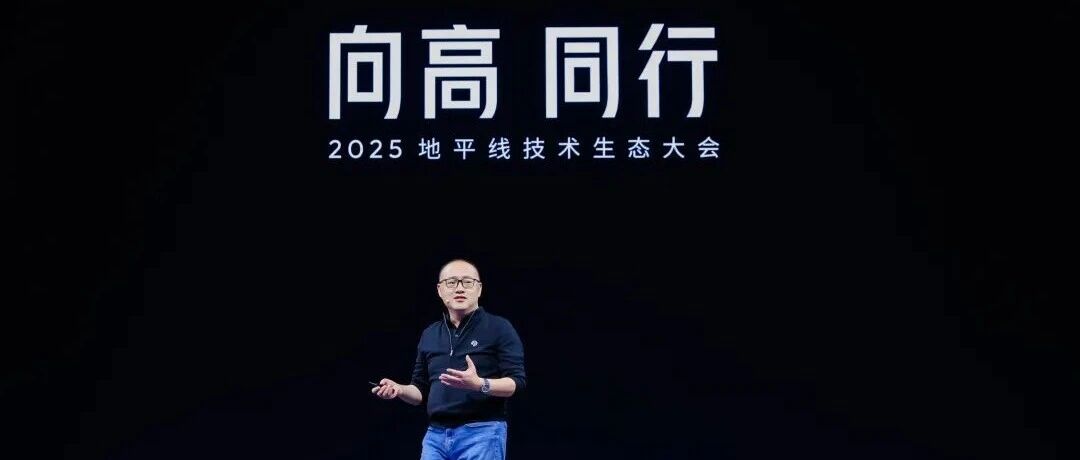
Core Viewpoint - The article discusses the evolution and advancements of Horizon Robotics under the leadership of founder Yu Kai, highlighting the transition from digital intelligence to physical intelligence and the development of new AI architectures and algorithms aimed at enhancing autonomous driving capabilities and robotics [1][2]. Group 1: Company Evolution and Milestones - In December 2012, a significant auction for a deep learning team took place, where Yu Kai represented Baidu, competing against Google, Microsoft, and DeepMind, marking a pivotal moment in AI history [1]. - Horizon Robotics was officially registered on July 14, 2015, coinciding with NASA's New Horizons mission, symbolizing the company's commitment to reaching new heights in AI computing [2]. Group 2: Technological Advancements - At the 2025 Horizon Technology Ecosystem Conference, Horizon Robotics unveiled its full-scene intelligent driving (HSD) production capabilities and introduced the new BPU "Riemann" architecture, aiming to build a foundational "Wintel" ecosystem for physical AI [4]. - The BPU architecture has evolved significantly, with a tenfold increase in key operator performance and a tenfold increase in high-precision operator support, targeting L4/L5 level autonomous driving [7]. - The new Riemann architecture aims to simplify complex real-world structures, enhancing efficiency and performance in AI applications [7]. Group 3: Compiler Innovations - Horizon Robotics introduced the fourth-generation compiler "OpenExplorer 4.0," which incorporates AI-driven optimization strategies, including reinforcement learning and Monte Carlo tree search, to overcome traditional compiler limitations [8][9]. - The new compiler has reduced compilation time from hours to minutes and improved model performance by 20%, optimizing end-to-end latency in HSD applications [12]. Group 4: Business Model Transformation - Horizon Robotics launched the HSD Together model, transitioning from a traditional chip-selling approach to providing a comprehensive algorithm service, allowing partners to leverage a validated intelligent driving system [13][14]. - This model aims to significantly reduce costs and time for partners, enabling them to focus on integration and differentiation while lowering operational expenses by up to 90% [14]. Group 5: Market Accessibility - Horizon Robotics aims to democratize advanced driving assistance systems, targeting the 100,000 RMB market segment, which constitutes a significant portion of the Chinese automotive market [16]. - The company demonstrated that a single Journey 6M chip can effectively handle complex urban driving scenarios, emphasizing cost-effectiveness and adaptability for both electric and traditional fuel vehicles [18][19]. Group 6: Robotics Ecosystem Development - Yu Kai emphasized the importance of mastering autonomous driving as a foundation for future robotics, defining intelligent driving models as the starting point for physical AI [21]. - Horizon Robotics introduced open-source initiatives for its robotics business, including HoloMotion and HoloBrain, aimed at enhancing motion and operational intelligence in robots [20][25]. - HoloMotion has been made available on GitHub, with institutions like Stanford and Tsinghua already utilizing it, indicating a strong interest in developing embodied intelligence [27].