
Hermès bags

Search documents
The hedge fund built on Hermès bags #shorts #hermes #birkin #kelly #luxury #hedgefund
Bloomberg Television· 2025-12-18 19:08
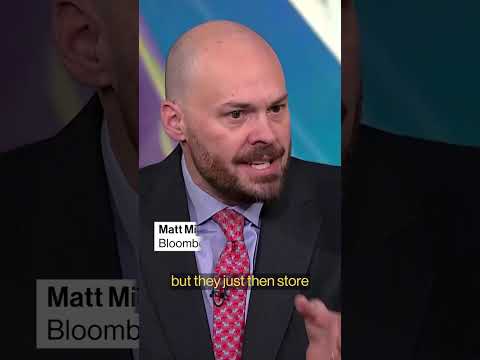
Business Model & Investment Strategy - The company operates like a real estate fund, acquiring brand new luxury handbags such as Birkins and Kellys to build a portfolio [1] - The company employs a portfolio construction methodology, focusing on fast-flipping "breadandbut" bags [1] - The company trades handbags, sourcing them from the resale market rather than directly from Hermes [3][4] Sales Channels - The company sells handbags on digital marketplaces like Sbee's first dibs, my Gemma, and through Christies auctions [1] - The company also sells handbags through real-life experiences, capitalizing on the demand for Hermes and handbag education [2] Market Trends & Consumer Behavior - There is significant pent-up supply in the resale market for a wide range of handbags, from brand new to "beater bags" [4] - Generational preferences vary, with Gen Z showing interest in "beater bags" [4] - A bag sells every 48 hours [4]

X @Bloomberg
Bloomberg· 2025-12-16 23:02
Money that should have mitigated flood damage in the Philippines was instead spent on Hermès bags and luxury cars. Here's how the scandal unfolded. https://t.co/Qwhdwnu4ZH ...
As secondhand luxury soars, authentication becomes a new gold standard
CNBC· 2025-10-18 06:11
Core Insights - The global resale market for fashion and luxury items is growing at an annual rate of 10%, significantly outpacing the firsthand market, and is projected to reach $360 billion by 2030 from approximately $210 billion today [1][11]. Market Dynamics - Trust and authentication are becoming critical as counterfeit manufacturing becomes more sophisticated, with even luxury brands sometimes unable to detect fakes [2][4]. - The secondhand market has traditionally operated under "caveat emptor," emphasizing the need for buyer vigilance [4]. Authentication Efforts - Resale platforms are investing heavily in verification processes to combat the rise of "superfakes," with companies like Carousell opening physical stores for luxury items to provide grading services [5][6]. - Carousell has developed a proprietary database covering nearly 500 product styles, ensuring that higher-valued items undergo multiple checks before listing [9]. - Bunjang claims a 99.9% authentication accuracy rate, utilizing a combination of visual inspections and AI trained on extensive data [10]. Business Impact - Verification processes have positively impacted sales, with Bunjang reporting that luxury goods account for over 25% of its $1.1 billion annual gross merchandise value, with a 30% year-on-year increase in transactions for luxury items [11]. - Carousell has experienced strong growth in its luxury segment, leading to the establishment of its first physical store [11][12]. Consumer Trends - Affordability is the primary motivation for purchasing secondhand luxury items, cited by 80% of respondents, but there is also a growing interest in rare or discontinued collections [13][14]. - Younger consumers, particularly Millennials and Gen Z, are reshaping the luxury market by preferring to buy, enjoy, and quickly resell items, indicating a fundamental shift in engagement with luxury goods [16].