
Liquefied Petroleum Gas (LPG)

Search documents
India’s gas shortage will make Dal compete with data
The Economic Times· 2026-04-01 04:35
Core Insights - The shift from liquefied petroleum gas (LPG) to electric cooktops is accelerating in India, with Amazon reporting a 30-fold increase in electric cooktop sales, indicating a significant change in consumer behavior amid a cooking gas shortage [1][12] - The current LPG crisis, exacerbated by geopolitical tensions, is prompting policymakers to reconsider energy consumption strategies, with a focus on prioritizing human welfare over technological advancements like AI [2][12] Industry Trends - The demand for electricity is expected to rise significantly, with an estimated additional load of 28 gigawatts if 10% of households switch to electric cooking, which is nearly 10% of the summer peak load [1][12] - The Indian government is pushing for a transition to piped natural gas (PNG) as a short-term solution, citing three main advantages: reduced blackout risks, decreased import dependence, and the ability to source US shale gas despite higher costs [6][12] Market Dynamics - The LPG supply chain is under strain, with 65% of demand met through imports, primarily from the Persian Gulf, which is currently facing disruptions due to geopolitical conflicts [5][12] - LPG cylinder prices have increased by 7% in March, with expectations of further hikes, leading to a quiet street-food scene in New Delhi and rising anxiety among migrant workers regarding food costs [8][12] Consumer Behavior - There is a notable shift in consumer sentiment, as the population recognizes the unsustainability of relying on external geopolitical stability for essential cooking needs, leading to a potential long-term transition towards solar energy solutions [10][12] - The historical context of energy consumption in India shows a transition from coal to LPG in the 1980s, and now to electric cooking, reflecting changing economic conditions and consumer preferences [9][12]



Revisiting Energy Market Impacts From the Iran War
Etftrends· 2026-03-31 14:03
Core Insights - The ongoing war in Iran has led to significant increases in oil prices, with energy stocks outperforming other sectors, showing a year-to-date total return increase of over 40% compared to a 6.7% decline in the S&P 500 [3][4] Liquefied Natural Gas (LNG) Market - The closure of the Strait of Hormuz and Iranian attacks on Qatari export facilities are expected to hinder LNG exports for 3 to 5 years, affecting 12.8 million tons per annum or approximately 1.7 billion cubic feet per day [5] - North American LNG is becoming more attractive to global buyers due to these disruptions, benefiting companies like Cheniere and Venture Global, which have significant expansion potential [6] - Venture Global has secured five-year LNG purchase agreements totaling 2 MTPA and has initiated financing for a 9-MTPA expansion [7] - Cheniere's operational capacity is largely secured under long-term contracts, but it is exploring ways to increase cargo shipments [8] Oil Market Dynamics - Global oil supplies have decreased by over 10 million barrels per day since the war began, with Brent crude experiencing the most significant price impacts [11] - The U.S. has released 400 million barrels from emergency reserves to stabilize prices, with contributions from both Iranian and Russian oil expected to add significant volumes to the market [12] - Saudi Aramco has increased oil volumes through its East-West pipeline, providing some relief to supply constraints [13] - The Brent-WTI spread has widened significantly, benefiting U.S. refiners [14] Liquefied Petroleum Gas (LPG) Market - Qatar's LPG exports are expected to decline by 13% due to infrastructure damage, which may lead to increased interest in long-term contracts with U.S. suppliers [15] - U.S. companies like Energy Transfer, Enterprise Products Partners, and Targa Resources are positioned to benefit from these market shifts [15] Broader Energy Implications - The U.S. Energy Information Administration has raised its production forecasts for oil, natural gas, and NGLs for 2027, indicating a more favorable outlook for U.S. energy production [16] - The attractiveness of the U.S. and Canada as energy partners is expected to increase, particularly for LNG and LPG, due to their proximity to key markets [17] - Energy security and reliability remain critical topics, with countries that have diversified energy sources better positioned to handle market disruptions [18]


Middle East Escalation and Energy Supply Shocks Trigger Global Market Pivot
Stock Market News· 2026-03-20 06:38
Geopolitical Tensions - Direct Iranian missile attacks on Central Israel, including Tel Aviv and Jerusalem, have escalated geopolitical tensions, with the Israeli military confirming active air defense operations [2][10] - The Islamic Revolutionary Guard Corps (IRGC) stated that missile manufacturing is at full capacity, indicating a prolonged period of instability in the region [3][10] Energy Sector Impact - HSBC Holdings raised price targets for major energy companies, with Chevron Corporation's target increased to $215 and BP's target rising from 430p to 565p, reflecting expectations of prolonged high oil prices due to supply disruptions [4][10] - Other energy companies also saw target increases, including Shell plc to 3350p and Equinor ASA to NOK 340, as market consensus anticipates elevated energy prices amid risks to Middle Eastern supply routes [5][10] IEA Recommendations - The International Energy Agency (IEA) proposed emergency strategies to reduce oil demand, urging governments to implement work-from-home measures and promote public transport usage [6][10] - Recommendations include cutting highway speed limits by at least 10 km/h and minimizing air travel, as well as diverting liquefied petroleum gas (LPG) from transport to essential energy needs during the supply shock [7][10] Central Bank Policy Changes - Barclays forecasts that the European Central Bank (ECB) will raise rates by 25 basis points in April and June 2026, reversing previous expectations of holding rates steady [8][10] - Morgan Stanley has adjusted its outlook for the Bank of England, now expecting rates to remain steady through 2026, prioritizing price stability over growth amid rising energy costs [9][10] Global Logistics and Manufacturing Challenges - A Russian drone attack in the Odesa region has damaged two foreign-flagged commercial ships, adding pressure to Black Sea shipping routes already strained by regional conflict [11][10] - A major factory fire in South Korea has resulted in serious injuries and is expected to cause localized supply chain disruptions in the manufacturing sector, contributing to market volatility [12][10]



石油追踪:霍尔木兹海峡流量仍处低位-Oil Tracker_ Hormuz Flows Remain Low
2026-03-16 02:05
Summary of the Conference Call on Oil Flows through the Strait of Hormuz Industry Overview - The report focuses on the oil industry, specifically the oil flows through the Strait of Hormuz (SoH) and the implications of geopolitical tensions in the region. Key Points and Arguments - **Current Oil Flow Estimates**: Estimated oil flows through the Strait of Hormuz have decreased by 19.5 million barrels per day (mb/d) to only 0.5 mb/d based on a 4-day moving average [1] - **Total Impact on Oil Flows**: The total estimated hit to oil flows from the Persian Gulf, after accounting for pipeline redirection, stands at 17.2 mb/d, which is significantly larger than the peak impact on Russian oil production in April 2022 [8] - **Vessel Tracking Challenges**: Tracking vessels remains difficult, but preliminary data indicates no oil tankers crossed the Strait on March 12 [1] - **Iran's Actions**: Reports indicate that Iran has allowed two India-flagged Liquefied Petroleum Gas (LPG) carriers to cross the Strait, with one tanker under escort from the Indian Navy [1] - **Potential Recovery Paths**: Three theoretical paths for a recovery in Hormuz flows were outlined: 1. Iran allowing safe passage for tankers with specific origins/destinations (e.g., China, India) 2. General de-escalation of conflict 3. Strong naval protection for tankers [1] - **Risks to Recovery Assumptions**: The risks to the assumption of a gradual recovery from March 21 are skewed towards delays, with recent reports suggesting Iran is granting pass-through authorizations to selective tankers [1] - **Attacks on Tankers**: There have been 17 reported attacks on oil tankers, but no confirmed attacks on Asian-flagged tankers, which accounted for nearly 60% of Hormuz tanker transits in the second half of 2025 [11][14] - **Asian Tanker Dominance**: Asia-bound tankers represented around 95% of the transits through the Strait of Hormuz in the second half of 2025 [14] - **Medium-Term Price Impact**: The medium-term impact of the Hormuz shock on oil prices will largely depend on total Persian Gulf exports to the rest of the world rather than specific regional exports, as oil is largely fungible and can be re-routed [1] Other Important Information - **Data Sources**: The report references data from S&P Global Commodities at Sea and Bloomberg, indicating a reliance on multiple data sources for accuracy [4][10] - **Exhibits**: Several exhibits are included to illustrate the data, including vessel counts and the impact of attacks on oil tankers [3][5][11][14] This summary encapsulates the critical insights and data points from the conference call regarding the current state of oil flows through the Strait of Hormuz and the broader implications for the oil industry.

Geopolitical Volatility Intensifies as Israel-Iran Conflict Escalates; Thames Water Receives £3.35bn Rescue Bid
Stock Market News· 2026-03-14 12:38
Geopolitical Developments - The military confrontation between Israel and Iran has escalated, with the Israeli Defense Forces destroying key Iranian military infrastructure, including the Iranian Space Agency's main research center and an air defense production factory [2][8] - The U.S. Central Command conducted strikes on Kharg Island, targeting naval mine storage and rocket depots while avoiding damage to Iranian oil infrastructure to prevent a global energy shock [3][8] - Ukraine has successfully targeted Russian energy hubs, including the Afipsky oil refinery and Port Kavkaz, impacting Russia's military supply chain and logistics [5][6][8] Corporate Sector Developments - Thames Water is in discussions for a £3.35 billion equity injection from lenders to stabilize its operations amid a £15 billion debt crisis, pending regulatory approval and negotiations on future spending and dividend policies [4][8] - Major utilities in Germany, such as RWE AG and E.ON SE, are expected to play significant roles in the country's accelerated transition to renewable energy as part of a strategy to enhance energy security [7][8] Energy Market Insights - Global oil markets are experiencing volatility, with Brent crude prices nearing $100 per barrel, while Iran claims that oil exports from Kharg Island are continuing normally despite U.S. military actions nearby [8] - NATO has increased its naval presence in the North Atlantic to counter Russian submarine activity, reflecting heightened security measures in response to geopolitical tensions [9]
Middle East conflict hits LPG supplies to India’s hospitality sector
Yahoo Finance· 2026-03-10 10:30
Core Insights - The ongoing conflict in Iran is causing tightening supplies of commercial liquefied petroleum gas (LPG) in major Indian cities, impacting the hospitality sector [1] - Recent price increases for LPG cylinders have exacerbated supply concerns, with domestic LPG prices rising by Rs60 ($0.65) and commercial cylinders by Rs115 ($1.25) [2] Group 1: Impact on Hospitality Sector - Hotel and restaurant associations in Bengaluru, Chennai, and Mumbai are reporting irregular deliveries of commercial LPG cylinders, affecting kitchen operations and food services [1][3] - The Bangalore Hotels Association has urged authorities to ensure fuel availability for essential services, indicating that operations are likely to be affected from March 10 [3] - The National Restaurant Association of India (NRAI) has communicated with the Indian Petroleum and Natural Gas Minister regarding the worsening supply situation, despite government assurances of no ban on commercial LPG supply [4][5] Group 2: Government Response - The Ministry of Petroleum & Natural Gas has directed domestic refineries to increase LPG output, with additional volumes allocated for the local market [5] - To prevent speculative buying, the ministry has implemented a 25-day minimum interval between LPG bookings to curb hoarding and black marketing [6] - A committee has been established to review requests for LPG supplies specifically for restaurants, hotels, and other industries [6]
Indonesia to import more crude oil from US as Middle East conflict escalates, minister says
Reuters· 2026-03-03 10:12
Core Viewpoint - Indonesia plans to increase crude oil imports from the United States to mitigate supply disruptions from the Middle East due to escalating regional conflicts [1]. Group 1: Crude Oil Imports - Indonesia's energy minister, Bahlil Lahadalia, stated that a quarter of the country's crude oil imports come from the Middle East, which is currently affected by conflict [1]. - The country aims to redirect its crude oil imports from the Middle East to the United States to ensure a stable supply [1]. Group 2: Liquefied Petroleum Gas (LPG) Imports - The Middle East accounts for 30% of Indonesia's liquefied petroleum gas (LPG) imports, and the government plans to source some LPG from regions outside the Middle East [1]. Group 3: Impact of Oil Prices - The Indonesian government is monitoring the effects of rising crude oil prices on fuel subsidy spending, although no hikes in subsidized fuel prices are expected at this time [1]. - The government assures that fuel supply is sufficient ahead of the upcoming Eid holidays [1].
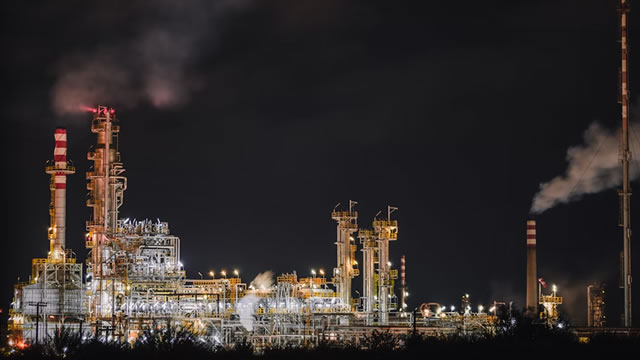
Oil Jumps as Iran Clock Ticks Toward Zero
Yahoo Finance· 2026-02-27 16:00
Group 1: Oil Market Overview - Oil prices are concluding February with a $1 per barrel increase, driven by escalating US-Iran tensions and stagnant indirect talks in Geneva [2] - OPEC+ is contemplating a production quota increase of 137,000 barrels per day (b/d) after a three-month pause, anticipating a price surge due to military tensions [3] Group 2: Geopolitical Influences - The Trump administration has delayed the sale of international assets owned by Lukoil, extending the deadline for a potential $22 billion deal to April 1 [4] - The US Treasury Department has authorized companies to resell Venezuelan oil to Cuba's private sector, potentially alleviating fuel shortages in Cuba [5] Group 3: European Market Dynamics - The European Union is seeking to coordinate a maritime services ban on Russian crude exports with G7 countries, facing challenges in implementing this measure [6] - Italy's industry minister has called for the suspension of the EU's carbon trading mechanism, with Germany supporting a quick revamp of carbon pricing [8] Group 4: Regional Production Updates - Kazakhstan's largest oil field, Tengiz, is nearing full production capacity after recovering from a month-long disruption, although it remains 15% below its plateau of 950,000 b/d [9] Group 5: LPG Market Response - Asian liquefied petroleum gas (LPG) prices have surged to $600 per tonne following Saudi Aramco's declaration of force majeure on LPG exports due to infrastructure issues [7]
UGI VP Sells 12840 Shares After Net Income Falls in Q1 Earnings
Yahoo Finance· 2026-02-22 15:19
Core Insights - UGI Corporation's Vice President, Jean Felix Tematio, sold 12,840 shares of UGI Common Stock for approximately $489,000 on February 11, 2026, indicating a significant transaction by a key executive [1][2]. Company Overview - UGI Corporation reported a total revenue of $7.34 billion and a net income of $600 million for the trailing twelve months (TTM) [4]. - The company has a dividend yield of 3.92% and a 1-year price change of 17.09% as of February 21, 2026 [4]. - UGI operates as a diversified energy distributor, providing propane, liquefied petroleum gas (LPG), natural gas, and electricity, serving approximately 1.4 million propane customers, 672,000 natural gas customers, and 62,500 electricity customers [5]. Recent Financial Performance - In Q1 FY 2026, UGI reported a net income of $297 million, which is a significant improvement compared to the previous two quarters that experienced net losses, although it is approximately 20% lower than the same quarter last year [6]. Corporate Developments - The company is undergoing restructuring after liquidating its petroleum gas distribution business in multiple European countries in January 2026 and appointed a new Chief Strategy Officer in February [7]. - UGI is expanding its operations into multiple states, including Pennsylvania and Hawai'i [7]. Stock Performance - UGI's stock has seen an increase over the past two years but is currently down about 5% in 2026 as of February 21 [8]. - Despite fluctuations in financial performance, the company’s petroleum gas distribution remains strong, suggesting potential for consistent revenue [9].

Targa(TRGP) - 2025 Q4 - Earnings Call Transcript
2026-02-19 17:00
Financial Data and Key Metrics Changes - Targa Resources reported a record Adjusted EBITDA of $4.96 billion for 2025, which is an increase of over $800 million or 20% year-over-year [6][20] - The fourth quarter Adjusted EBITDA was $1.34 billion, reflecting a 5% increase over the third quarter [19] - The company invested approximately $3.3 billion in growth capital projects in 2025, with net maintenance capital at $226 million [20][21] - The net consolidated leverage ratio at year-end was approximately 3.5 times, within the long-term target range of 3-4 times [21] Business Line Data and Key Metrics Changes - Permian volumes grew by 11% in 2025, translating to an increase of over 600 million cubic feet per day [6] - NGL transport volumes increased by almost 170,000 barrels per day, while frac volumes rose by more than 120,000 barrels per day [6] - The logistics and transportation segment saw NGL transportation volumes average a record 1.05 million barrels per day, and fractionation volumes averaged 1.14 million barrels per day [17][18] Market Data and Key Metrics Changes - The company added approximately 350,000 dedicated acres in 2025 and completed the acquisition of Stakeholder, adding nearly 500,000 dedicated acres [14] - The Delaware Express project and other expansions are expected to enhance the company's market position and operational capacity [18] Company Strategy and Development Direction - Targa Resources plans to continue investing in growth capital projects, with an estimated $4.5 billion in growth capital spending for 2026 [21][22] - The company is focused on maintaining a strong balance sheet while generating significant free cash flow, with expectations of reaching over $6 billion in Adjusted EBITDA following the completion of major projects [11][22] - The strategy emphasizes growing Adjusted EBITDA, increasing common dividends, and reducing common shares outstanding [11] Management's Comments on Operating Environment and Future Outlook - Management expressed confidence in continued low double-digit Permian volume growth for 2026 and beyond, supported by strong producer relationships and commercial success [7][32] - The outlook for 2027 and beyond has improved, with expectations of sustained higher Waha prices benefiting Targa and its producers [17][32] - Management acknowledged the potential for volatility in natural gas prices but emphasized the stability provided by fee-based contracts [22][88] Other Important Information - The company is in an elevated growth capital environment, investing in gathering, processing, and downstream infrastructure [10] - Targa is ordering long lead items for additional processing plants planned for early 2028, indicating a proactive approach to future capacity needs [9][10] Q&A Session Summary Question: Outlook for 2026 and growth drivers - Management highlighted strong producer relationships and existing customer activity as key drivers for resilience in growth outlook for 2026, with low double-digit growth expected [30][32] Question: CapEx budget increase - The increase in CapEx is attributed to new plants and additional field capital, reflecting a larger base for growth and the need for incremental spending [33][37] Question: Durability of commercial success - Management indicated that even without significant new commercial success, strong growth is expected from existing contracts and dedicated acreage [44][45] Question: Waha price exposure and marketing opportunities - Management noted that while Waha prices may be volatile, the company has significant transport positions to mitigate risks and capture marketing opportunities [86][88] Question: Impact of new technologies on well recovery - Management acknowledged improvements in well recovery due to technological advancements by producers, contributing positively to Targa's outlook [72][74] Question: Export volumes and capacity - The company remains confident in growing export volumes in tandem with new capacity coming online, supported by strong commercial commitments [108]
