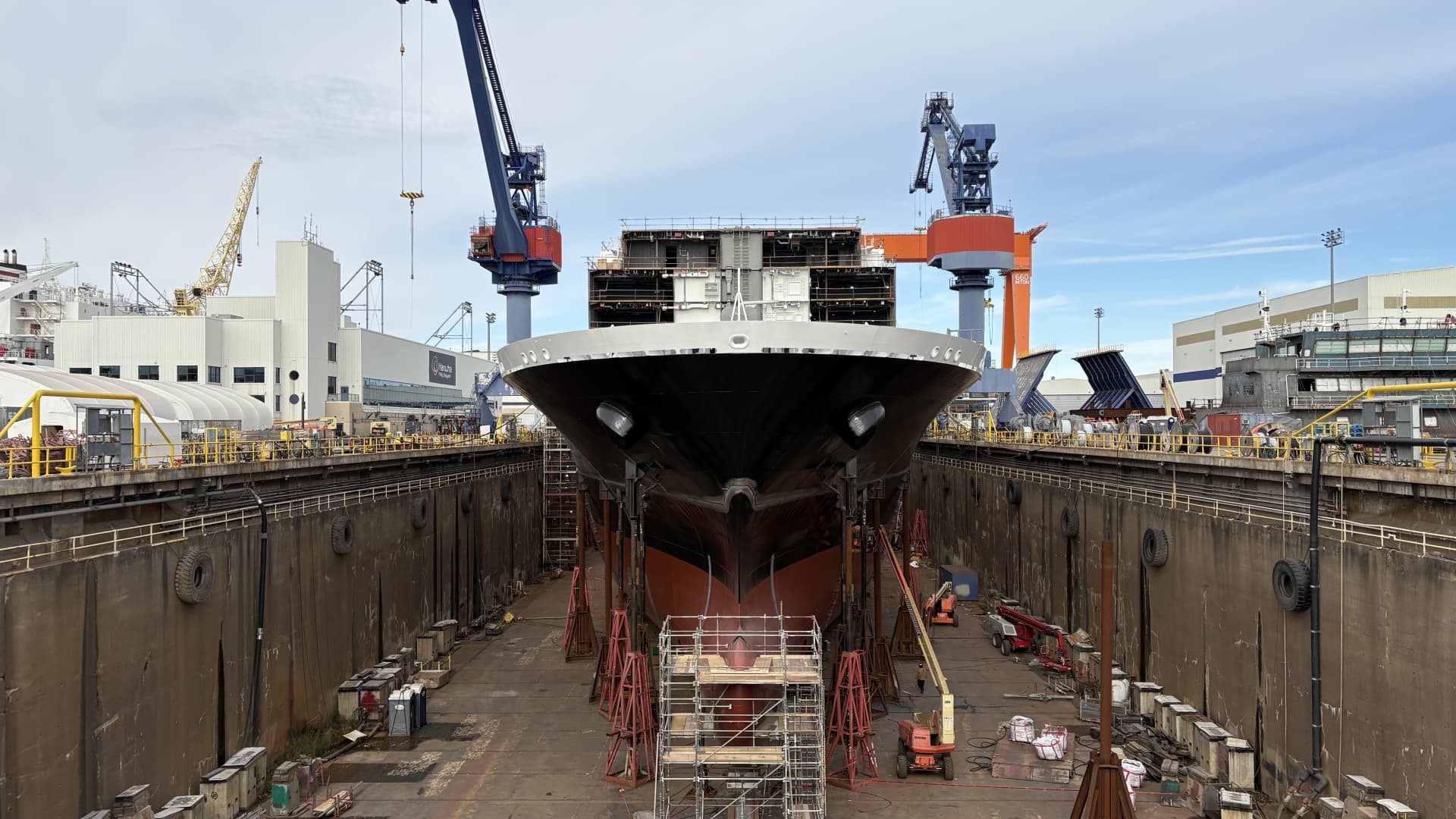
Liquified Natural Gas Tankers

Search documents
Trump wants the U.S. shipbuilding industry to be great again. Here's what it will take, and what's at stake
CNBC· 2025-12-14 13:25
Core Insights - The U.S. shipbuilding industry is undergoing a revival initiative led by the Trump administration, focusing on enhancing domestic capabilities while relying on foreign expertise and investment [2][6][7] Shipbuilding Industry Overview - The American shipbuilding industry has experienced two significant booms in the past 110 years, during World War I and World War II, but currently faces challenges due to limited domestic capacity compared to China, which has 232 times the shipbuilding capacity of the U.S. [3][5] - The U.S. has only eight active shipyards, while China boasts over 300, dominating the global market with a 53% share [3][5] Foreign Collaboration and Investment - The Trump administration's "Make American Shipyards Great Again" initiative includes partnerships with foreign shipbuilders, particularly South Korea's Hanwha Group, which is the third-largest shipbuilder globally [7][8] - A $350 billion investment deal between South Korea and the U.S. includes $150 billion allocated for maritime investment, highlighting the importance of international collaboration [8] Specific Projects and Developments - Hanwha Philly Shipyard, acquired by Hanwha Group, is set to expand its vessel-making capacity significantly, with plans to increase production from 1-1.5 vessels per year to 20 vessels [9][12] - The shipyard has received its first orders for LNG carriers, marking a significant milestone in U.S. shipbuilding, with deliveries expected around 2028 [10] Workforce and Training Challenges - The U.S. shipbuilding industry faces workforce challenges, with a need for skilled instructors to train new employees. Hanwha plans to rotate U.S. workers to South Korea for training [11] - The current workforce at Hanwha Philly Shipyard is 1,700, with aspirations to grow to over 10,000 to meet production goals [12] Strategic Defense Considerations - The U.S. aims to enhance its naval capabilities, including the construction of nuclear-powered submarines at Hanwha Philly Shipyard, emphasizing the need for self-sufficiency in national security [17][18] - The U.S. Coast Guard's icebreaker fleet is outdated, with plans to acquire 11 new icebreakers through a $6.1 billion agreement with Finnish shipyards, addressing the need for Arctic defense capabilities [29][30] Market Dynamics - The U.S. currently has a minimal share in the LNG tanker market, with only one U.S.-flagged LNG tanker, while the country exports nearly 30% of its crude oil production without significant issues related to tanker availability [15][16] - The Jones Act mandates that vessels transporting goods between U.S. ports must be U.S.-built, which impacts the domestic shipbuilding market [14]