MBUX platform

Search documents
Automakers Replace Drivers With Software at CES
PYMNTS.com· 2026-01-07 22:16
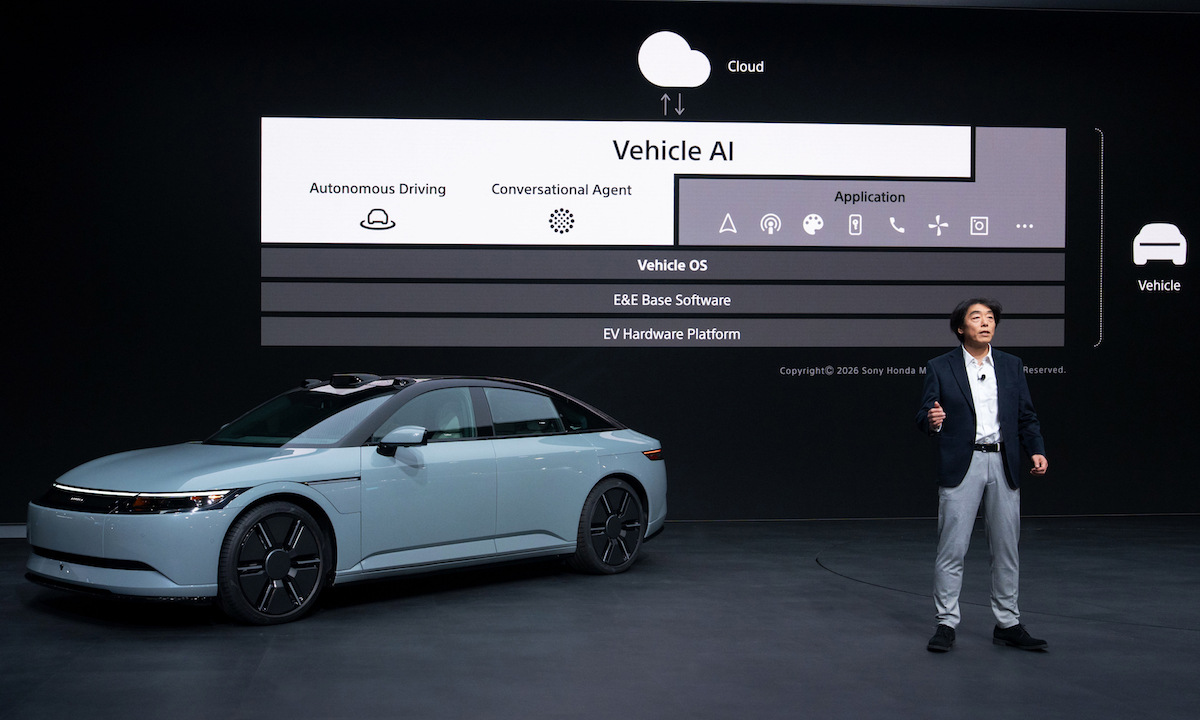
Core Insights - The automotive industry is shifting focus from driver-assist features to software that manages vehicle control, anticipating a future where humans may not always drive [1][5]. Group 1: Software and Control Systems - Nvidia introduced Alpamayo, a system designed to handle ambiguous driving situations by evaluating context and making decisions autonomously, moving beyond traditional driver-assistance systems [3][4]. - Alpamayo will be implemented in production vehicles, with Mercedes-Benz as an early adopter, indicating a shift towards software that resolves edge cases independently [5]. - Mercedes-Benz showcased its MBUX platform, which integrates navigation, driver assistance, and vehicle controls into a single system, reducing the need for manual driver input [6][7]. Group 2: Voice Interaction and User Experience - BMW presented its iX3 with an expanded conversational interface integrated with Amazon Alexa+, allowing drivers to use natural language commands for various functions [8][9]. - BMW's approach emphasizes voice interaction as the primary control method, reflecting a design that accommodates fluctuating driver attention [9]. Group 3: New Vehicle Designs - Sony Honda Mobility unveiled a new electric SUV prototype, the Afeela 1, which features a full-width digital display and is designed as a mobility and entertainment space [11][12]. - The Afeela 1 is expected to have a range of approximately 300 miles and aims to create an environment where occupants interact with screens rather than actively driving [12][13]. - Sony Honda's design integrates the assumption of reduced driver engagement directly into the vehicle's architecture, contrasting with other companies that layer software onto existing designs [14].