Alpamayo

Search documents
AI智能汽车4月投资策略:小鹏第二代VLA上车,看好智能化
Soochow Securities· 2026-03-30 12:46
Core Conclusions - The report highlights a shift in the industry consensus from "whether to develop" to "how to scale" L3/L4 autonomous driving technologies, with a focus on the acceleration of R&D and testing in Guangdong Province for full-scene autonomous driving [2] - The launch of the second-generation VLA model by Xiaopeng Motors emphasizes full-scene capabilities and safety, while other companies like Li Auto and Huawei are also making significant advancements in their autonomous driving technologies [2] - Investment recommendations favor B-end software companies over C-end hardware companies, with preferred stocks including Xiaopeng Motors, Horizon Robotics, and others in the H-share market, and Qianli Technology and Desay SV in the A-share market [2] AI Smart Car Investment Framework - The report outlines a spiral upward iteration of hardware and software, indicating that each major upgrade disrupts existing paradigms [7] - The timeline for L1 to L4 development shows a clear progression, with significant advancements expected by 2030, particularly in the areas of E/E architecture and high-computing chips [8] L4 RoboX Monthly Tracking - Tesla's Robotaxi business is rapidly expanding, particularly in Austin, Texas, with plans for a fully autonomous service by 2026 [21] - The report tracks the progress of Tesla's Robotaxi service, noting significant milestones in vehicle registration and operational area expansion [23][25] L2-L3 Smart Driving C-end Monthly Tracking - The report forecasts a total retail sales volume of 22 million vehicles in 2026, a decrease of 3.2% year-on-year, with a notable increase in the market share of domestic brands [49][51] - The penetration rate of new energy vehicles is expected to reach 60% by 2026, reflecting a significant growth trajectory in the sector [49]


「华舟魔」三强之一,加速迈向物理AI
雷峰网· 2026-03-25 10:05
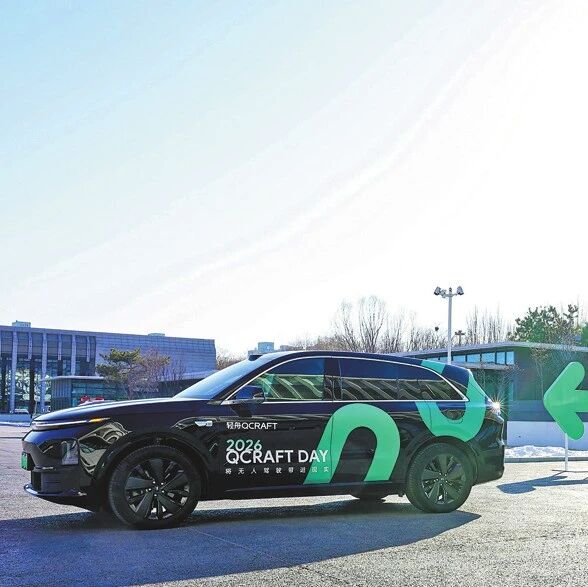
Core Viewpoint - The article discusses the recent $100 million funding round for Qianzhou Zhihang, emphasizing its strategic shift towards physical AI and the development of advanced technologies in autonomous driving and general physical AI [2][3][4]. Group 1: Funding and Strategic Shift - Qianzhou Zhihang completed a Series D funding round of $100 million, with investors including leading domestic automotive manufacturers and various investment funds [2]. - The company plans to enhance its research in world models and reinforcement learning, which are crucial for advancing physical AI technologies [3][4]. Group 2: Importance of Physical AI - AI can be categorized into digital AI, which processes information, and physical AI, which interacts with the physical world. The latter is still in its early stages, particularly in autonomous driving [4][5]. - The CEO of Qianzhou Zhihang highlighted that autonomous driving is the best entry point for physical AI, with the potential for significant opportunities in the next 5-10 years [5][6]. Group 3: Technological Development - The company aims to leverage structured data from autonomous driving to develop a robust world model, which is essential for understanding physical interactions in complex environments [7][9]. - The integration of world models and reinforcement learning is seen as a solution to the challenges faced in the unpredictable physical world, allowing for proactive decision-making in autonomous systems [9][10]. Group 4: Market Position and Production Scale - Qianzhou Zhihang has achieved a production scale of over 1 million vehicles equipped with its autonomous driving system, positioning itself among the top players in China's intelligent driving sector [12][13]. - The company plans to expand its model offerings significantly by 2026, with a focus on urban navigation assistance (NOA) capabilities [13][14]. Group 5: Competitive Landscape - The competitive landscape includes major players like Huawei and Momenta, each adopting different strategies to penetrate the market. Qianzhou Zhihang focuses on maximizing the efficiency of single-chip solutions for urban NOA [16][17]. - The company aims to target the price segment of 100,000 to 200,000 yuan, which represents a significant portion of the Chinese new energy vehicle market [17][18]. Group 6: Technological Integration and Future Plans - Qianzhou Zhihang's approach emphasizes standardization and compatibility across different vehicle models, allowing for rapid adaptation and deployment of its technologies [20][21]. - The company plans to showcase its latest technological advancements at the Beijing Auto Show in April 2026, highlighting its transition from L2 to L4 autonomous driving and general physical AI [24].

NVIDIA Alpamayo In-Car Reasoning: AI That Drives, Explains Decisions, and Responds to Passengers
NVIDIA· 2026-03-20 15:56
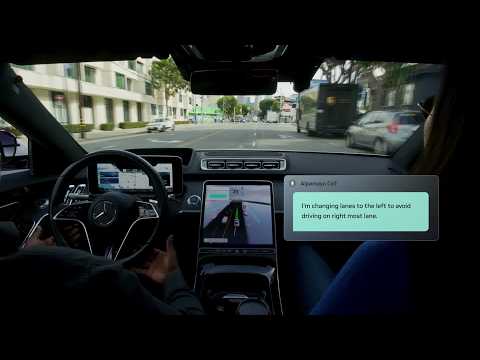
Today, we're going to experience the reasoning capabilities of the Alpamayo model that powers the intelligence in our cars. Throughout the drive, you'll see the car is constantly evaluating its surroundings in real time. You can also ask the car for information about your surroundings.Hey, Mercedes. Why is the Transamerica Pyramid shaped like that. Architect William Pereira chose the tapered design so more sunlight could reach the streets below, instead of casting a huge shadow.We've also asked the car to n ...
NVIDIA Alpamayo In-Car Reasoning: AI That Drives, Explains Decisions, and Responds to Passengers
NVIDIA· 2026-03-19 18:02
Today, we're going to experience the reasoning capabilities of the Alpameo model that powers the intelligence in our cars. Throughout the drive, you'll see the car is constantly evaluating its surroundings in real time. You can also ask the car for information about your surroundings.Hey, Mercedes, why is the Transame pyramid shaped like that. Architect William Pereira chose the tapered design so more sunlight could reach the streets below instead of casting a huge shadow. We've also asked the car to narrat ...
优步与英伟达扩大自动驾驶汽车合作,目标2027年推出
Xin Lang Cai Jing· 2026-03-17 14:52
Core Viewpoint - Nvidia and Uber are expanding their collaboration to launch a global fleet of autonomous taxis using Nvidia's Drive Hyperion platform, with initial deployment planned for Los Angeles and San Francisco in the first half of next year, and expansion to 28 cities worldwide by 2028 [1][2]. Group 1 - Nvidia and Uber will utilize the Nvidia Drive Hyperion platform for their autonomous taxi fleet [1]. - The initial rollout will begin in Los Angeles and San Francisco, with plans to expand to Europe, Australia, Asia, and North America by 2028 [1]. - Uber's stock price increased by 5.1% following the announcement of this collaboration [2]. Group 2 - The vehicles will incorporate Nvidia's Alpamayo AI model, designed to handle complex driving scenarios [2]. - The deployment will start with data collection vehicles for training Alpamayo, transitioning to human-driven vehicles, and eventually to fully autonomous cars [2].

Uber Stock Climbs After Expanded Robotaxi Partnership With Nvidia
Investors· 2026-03-17 12:48
Core Insights - Uber is expanding its partnership with Nvidia to launch a fleet of robotaxis powered by Nvidia's software, with plans to start in Los Angeles and San Francisco in the first half of next year [1][2][4] - The initiative aims to grow to 28 cities globally by 2028, an increase from the previous target of 15 markets by the end of 2026 [5] - Nvidia's Drive Hyperion platform will be utilized for the robotaxis, which also integrates AI technology [4][6] Company Developments - Uber's stock rose over 3% following the announcement of the Nvidia partnership, reflecting positive investor sentiment [4] - The company has recently formed additional partnerships with Zoox, Hyundai's Motional, Nissan, and Wayve to enhance its robotaxi offerings [6][7] - Uber's strategy focuses on collaborating with various autonomous vehicle developers to strengthen its market position [7][8] Market Context - The announcement comes amid increasing competition in the robotaxi space, particularly from companies like Waymo and Tesla [7] - Analysts suggest that Uber and Lyft's diversified partnerships with AV suppliers may provide a competitive edge in the evolving market [8]
Uber Stock Climbs on Nvidia Robotaxi Partnership
Investing· 2026-03-17 10:42
Core Insights - Uber Technologies has announced a partnership with Nvidia to deploy a fleet of Level 4 robotaxis powered by Nvidia's DRIVE Hyperion platform, starting in Los Angeles and San Francisco in 2027 and expanding to 28 cities across four continents by 2028 [1][2][3] Company Developments - The rollout strategy includes phased implementation, beginning with data-collection vehicles to train the system on city-specific driving conditions, followed by operator-supervised launches, and ultimately progressing to fully driverless operations [2] - Uber's CEO framed the partnership as part of a "multi-player" autonomous vehicle strategy, positioning Uber as a neutral marketplace for robotaxi services from various developers and automakers [4] - Uber has also partnered with Lucid Group and Nuro to deploy robotaxis built on Lucid vehicles powered by Nuro's self-driving software [4] Market Performance - As of March 16, 2026, Uber shares closed at $74.66, with premarket trading pushing the stock to $76.19, reflecting a gain of 1.81% and 2.04% respectively [5] - The stock has a 52-week range of $60.63 to $101.99, indicating it remains below its highs despite recent positive developments [5] - Analysts have set an average price target of $103.81 for Uber, suggesting significant upside potential from current levels [5] Financial Metrics - Uber's trailing P/E ratio stands at 15.78, with a market capitalization of approximately $155.1 billion, trailing twelve-month revenue of $52.02 billion, and net income of $10.05 billion [6] - Year-to-date, Uber's stock is down approximately 8.63%, underperforming the S&P 500's loss of around 2.13% [6] Competitive Landscape - The announcement of the partnership provides a concrete timeline and geographic scope that investors and analysts had been anticipating, amidst fierce competition in the robotaxi space, particularly from Alphabet's Waymo and Tesla [3][7]

Uber, Nvidia plan robotaxi rollout in 28 cities starting next year
Reuters· 2026-03-16 20:33
Core Insights - Uber and Nvidia plan to deploy a fleet of robotaxis powered by Nvidia's autonomous driving software, starting in Los Angeles and San Francisco in 2027, with expansion to 28 cities globally by 2028 [1][5]. Group 1: Company Plans and Partnerships - The rollout will begin with data-collection vehicles to train the system on city-specific driving conditions, transitioning to operator-supervised launches and eventually fully driverless Level 4 operations [4]. - Uber's partnership with Nvidia is part of a broader strategy to create a "multi-player" autonomous vehicle ecosystem, allowing various developers and automakers to bring robotaxi services to market [5][6]. - Uber has previously partnered with Lucid Group and Nuro to deploy robotaxis built on Lucid vehicles and powered by Nuro's self-driving software [6]. Group 2: Competitive Landscape - The competition in the autonomous ride-hailing sector is intensifying, with Alphabet's Waymo currently leading with fully driverless rides in cities like Phoenix, San Francisco, and Los Angeles [2][3]. - Tesla is also entering the market with plans for its own robotaxi service, leveraging its large vehicle manufacturing capacity and a camera-based approach to autonomy [3].
机械设备行业专题研究:26年GTC大会前瞻:物理agent
GOLDEN SUN SECURITIES· 2026-03-15 03:24
Investment Rating - The report maintains an "Increase" rating for the industry, indicating a positive outlook for investment opportunities [6]. Core Insights - The concept of "Physical Agents" is expected to be a focal point at the 2026 GTC conference, similar to how smartphones were pivotal during the internet era. This concept encompasses a broader scope than just robotics, aiming to integrate AI into the physical world [1][10]. - The advancements in AI technology, particularly through platforms like OpenClaw, are bridging the gap between large model computation and physical execution, enabling robots to perform tasks in the real world [4][25]. - The report highlights the emergence of various forms of physical agents showcased at CES 2026, demonstrating the diversity and potential applications of AI in physical environments [2][26]. Summary by Sections Industry Trends - The report discusses the rapid evolution of physical agents, with examples such as multi-joint robotic arms and intelligent robots capable of performing household tasks, indicating a shift towards more interactive and capable AI systems [2][26]. - The integration of OpenClaw technology into robots like Yushu and Vbot signifies a milestone in embodied intelligence, allowing these robots to understand spatial and temporal contexts [3][34]. Investment Recommendations - The report suggests focusing on companies involved in sensor and actuator technologies, which are critical for the development of physical agents. Recommended stocks include: - Sensors: Fulei New Materials (605488.SH), Jinghua New Materials (603683.SH), and Orbbec (688322.SH) [4][38]. - Actuators: Xinquan Co., Ltd. (603179.SH), Slin Intelligent Drive (301550.SZ), and Kosen Technology (603626.SH) [4][38]. Technological Developments - The report emphasizes the significance of the five-layer AI technology stack proposed by NVIDIA, which supports the transition of AI from virtual cognition to physical implementation. This includes advancements in models like Alpamayo, which can reason and adapt to complex scenarios [4][17][25]. - The introduction of NVIDIA's Rubin supercomputer aims to reduce training costs and improve efficiency, further facilitating the mainstream adoption of AI technologies [22][25].
Nvidia放2.5小時無人實測!Tesla怕嗎?@Tesla @NVIDIA #NvidiaAlpamayo #TeslaFSD #ElonMusk #自動駕駛 #Robotaxi #自駕車競爭
大鱼聊电动· 2026-03-12 07:23
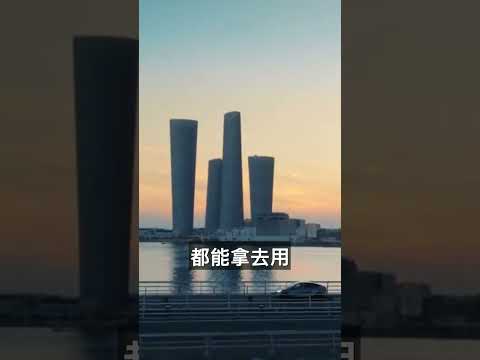
Nvidia剛放狠招! Jensen Huang 本人坐Mercedes 在舊金山街頭 hands-off 跑了2.5%小時! 全程聊天看風景 車子自己搞定 所有亂七八糟路況 零干預 零失誤 Alpamayo 模型開放源碼 10B參數 還帶推理鏈 能告訴你 為什麼這麼開 聽起來 超猛對吧? 但FSD累積里程 已經衝破 8.4%億英里! Nvidia 給的是武器庫 Mercedes Uber 都能拿去用 但他們得從 新車開始改 舊車基本沒戲 Tesla呢? 800萬輛車隊 直接OTA推更新 能邊開邊進化! 對手再開放再猛 資料量和規模 還是差太遠 你說 這波競爭 Tesla會不會 繼續笑到最後?. ...