MSME loans

Search documents
PSU banks are quietly eating private banks’ lunch? Motilal Oswal says HDFC Bank, ICICI Bank, SBI and AU Bank matter most
The Economic Times· 2025-12-26 03:52
Core Insights - Public sector banks (PSUs) are actively gaining market share in MSME and home loans, reshaping competitive dynamics in India's financial system [1][14] - The credit cycle is transitioning into a more sustainable, execution-led phase, with systemic loan growth projected to hold at about 12% or more year-on-year in FY26 [11][15] MSME Lending - PSU banks are sanctioning MSME and working-capital loans with turnaround times of two to four days, with the State Bank of India often completing approvals within 48 hours [1][2] - The use of CGTMSE-backed structures allows loans of up to ₹500 million to be sanctioned without collateral, narrowing the rate differential with private banks [2] - A strong central push to scale MSME credit has accelerated PSU bank execution, enabling them to gain market share over the past six to nine months [2] Unsecured Business Lending - Growth in unsecured business lending has moderated to about 10–20%, down from 30–40% in previous years, despite a pricing correction to around 12–12.5% [4] - Stress is evident in agri-linked commodity businesses and FMCG distributors, with payment cycles stretching from about 10 days to nearly 40 days [5] Housing and Real Estate - Housing and real estate momentum remains strong, supported by improved disbursement rates and activity among large developers [7] - PSU banks are regaining relevance in home loans due to lower rates and faster turnaround times, particularly in Tier-2 and Tier-3 cities [8] Credit Cards and Personal Loans - Credit card growth remains subdued, with selective issuances and elevated delinquency levels compared to historical norms [9] - Personal loans are showing early signs of stabilization, with incremental disbursements skewed towards existing customers and higher-quality repeat borrowers [10] Investment Preferences - The brokerage favors lenders with execution strength and stable asset quality, specifically ICICI Bank, HDFC Bank, State Bank of India, and AU Bank for their growth potential [13][15]


At $4.4 bn, Shriram Fin to get India's largest financial-sector FDI
Rediff· 2025-12-20 17:27
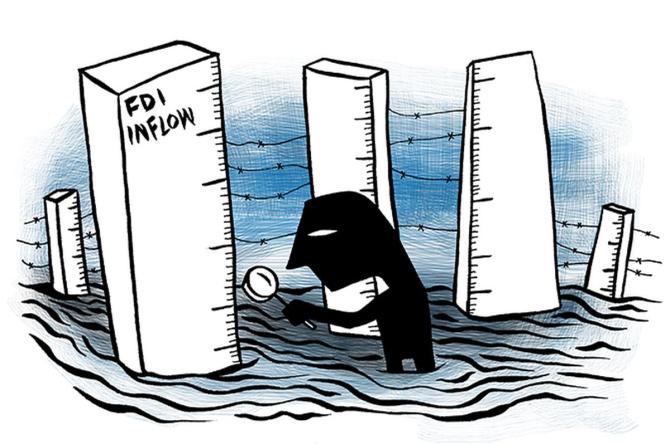
Core Viewpoint - MUFG Bank will invest Rs 39,618 crore (approximately $4.4 billion) to acquire a 20% stake in Shriram Finance, marking the largest foreign direct investment in India's financial services sector to date [1][3]. Company Overview - Shriram Finance is the flagship company of the Shriram group and is the second-largest retail non-banking financial company (NBFC) in India, with assets under management exceeding Rs 2.81 trillion [4]. - The company offers a variety of financial products, including commercial vehicle loans, MSME loans, tractor and farm equipment loans, gold loans, personal loans, and working capital finance through 3,225 branches, serving 9.6 million customers [12]. Investment Details - MUFG Bank will acquire over 471 million shares at Rs 840.93 each, translating into a 20% stake on a fully diluted basis [4]. - The investment is subject to shareholder approval, regulatory clearances, and customary closing conditions [5]. - Upon completion, MUFG Bank will be classified as a public shareholder and will have the right to nominate two non-independent directors to Shriram Finance's board [5][4]. Strategic Implications - The investment is expected to enhance Shriram Finance's capital adequacy, strengthen its balance sheet, and provide long-term growth capital [5]. - It will improve access to low-cost liabilities and potentially strengthen Shriram Finance's credit ratings while aligning governance and operational practices with global best standards [6]. - The partnership aims to support the development of India's road transport infrastructure and logistics value chain, contributing to financial inclusion, which is a key policy agenda in India [8]. Market Context - This transaction surpasses previous significant investments in the sector, including Emirates NBD's acquisition of a 60% stake in RBL Bank for $3 billion and SMBC's investment in Yes Bank for $1.6 billion [3]. - Japanese financial institutions have become significant investors in India's financial services sector this year, with notable investments from SMBC and Mizuho Financial Group [14].