
MUSA C

Search documents
又又又一次快速行动:摩尔线程MTT S5000完成对阿里大模型Qwen3.5适配
Guang Zhou Ri Bao· 2026-02-18 03:08
Group 1 - The core achievement of Moore Threads is the full adaptation of Alibaba's latest large model Qwen3.5 on its flagship AI training and inference GPU MTT S5000, enabling efficient model deployment and optimization through MUSA C programming language and Triton-MUSA toolchain [2] - The adaptation process validated two core capabilities of the MUSA ecosystem: native MUSA C support allows developers to directly use MUSA C for kernel development, significantly lowering the migration barrier from CUDA; deep compatibility with Triton-MUSA enables developers to write high-performance operators using familiar Triton syntax, seamlessly running on Moore Threads' full-featured GPU [2] - Moore Threads achieved native optimization for the hybrid attention mechanism used in the Qwen3.5 multimodal model, providing efficient support for long sequence processing based on the muDNN computing library and MATE open-source operator library, successfully realizing high-performance inference of the model on the MTT S5000 [2] Group 2 - In a week, Moore Threads rapidly followed up and adapted to top domestic large models such as GLM-5, MiniMax M2.5, and Qwen3.5, indicating a normalized agile response mechanism [3] - This agile response is attributed to the seamless compatibility of the MUSA architecture with mainstream AI ecosystems and the continuous optimization of the toolchain, marking the establishment of a full-link support capability from model adaptation to efficient deployment for domestic computing power [3] - A new ecological model combining domestic computing power and domestic large models is gradually taking shape [3]


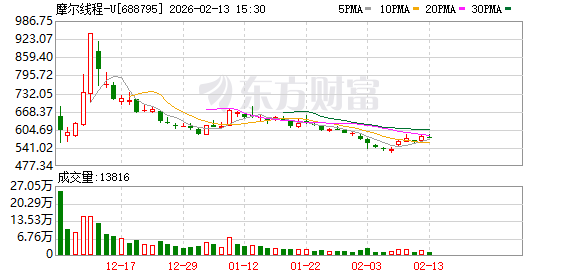
摩尔线程:完成对Qwen3.5模型全面适配
Xin Lang Cai Jing· 2026-02-17 14:43
Core Insights - Moore Threads has successfully adapted its flagship AI training and inference GPU MTT S5000 to Alibaba's latest large model Qwen3.5, showcasing the maturity and completeness of the MUSA ecosystem [1] Group 1: MUSA Ecosystem - The adaptation demonstrates two core capabilities of the MUSA ecosystem: native MUSA C support allows developers to directly use MUSA C for kernel development, significantly lowering the migration barrier from the CUDA ecosystem [1] - Deep compatibility with Triton-MUSA enables developers to write high-performance operators using familiar Triton syntax, which can seamlessly run on Moore Threads' full-featured GPUs through the Triton-MUSA backend [1]