Oscar Mayer meats

Search documents
Kraft Heinz to “upgrade” Canada plant
Yahoo Finance· 2026-03-23 12:09
Investment Announcement - Kraft Heinz is investing C$250 million ($182.3 million) to modernize its Mont Royal factory in Montreal, Canada [1] - The investment aims to upgrade key plant systems to enhance efficiency, sustainability, and innovation [1] Employment and Production - The Montreal site employs over 1,000 people and produces products such as Philadelphia cream cheese and Kraft peanut butter [2] - The company plans to introduce new production volume into the plant as part of the investment program [2] - Kraft Heinz employs approximately 2,000 people across Canada [2] Industry Context - Recently, Mars announced a C$180 million investment at four sites in Ontario for manufacturing innovation and workplace modernization [3] - Kraft Heinz has also announced plans to close three factories in New Zealand due to challenging operating conditions [3] - The company has decided to pause its plan to split into two separate businesses, focusing instead on business growth [3][4]

New CEO Greg Abel Called One of Berkshire Hathaway's Long-Term Investments "Well Short of Adequate." Should Investors Sell the Stock?
The Motley Fool· 2026-03-07 22:05
Core Viewpoint - The investment in Kraft Heinz by Berkshire Hathaway and 3G has been disappointing, with the stock down nearly 67% since the merger, raising questions about the company's future and whether investors should sell their shares [2][5]. Company Performance - Kraft Heinz has struggled with competition and changing consumer preferences towards healthier options, impacting its financial performance [4]. - The company has significant debt and has faced challenges in brand investment and marketing, which some attribute to 3G's cost-cutting measures [5]. Leadership Changes - New CEO Greg Abel acknowledged the inadequate returns and indicated a shift in strategy, including relinquishing board seats and evaluating strategic transactions [2][6]. - Kraft Heinz hired Steve Cahillane as CEO to implement a split strategy, but this plan was paused as he believes the company's issues are fixable [10][11]. Strategic Initiatives - The company announced a $600 million investment aimed at enhancing marketing, sales, and research and development to drive profitable growth [11]. - Analysts have expressed skepticism about the company's ability to operate as standalone entities, indicating that the businesses may not be in strong enough condition [12]. Financial Metrics - Kraft Heinz has a current market cap of $29 billion, with a dividend yield of 8.15% and a trailing-12-month dividend yield of 6.62% [9][13]. - The company has written down its investment by nearly $7 billion on two occasions, reflecting ongoing financial struggles [9].

Berkshire prepares to exit 28% stake in Kraft Heinz as new CEO aims to move on from rare Buffett gaffe
CNBC· 2026-01-21 13:24
Core Insights - Berkshire Hathaway is moving to exit its 27.5% stake in Kraft Heinz, which has been a significant investment for the conglomerate and is its largest holding in the food sector [1][3]. Group 1: Company Actions - The registration of the stake allows Berkshire Hathaway to reduce its ownership in Kraft Heinz, indicating a strategic shift under new CEO Greg Abel [2][5]. - The decision reflects Abel's readiness to address a deal that has been viewed as a misstep in Warren Buffett's investment history [3][4]. Group 2: Financial Performance - Kraft Heinz shares have decreased approximately 70% since the 2015 merger, impacted by changing consumer preferences, rising costs, and slow growth in core brands [3]. - Despite receiving billions in dividends over the years, Berkshire Hathaway recorded a $3.8 billion writedown on its Kraft Heinz investment last year [3]. Group 3: Strategic Developments - Kraft Heinz is planning to split into two separate companies, one focusing on sauces and shelf-stable meals, and the other on North American staples like Oscar Mayer and Kraft cheese [4]. - Buffett has expressed skepticism about the merger's success, stating that separating the companies may not resolve the underlying issues [5]. Group 4: Market Outlook - Analysts from Stifel have maintained a hold rating on Kraft Heinz, setting a price target of $26, citing weak U.S. consumption trends and slower growth in emerging markets as potential challenges for revenue growth [6].

Kraft Heinz Evaluating Potential Spin-Off Of A Grocery Business
Forbes· 2025-07-17 16:02
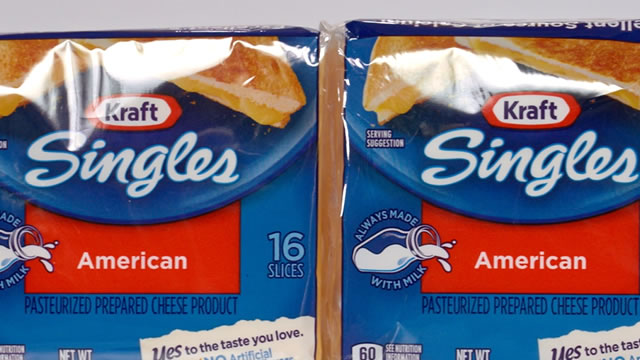
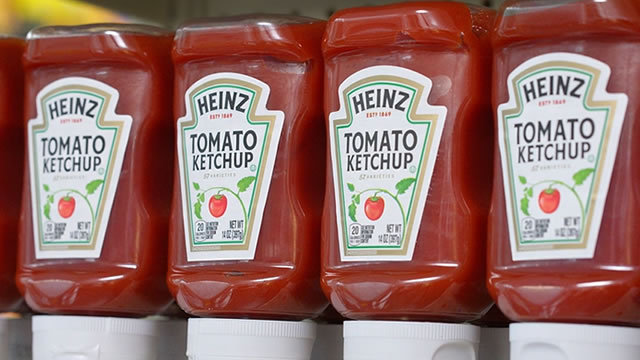
Core Viewpoint - The Kraft Heinz Company is considering a spin-off of its grocery business while retaining its high-growth condiments and sauces segment, with the spin-off entity potentially valued at $20 billion based on favorable business prospects [2][8]. Spin-Off Details - Post-separation, the remaining company (RemainCo) will focus on faster-growing, consumer-aligned brands, including iconic products like Heinz ketchup and Grey Poupon mustard, emphasizing innovation and global market expansion [3][6]. - The spin-off entity (SpinCo) will consist of traditional packaged food brands that have seen slower growth, such as Kraft cheese and Oscar Mayer meats, aiming to stabilize these legacy brands through operational efficiencies and targeted marketing [4][6]. Historical Context - Kraft Heinz was formed in July 2015 through a merger between Kraft Foods Group and H.J. Heinz Company, but has struggled with shifting consumer preferences, leading to a strategic review aimed at unlocking shareholder value [5][9]. - The company has been divesting underperforming brands and has seen a significant decline in stock value since the merger, with a 60% drop in stock price and a loss of nearly $57 billion in market capitalization [7][9]. Financial Implications - The spin-off could unlock significant value, potentially allowing the combined entities to exceed Kraft Heinz's current market capitalization of approximately $32 billion, providing clearer visibility of each segment's performance [8][9]. Industry Context - The restructuring of Kraft Heinz mirrors broader industry trends, similar to Kellogg's recent split, which has led to significant stock gains for both resulting companies [9].

Kraft Heinz considers breakup amid sluggish sales, changing consumer preferences: report
New York Post· 2025-07-11 20:03
Core Viewpoint - Kraft Heinz is considering a spinoff of a significant portion of its grocery business due to changing consumer preferences towards healthier, less processed foods, which could create a new entity valued at up to $20 billion [1][7]. Company Strategy - The remaining Kraft Heinz entity would focus on sauces and condiments, including well-known brands like Heinz ketchup and Grey Poupon [2]. - Executives believe that separating the two units could enhance overall market value, potentially exceeding the current $31 billion market cap [3]. Financial Performance - Kraft Heinz has struggled to meet expectations since its 2015 merger, with little sales growth and declining profits, resulting in a stock price drop of over 60%, equating to a loss of approximately $57 billion in market value [11][16]. - The company reported around $28 billion in annual revenue at the time of the merger, but by 2019, it faced rising costs and a $15 billion write-down related to its Kraft and Oscar Mayer brands [8][9]. Market Response - Following news of the potential spinoff, Kraft Heinz shares surged nearly 4%, trading around $27 [2]. - The stock has experienced significant volatility, peaking near $96 in early 2017 and recently opening at $26.90, just above its 52-week low [12]. Strategic Considerations - Kraft Heinz is evaluating various strategic transactions to unlock shareholder value, with discussions ongoing but no final decisions made yet [4][14]. - The company has also been exploring the sale of underperforming brands, including Oscar Mayer and Maxwell House, but these efforts have not yet succeeded [13].