Polypropylene (PP)

Search documents
中国工业:超越能源视角,航道封锁对供应链及全球化进程的影响-China Industrials_ Looking beyond energy_ impact of blockade on the supply chain and going global
2026-03-26 13:20
Summary of Conference Call Notes Industry Overview - **Industry Focus**: China Industrials, specifically the petrochemical sector and its downstream applications - **Key Context**: The ongoing blockade of the Strait of Hormuz is impacting global energy supply and potentially disrupting supply chains for petrochemical products, which are critical in various industries including automotive, home appliances, and agriculture [1][2][3] Core Insights - **Supply Chain Disruption**: - The blockade could lead to significant shortages of petrochemical products such as ethylene, propylene, and glycol, affecting production in industries like automotive and construction machinery [2][3] - Major global petrochemical producers, particularly in South Korea, Japan, and ASEAN, have announced production cuts, indicating a tightening supply [2] - Strikes in various countries (Brazil, Philippines, Ireland, India) are exacerbating logistics issues, further complicating supply chains [2] - **China's Position**: - China is the largest exporter of petrochemical products, with exports exceeding US$320 billion in 2025. Chinese companies may benefit from supply chain disruptions faced by international competitors [1] - Historical context suggests that during the COVID-19 pandemic, Chinese corporates gained market share due to their stable supply chains [1] Potential Beneficiaries - **Companies Identified**: - A list of companies that could gain market share due to supply chain disruptions includes: - Haier - Fuyao Glass - Kedali - Hengli Hydraulic - CSSC - XCMG - Sinotruk - Yutong - Ninebot - Pharmaron [4] Sector Implications - **Automotive and Home Appliances**: - Companies like Kedali and Fuyao Glass are positioned to benefit from rising demand in Europe due to increased natural gas prices, which may drive up local demand for battery energy storage and auto glass [14][17] - **Construction Machinery**: - The construction machinery sector may face challenges due to higher oil prices affecting raw material processing. However, Chinese manufacturers could gain global market share due to their resilient supply chains [15] - **Shipbuilding**: - The blockade may increase costs for global shipbuilders, but Chinese shipyards could become more competitive due to their higher stock of oil and gas, potentially increasing new build orders [18] Risks and Considerations - **Macroeconomic Risks**: - A weak Chinese economy could lead to reduced demand for industrial goods, impacting growth in the sector. The cancellation of preferential policies for high-tech companies could also affect earnings [19] Additional Insights - **Downstream Usage of Petrochemical Products**: - Various petrochemical products have significant downstream applications across multiple sectors, highlighting the interconnectedness of the industry [5] - **Market Dynamics**: - The report emphasizes the potential for Chinese companies to capture market share if global competitors face supply chain disruptions, particularly in the context of rising energy prices and geopolitical tensions [1][14][17] This summary encapsulates the key points from the conference call, focusing on the implications for the petrochemical industry and the potential beneficiaries within the Chinese market.
LyondellBasell Industries (NYSE:LYB) 2026 Conference Transcript
2026-03-17 20:42
Summary of LyondellBasell Conference Call Company Overview - **Company**: LyondellBasell - **Participants**: Agustin Izquierdo (CFO), Jeffrey Zekauskas (Chemicals Analyst) Key Industry Insights North America - Demand in Q1 was rising, with January and February showing normal seasonal patterns. PMI indicators were positive, suggesting a potential recovery in durable goods [3][4] - Price increases for polyethylene (PE) and polypropylene (PP) were noted, with oxyfuels pricing benefiting from crude oil price increases [3][4] - North America is positioned advantageously in terms of feedstock availability [4] Europe - European operations faced pressure from imports and rising feedstock prices due to the ongoing conflict in the Middle East [4][5] - A rationalization of capacity is occurring, with an accelerated pace of closures anticipated [8] - The region is expected to see increased utilization rates as imports from the Middle East and China diminish [12][122] Asia - The market continues to experience oversupply, with elevated feedstock costs impacting profitability [5][6] - Operating rates are declining, particularly for non-integrated producers facing raw material cost pressures [38] Financial Highlights - Inventory days for PE were low at 37 days, supporting price increases of $0.10 per pound for March and April [7][19] - A $100 per ton price increase in North America could yield an additional $320 million in EBITDA, while in Europe, it would translate to $280 million [10][11] - The company declared a commercial force majeure in Europe to renegotiate pricing due to rapid increases in raw material costs [12][61] Operational Challenges - A fire at the Bayport facility has temporarily affected propylene oxide production, with recovery timelines uncertain [88][92] - Joint ventures in the Middle East are operating normally but face potential storage issues due to the conflict [73][74] Future Outlook - The company anticipates a significant benefit in Q2 and Q3 from price increases and improved demand, contingent on the duration of the conflict [150][152] - LyondellBasell aims to maintain a leverage ratio of 2.5 times through the cycle, with a focus on cash generation and debt reduction [103][111] Additional Considerations - The company is actively managing working capital, expecting a consumption of $200-$250 million in 2025 [50][53] - The transaction for selling assets in Europe is on track, with a closing expected in the first half of 2026 [66][70] This summary encapsulates the key points discussed during the conference call, highlighting LyondellBasell's current market position, operational challenges, and future outlook in the context of the ongoing geopolitical situation.

Conflict Profits: Why These 2 Chemical Stocks Are Suddenly Soaring
Yahoo Finance· 2026-03-17 15:37
Group 1 - A significant rally is occurring in the basic materials sector, particularly for chemical companies Dow Inc. and LyondellBasell Industries, with Dow's shares rising over 9% and LyondellBasell's over 10% on March 12, 2026 [1] - This upward momentum is surprising given the companies' recent earnings reports, where Dow reported a loss of 34 cents per share and LyondellBasell a loss of 26 cents per share for Q4 2025 [2] - The rally is attributed to a new geopolitical reality, specifically escalating conflict in the Middle East, which is causing a supply shock in the global chemical market [3] Group 2 - The conflict is impacting the Strait of Hormuz, a critical chokepoint for energy and chemical shipments, leading to a constriction in the supply of key petrochemicals like polyethylene and polypropylene [3] - This disruption is forcing buyers to seek reliable alternatives, driving prices higher and creating a favorable environment for producers insulated from logistical issues [3] - Major Wall Street firms, including Citigroup, are upgrading their ratings and outlook for Dow and LyondellBasell, indicating a significant investment opportunity [4]

Petronet LNG inks secured term loan facility of ₹12,000 crore
BusinessLine· 2025-12-10 15:53
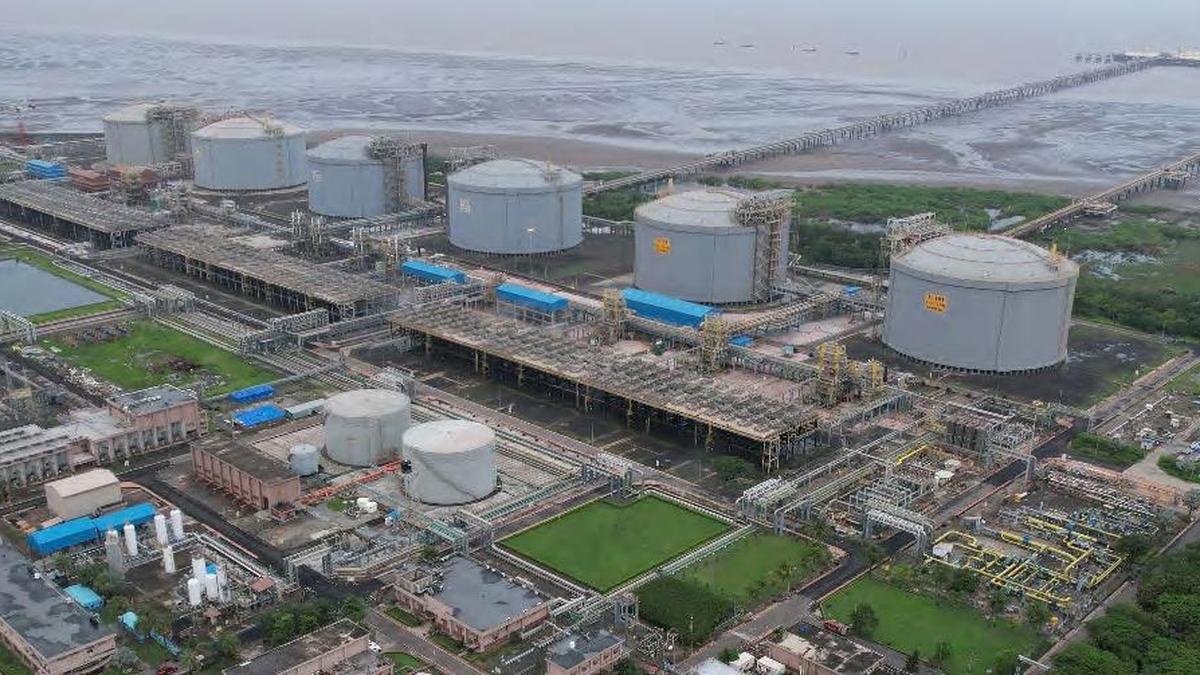
Core Viewpoint - State-run Petronet LNG (PLL) has secured a ₹12,000 crore secured rupee term loan (RTL) facility from a consortium of banks to finance its Petrochemicals Project and other capital expenditures [1][2]. Group 1: Loan Facility Details - The consortium includes State Bank of India and Bank of Baroda, each providing a sanctioned limit of ₹6,000 crore [2]. - The RTL facility was finalized through a competitive bidding process, reflecting strong confidence in PLL's projects and financial profile [4]. - The terms of the secured loan are better than initial financing assumptions, enhancing project viability and supporting PLL's strategic objectives [6]. Group 2: Project and Capacity Expansion - PLL is establishing a PDH unit with a capacity of 750,000 tonnes per annum and a PP unit of 500,000 tonnes per year at Dahej, Gujarat [3]. - PLL controls 43% of India's LNG re-gasification capacity and manages about two-thirds of the country's LNG imports, with a total regasification capacity of 22.5 million tonnes per annum [7]. - The company is augmenting the Dahej terminal capacity from 17.5 mtpa to 22.5 mtpa, expected to be commissioned shortly [7]. - PLL is also developing a greenfield LNG regasification terminal with a capacity of 5 mtpa at Gopalpur, Odisha [8].