Real estate properties (malls

Search documents
Can Realty Income's Broad Reach Shield It and Drive Superior Returns?
ZACKS· 2026-01-21 17:15
Core Insights - Realty Income has maintained monthly dividends for 667 consecutive months, supported by a well-structured portfolio of over 15,500 properties leased to more than 1,600 tenants across 92 industries, with no single tenant contributing more than 3.3% of annualized rent, thereby limiting concentration risk and stabilizing cash flows [1][9] Portfolio Performance - As of Q3 2025, Realty Income's portfolio occupancy was 98.7%, with a rent recapture rate of 103.5% across 284 leases, indicating strong tenant retention and willingness to pay higher rents [2][9] - The top 20 tenants account for approximately 35% of total rent, providing a diversified mix that historically reduces earnings volatility [2] Investment Strategy - In Q3 2025, Realty Income invested around $1.4 billion in new investments at an average initial yield of 7.7%, reflecting consistent tenant demand [2][9] - The company has diversified its capital allocation strategy, including an $800 million preferred equity investment in CityCenter Las Vegas and a partnership with GIC, which enhances income stability beyond traditional leases [3] Geographic Diversification - Europe contributes 17.7% of the total annualized base rent from 572 properties, blending U.S. retail with global reach to provide additional stability [3][9] Operational Efficiency - Approximately 98% of Realty Income's portfolio consists of single-tenant properties under triple-net lease agreements, where operating costs are primarily tenant-paid, supporting steady margins and enabling the company's 133rd dividend increase [4] Growth Outlook - Realty Income continues to grow by leveraging scale and data to secure attractive yields, diversifying by tenant, geography, and deal type, positioning the portfolio for various market cycles [5] Market Performance - Realty Income's shares have increased by 8.7% over the past month, outperforming the industry growth of 3.6% [8] Valuation Metrics - Realty Income trades at a forward 12-month price-to-FFO of 13.91, which is below the industry average but above its one-year median of 13.15, and it carries a Value Score of D [10]


Income Alert: Get Paid This Month with 3 Singapore Billionaire REITs
The Smart Investor· 2025-11-03 23:30
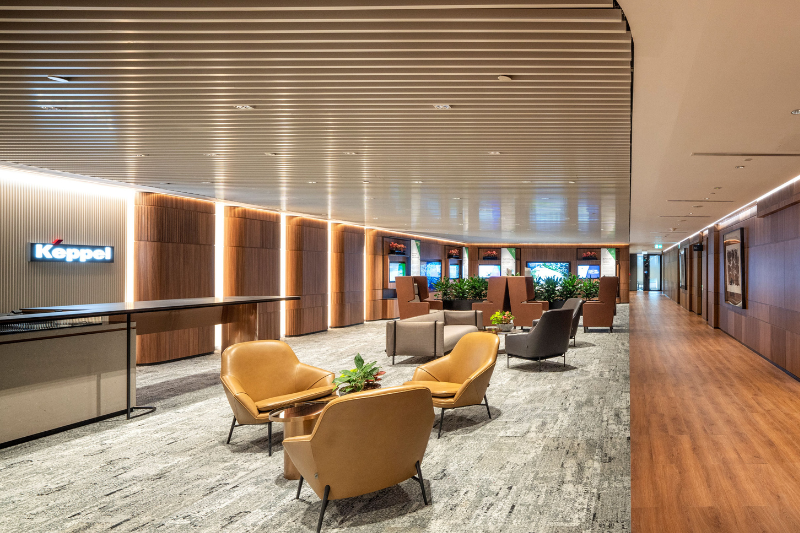
Core Insights - The article discusses the differing realities of three major REITs in Singapore—Frasers Centrepoint Trust, Keppel REIT, and Suntec REIT—highlighting their upcoming distributions and financial performances [1] Keppel REIT - For the first nine months of 2025, property income increased by 5.5% YoY to S$204.5 million, while net property income rose by 8.6% to S$161.3 million [2] - Distributable income from operations decreased by 0.6% to S$144.6 million due to management's decision to receive 25% of fees in cash instead of units, which distorted the income figures [3] - If fees had been paid entirely in units, distributable income would have increased by 6.7% YoY to S$155.3 million [3] - The portfolio's committed occupancy improved to 96.3% from 95.9% in the previous quarter, with rental reversions of 12% achieved across over 1.4 million square feet of leases [3] - The Singapore portfolio, which constitutes 78.5% of assets, saw a 15.4% YoY increase in results from associates to S$75.4 million, driven by higher rentals at key properties [4] Frasers Centrepoint Trust - Frasers Centrepoint Trust (FCT) is Singapore's leading suburban retail REIT, managing S$8.3 billion in assets and owning nine suburban malls with approximately three million square feet of retail space [5] - For FY2025, FCT reported gross revenue of S$389.6 million, a 10.8% YoY increase from S$351.7 million in FY2024 [5] - Net property income rose by 9.7% to S$278.0 million, and distribution per unit (DPU) increased by 0.6% to S$0.12113 [6] - The retail portfolio's committed occupancy was 98.1% as of 30 September 2025, with rental reversion remaining resilient at 7.8% for FY2025 [6][7] - FCT's strong performance was bolstered by the acquisition of Northpoint City South Wing and proactive portfolio management, including the divestment of Yishun 10 Retail Podium [8] Suntec REIT - Suntec REIT reported a DPU growth of 12.5% YoY to S$0.018 for 3Q'25, despite a 0.2% YoY decline in gross revenue to S$117.5 million and a 1.6% drop in net property income to S$78.5 million [10] - The DPU growth was primarily driven by non-operational factors, including lower financing costs and a reversal of withholding tax provisions [11] - Occupancy rates remained respectable, with 98.5% for Singapore offices and 99.3% for retail, but Australian property occupancy was lower at 87.3% [11] - Positive rental reversions were noted, but these did not translate into revenue or net property income growth [12] - Planned asset enhancement works at Suntec City Mall could provide necessary operational improvements, but distribution growth remains uncertain until one-off benefits normalize [12] Investment Insights - For dividend investors, the article emphasizes the importance of looking beyond headline DPU figures to assess the operational health of REITs [13] - FCT is highlighted as having the most sustainable profile due to genuine operational growth and balance sheet improvement, while Keppel REIT shows strong fundamentals obscured by fee structure changes [13] - Suntec REIT's DPU growth is seen as less sustainable, relying on financial adjustments rather than operational improvements [13][14]