
Rejuva

Search documents
Fractyl Health(GUTS) - 2025 Q4 - Earnings Call Transcript
2026-03-24 21:32
Financial Data and Key Metrics Changes - Research and development expenses decreased to $16.5 million for Q4 2025 from $20.3 million in Q4 2024, primarily due to strategic reprioritization and reduced costs associated with the pausing of the Revitalize-1 study [24] - SG&A expenses increased to $6.8 million for Q4 2025 from $4.9 million in Q4 2024, mainly due to underwriter's commissions related to financing [24] - The net loss for Q4 2025 was $43.7 million compared to $25 million in Q4 2024, with a significant portion of the increase attributed to a non-cash accounting change [25] - Adjusted EBITDA improved to -$21.2 million for Q4 2025 from -$22.1 million in Q4 2024, reflecting a decrease in operating expenses [25] - As of December 31, 2025, the company had approximately $81.5 million in cash and cash equivalents, expected to fund operations into early 2027 [25][26] Business Line Data and Key Metrics Changes - Revita is positioned as a solution for maintaining weight loss after GLP-1 therapy discontinuation, with a focus on a specific patient population that shows a strong treatment effect [4][20] - The pivotal study has enrolled over 300 participants across more than 30 sites, making it the largest sham-controlled GI endoscopy pivotal trial conducted [18] Market Data and Key Metrics Changes - The anticipated population on GLP-1 drugs is projected to exceed 30 million in the coming years, with over 50% expected to lose more than 17.5% of their total body weight [20] - The payer landscape is evolving, with expanded Medicare coverage of GLP-1s increasing the addressable patient population while also intensifying economic pressures on payers [20] Company Strategy and Development Direction - The company aims to submit a de novo classification request for Revita by late Q4 2026, with favorable FDA feedback received on the safety profile [19][20] - Revita is the first FDA breakthrough device designed for post GLP-1 weight maintenance, addressing a significant unmet need in the market [20] - The company plans to file a Category III CPT code application in summer 2026, with expectations for it to be effective by summer 2027 [21][62] Management's Comments on Operating Environment and Future Outlook - Management expressed confidence in the clinical signal of Revita, highlighting a strong dose-response relationship and a clear target population for treatment [28] - The pivotal study is designed to succeed with strong powering and an optimized cohort of patients, aiming for a positive outcome [28] - The company is committed to operating within its existing capital envelope until pivotal data is available, signaling alignment with shareholders [27][28] Other Important Information - The Rejuva program, targeting long-term metabolic remission from a single dose, is advancing with clinical trial applications submitted in the EU and Australia [22] - The company anticipates several key milestones in 2026, including pivotal data readouts and regulatory feedback [23] Q&A Session Summary Question: How is the ablation length determined? - Ablation length is calculated based on the total amount of duodenum ablated during the procedure, with a target minimum of 16 cm established for future procedures [31][33] Question: Does this impact how doctors will be trained in the future? - Physicians are trained to perform at least 10 cm of ablation, with the expectation that they can consistently achieve greater than 14 cm based on the data [34] Question: What is the role of efficacy in the de novo submission? - The de novo pathway determination is primarily a safety consideration, with efficacy being assessed as reasonable assurance of safety and effectiveness [39] Question: How long does it take to train physicians for the procedure? - Training takes less than three to four cases for physicians to perform adequate ablations, with consistency improving as they gain experience [56] Question: Will there be further analysis by length for the REMAIN-1 midpoint cohort? - Yes, further analysis by length will be provided in the upcoming data readouts [60] Question: What is the timeline for the CPT code filing? - The company plans to file for a Category III CPT code in June 2026, with an expected effective date in summer 2027 [62]

Fractyl Health(GUTS) - 2025 Q4 - Earnings Call Transcript
2026-03-24 21:32
Financial Data and Key Metrics Changes - Research and development expenses decreased to $16.5 million for Q4 2025 from $20.3 million in Q4 2024, primarily due to strategic reprioritization and reduced costs associated with the pausing of the Revitalize One study [24] - SG&A expenses increased to $6.8 million for Q4 2025 from $4.9 million in Q4 2024, mainly due to underwriter's commissions from financing [24] - The net loss for Q4 2025 was $43.7 million compared to $25 million in Q4 2024, with a significant portion of the increase attributed to a non-cash accounting change [25] - Adjusted EBITDA improved to negative $21.2 million for Q4 2025 from negative $22.1 million in Q4 2024, reflecting a decrease in operating expenses [25] - As of December 31, 2025, the company had approximately $81.5 million in cash and cash equivalents, expected to fund operations into early 2027 [25][26] Business Line Data and Key Metrics Changes - Revita, the lead asset, is positioned as a solution for maintaining weight loss after GLP-1 therapy discontinuation, with a focus on a pivotal study designed to validate its efficacy [4][5] - The pivotal study has enrolled over 300 participants across more than 30 sites, making it the largest sham-controlled GI endoscopy pivotal trial conducted [18] Market Data and Key Metrics Changes - The anticipated population on GLP-1 drugs is projected to exceed 30 million users in the coming years, with over 50% expected to lose more than 17.5% of their total body weight [20] - The payer landscape is evolving, with expanded Medicare coverage of GLP-1s increasing the addressable patient population and intensifying economic pressures on payers [20] Company Strategy and Development Direction - The company aims to submit a de novo classification request for Revita by late Q4 2026, with favorable FDA feedback received on its safety profile [19] - Revita is positioned as the first FDA breakthrough device designed for post GLP-1 weight maintenance, addressing a significant unmet need in the market [20] - The company plans to file a Category III CPT code application in summer 2026, with expectations for effective reimbursement by summer 2027 [21] Management's Comments on Operating Environment and Future Outlook - Management expressed confidence in the clinical signal of Revita, highlighting a strong dose-response relationship and a well-structured pivotal study [28] - The company is committed to operating within its existing capital envelope without planned incremental capital raises before pivotal data is available [27][28] - Management anticipates delivering top-line six-month primary endpoint data in early Q4 2026, which is considered a critical milestone for the company [24][28] Other Important Information - The Rejuva program, targeting long-term metabolic remission from a single dose, is advancing with clinical trial applications submitted in the EU and Australia [22] - The company is preparing for a potential commercial launch of Revita, with a clear and validated pathway for reimbursement [21][22] Q&A Session Summary Question: How is the ablation length determined? - Ablation length is calculated based on the total amount of duodenum ablated during the procedure, with a target minimum of 16 centimeters established for future studies [31][33] Question: Does this impact physician training for ablation length? - Physicians were advised to aim for at least 10 centimeters of ablation, with training allowing them to consistently achieve greater than 14 centimeters [34] Question: What is the role of efficacy in the de novo submission? - The de novo pathway primarily considers safety, with efficacy being a secondary factor compared to PMA submissions [39] Question: Is 16 centimeters of ablation readily achievable in the average patient? - In the pivotal cohort, the mean and median ablation length exceeded 16 centimeters, which is considered achievable by trained investigators [41] Question: How long does it take to train physicians for the procedure? - Training typically requires less than 3-4 cases for physicians to perform adequate ablations [56]
Fractyl Health(GUTS) - 2025 Q4 - Earnings Call Transcript
2026-03-24 21:30
Financial Data and Key Metrics Changes - Research and development expenses decreased to $16.5 million for Q4 2025 from $20.3 million in Q4 2024, primarily due to strategic reprioritization and lower personnel-related costs [24] - SG&A expenses increased to $6.8 million for Q4 2025 from $4.9 million in Q4 2024, mainly due to underwriter's commissions from financing [24] - The net loss for Q4 2025 was $43.7 million compared to $25 million in Q4 2024, with a significant portion of the increase attributed to a non-cash accounting change [25] - Adjusted EBITDA improved to negative $21.2 million for Q4 2025 from negative $22.1 million in Q4 2024, reflecting a decrease in operating expenses [25] - As of December 31, 2025, the company had approximately $81.5 million in cash and cash equivalents, expected to fund operations into early 2027 [25] Business Line Data and Key Metrics Changes - Revita, the lead asset, is positioned as a solution for maintaining weight loss after GLP-1 therapy discontinuation, with a focus on a pivotal study designed to validate its efficacy [4][5] - The REMAIN-1 pivotal study has enrolled over 300 participants across more than 30 sites, making it the largest sham-controlled GI endoscopy pivotal trial conducted [17] Market Data and Key Metrics Changes - The anticipated filing via the de novo pathway is expected to coincide with a growing population of over 30 million users of GLP-1 drugs, with more than 50% likely to lose over 17.5% of their total body weight [19] - The payer landscape is evolving, with expanded Medicare coverage for GLP-1s, increasing the addressable patient population and creating economic pressure on payers [20] Company Strategy and Development Direction - The company aims to submit a de novo classification request by late Q4 2026, with favorable FDA feedback received on its safety profile [18] - Revita is positioned as the first FDA breakthrough device designed for post GLP-1 weight maintenance, addressing a significant unmet need in the market [20] - The Rejuva program is advancing separately, targeting long-term metabolic remission from a single dose, with clinical trial applications submitted in the EU and Australia [22] Management's Comments on Operating Environment and Future Outlook - Management expressed confidence in the clinical signal of Revita, highlighting a strong dose-response relationship and a well-structured pivotal study [27] - The company is committed to operating within its existing capital envelope without planned incremental capital raises before pivotal data is available [27] - Management anticipates delivering top-line six-month primary endpoint data in early Q4 2026, which is considered a critical milestone for the company [24][27] Other Important Information - The company plans to file a Category III CPT code application in summer 2026, with expectations for it to take effect in summer 2027 [20] - Transitional Pass-Through Payment via CMS is expected to provide a mechanism to cover the cost of the Revita device, ensuring hospitals can maintain a positive contribution margin [21] Q&A Session Summary Question: How is the ablation length determined? - Ablation length is determined during the procedure, with a target minimum of 16 centimeters established based on previous studies [31][33] Question: Does this impact how doctors will be trained in the future regarding ablation length? - Physicians were trained to perform at least 10 centimeters of ablation, with the expectation that they can consistently achieve greater than 14 centimeters based on the data [34] Question: What role does efficacy play in the de novo submission? - The de novo pathway determination is primarily a safety consideration, with efficacy being assessed under a reasonable assurance of safety and effectiveness [39] Question: How long does it take to train physicians for the procedure? - Training takes less than 3-4 cases to ensure physicians can perform adequate ablation [57] Question: Will there be further analysis by length for the one-year REMAIN midpoint cohort? - Yes, further analysis by length will be provided [62]
Fractyl Health Reports Fourth Quarter and Full Year 2025 Financial Results and Business Updates
Globenewswire· 2026-03-24 20:01
Core Insights - Fractyl Health, Inc. has completed randomization in the REMAIN-1 Pivotal Cohort, with topline 6-month data expected in early Q4 2026, and received favorable FDA feedback on its De Novo classification request, with submission anticipated in late Q4 2026 [1][2][10] Clinical Developments - New post-hoc analyses from the REMAIN-1 Midpoint Cohort show a statistically significant ablation-length (dose)-dependent treatment effect on post-GLP-1 weight maintenance at 6 months, reinforcing confidence in the REMAIN-1 Pivotal Cohort design [2][4][5] - Patients with greater GLP-1-induced weight loss prior to randomization exhibited larger sham-adjusted treatment effects at 6 months, with effect size increasing over time [1][3][5] Financial Performance - For Q4 2025, Fractyl reported a net loss of $43.7 million, compared to $25.0 million for the same period in 2024, primarily due to a non-cash accounting change in fair value related to warrant liabilities [19][31] - Research and development expenses were $16.5 million for Q4 2025, down from $20.3 million in Q4 2024, attributed to strategic reprioritization [19][29] - As of December 31, 2025, the company had approximately $81.5 million in cash and cash equivalents, which is expected to fund operations into early 2027 [19][28] Regulatory Strategy - The FDA has acknowledged the safety profile of the Revita DMR System as consistent with a Class II device classification, with final determinations pending a complete safety dataset review [10][17] - The company is advancing toward multiple anticipated clinical and regulatory milestones, including pivotal readout and potential U.S. regulatory submission [9][10] Market Context - Approximately 30 million patients are projected to be on GLP-1s by 2035, with many facing discontinuation and significant weight regain, highlighting the potential market for Fractyl's procedural therapy for post-GLP-1 weight maintenance [3][4]

Fractyl Health Enters a Catalyst-Rich 2026 Positioned to Define the Post-GLP-1 Weight Maintenance Therapeutic Category
Globenewswire· 2026-01-05 12:00
Core Insights - Fractyl Health is positioned for a significant year in 2026, focusing on clinical and regulatory milestones for its Revita and Rejuva programs [2][3] Financial Overview - As of December 31, 2025, Fractyl had approximately $81.5 million in cash and cash equivalents, which increased to $85.6 million following the exercise of Tranche A warrants [6][8] - The current cash runway is expected to support operations through early 2027 [8] Revita Program - The Revita program aims to address post-GLP-1 weight maintenance, with pivotal data and potential PMA filing expected in H2 2026 [2][3] - Key milestones for Revita in 2026 include: - Late January: 6-month randomized data from the REMAIN-1 Midpoint Cohort - Early 2026: Completion of randomizations for the REMAIN-1 Pivotal Cohort - Q2 2026: 1-year REVEAL-1 Cohort data - Q3 2026: 1-year REMAIN-1 Midpoint Cohort data - H2 2026: Topline 6-month randomized data from the REMAIN-1 Pivotal Cohort and potential PMA filing [6][10] Rejuva Program - The Rejuva gene therapy platform is advancing towards clinical validation, with the first-in-human evaluation of RJVA-001 expected in 2026, pending regulatory authorization [5][11] - Key milestones for Rejuva in 2026 include: - Q2 2026: Regulatory feedback on the Clinical Trial Application (CTA) for RJVA-001 - H2 2026: First-in-human dosing of RJVA-001 and preliminary data [7][11] Company Overview - Fractyl Health focuses on innovative treatments for metabolic diseases, particularly obesity and type 2 diabetes (T2D), aiming to transform treatment from chronic management to disease-modifying therapies [9][10] - The company has a robust intellectual property portfolio, with 35 granted U.S. patents and approximately 45 pending applications [9]


Fractyl Health(GUTS) - 2025 Q3 - Earnings Call Transcript
2025-11-12 22:30
Financial Data and Key Metrics Changes - For Q3 2025, research and development expenses decreased to $17.5 million from $19.0 million in Q3 2024, primarily due to reduced spending on the Revitalize One study and lower stock-based compensation [17] - Selling, general, and administrative expenses increased to $5.2 million from $4.8 million in the same period last year, reflecting one-time costs associated with the issuance of warrants [17] - The company reported a net loss of $45.6 million, compared to a net loss of $23.2 million in Q3 2024, largely driven by a $23.5 million non-cash accounting change in the fair value of warrants [17] - As of September 30, 2025, cash and cash equivalents stood at approximately $77.7 million, bolstered by $83 million from recent underwritten offerings, extending the cash runway into early 2027 [18] Business Line Data and Key Metrics Changes - Revita, the company's endoscopic procedural therapy, demonstrated significant clinical results, with treated patients losing an additional 2.5% of total body weight while sham group patients regained about 10% after discontinuing tirzepatide [6][8] - Enrollment in the Remain One pivotal cohort was completed in Q2 2025, with over 60% of patients randomized as of October 31, 2025, ahead of schedule [7] Market Data and Key Metrics Changes - The company anticipates nearly 1 million annual procedures at peak adoption for Revita, translating to a substantial revenue opportunity [13] - Revita's unit economics are expected to create strong incentives for adoption at clinical sites, with gross margins comparable to or better than other advanced endoscopic interventions [13] Company Strategy and Development Direction - The company is focused on advancing clinical programs and regulatory milestones, with a clear path for multiple catalysts expected within the next 12 months, including pivotal data and potential PMA submission [19] - Revita is positioned as a transformative therapy for obesity, particularly in post-GLP-1 weight maintenance, complementing existing chronic drug therapies [9][11] Management's Comments on Operating Environment and Future Outlook - Management expressed confidence in the upcoming clinical and regulatory milestones, emphasizing the strong data supporting Revita and the growing market need for effective obesity treatments [4][19] - The company is optimistic about the potential for Revita to significantly reduce weight regain rates, which is a critical challenge for patients discontinuing GLP-1 therapies [9][22] Other Important Information - The company has established a ready-to-activate commercial model with experienced physicians at major clinical centers across the U.S. [12] - Revita's durable activity is expected to provide economic advantages by potentially reducing the need for ongoing drug therapy and associated health risks [11] Q&A Session Summary Question: What are the expectations for the six-month updates for Reveal One and Remain One Midpoint? - Management expects the six-month Reveal dataset to show consistency in results, with a goal of less than 5% weight regain, which would be a compelling outcome [21][23] Question: Can you clarify the German registry data regarding weight loss maintenance? - The average weight loss at one year was 8%, and at two years was 8.9%, indicating no waning of effect [26][27] Question: What are the manufacturing needs for Revita? - The company is confident in its current manufacturing capabilities to support clinical studies and is preparing for scale [41]
Fractyl Health Reports Third Quarter 2025 Results; Revita® Clinical Momentum Builds Toward 2026 Pivotal Readout and PMA Filing, Cash Runway Extended into Early 2027
Globenewswire· 2025-11-12 21:05
Core Insights - Fractyl Health, Inc. reported positive results from the REMAIN-1 Midpoint Cohort, indicating that the Revita procedure can maintain weight loss after discontinuation of GLP-1 therapy, with 6-month data expected in Q1 2026 [1][11] - The company completed $83 million in underwritten offerings, which is anticipated to extend its cash runway through early 2027, supporting upcoming clinical and regulatory milestones [3][20] Company Updates - Fractyl Health is focused on innovative treatments for obesity and type 2 diabetes (T2D), with ongoing momentum in its Revita and Rejuva platforms [3][18] - The REMAIN weight maintenance program includes three cohorts: REVEAL-1, REMAIN-1 Midpoint, and REMAIN-1 Pivotal, aimed at evaluating Revita's effectiveness in sustaining weight loss [5][21] - The REMAIN-1 Midpoint Cohort showed that Revita-treated patients lost an additional 2.5% of total body weight after stopping tirzepatide, while sham-treated patients regained 10% [11] Financial Performance - For Q3 2025, Fractyl reported a net loss of $45.6 million, compared to $23.2 million in Q3 2024, primarily due to a non-cash accounting change related to warrants [20][27] - Research and development expenses were $17.5 million for Q3 2025, down from $19.0 million in the same period of 2024 [20][27] - As of September 30, 2025, the company had approximately $77.7 million in cash and cash equivalents, which is expected to fund operations into early 2027 [20][26] Upcoming Milestones - The company expects to report 6-month data from the REVEAL-1 Cohort in Q4 2025 and pivotal data from the REMAIN-1 Pivotal Cohort in H2 2026 [1][12] - Fractyl anticipates filing a Premarket Approval (PMA) application with the FDA in H2 2026 [12] Research and Development - The Rejuva platform is advancing gene therapies for T2D and obesity, with RJVA-002 showing promising preclinical results, including approximately 30% weight loss in a mouse model [10][13] - The company has submitted the first Clinical Trial Application (CTA) module for RJVA-001, with preliminary data expected in 2026 [22][13]
Fractyl Health Announces Potent Preclinical Results from RJVA-002, a Dual GIP/GLP-1 Gene Therapy Candidate for Obesity
Globenewswire· 2025-10-07 11:00
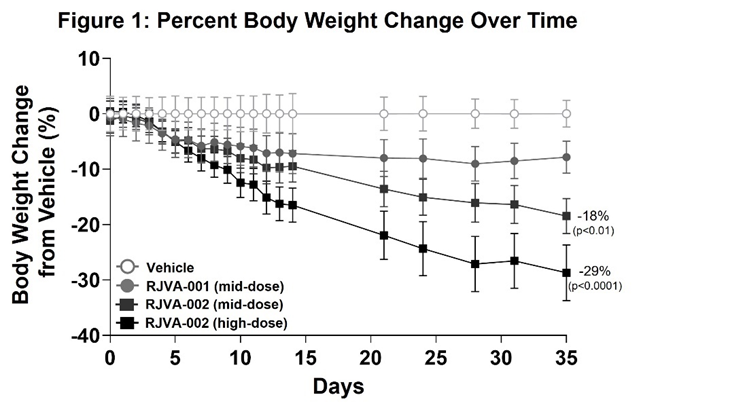
Core Insights - Fractyl Health, Inc. announced promising preclinical data for RJVA-002, indicating a potential for significant weight loss in obesity treatment, achieving approximately 30% weight loss over five weeks in a mouse model, with no observed adverse effects [1][2][3] Company Overview - Fractyl Health is focused on innovative metabolic therapeutics aimed at addressing the root causes of obesity and type 2 diabetes (T2D) [9] - The company has a robust intellectual property portfolio with 33 granted U.S. patents and around 40 pending applications [9] Product Development - RJVA-002 is the second candidate from the Rejuva Smart GLP-1 platform, which aims to provide a durable treatment for obesity and T2D [1][7] - The Rejuva platform utilizes gene therapy to enable long-term remission of metabolic diseases by reprogramming pancreatic islet cells to produce metabolic hormones [7][10] - RJVA-001, the first candidate from the Rejuva platform, is expected to enter clinical trials in 2026 for T2D patients [7][10] Preclinical Study Results - In a diet-induced obesity mouse model, a single administration of RJVA-002 resulted in a mean weight loss of 18% and 29% for mid- and high-dose cohorts, respectively, by day 35 [3][2] - The weight loss trajectory for RJVA-002 has not yet plateaued, indicating potential for sustained effects [2][3] Future Directions - The company plans to present further results from ongoing studies at upcoming scientific congresses, which will include metabolic measurements [4] - Fractyl Health aims to transform the treatment paradigm for obesity and T2D from chronic disease management to durable remission [3][10]
Fractyl Health (NasdaqGM:GUTS) Earnings Call Presentation
2025-09-26 11:00
Revita Program - The durable weight maintenance market represents an untapped opportunity of approximately $175 billion[7] - 85% of patients regain weight after stopping GLP-1 drugs, highlighting a significant unmet clinical and economic need[10] - The REMAIN-1 Pivotal Cohort is on track to complete randomization in early 2026, with potential PMA filing in H2 2026[10] - In the REMAIN-1 Midpoint Cohort study, Revita patients experienced a further 2.5% weight loss after stopping GLP-1s, compared to a 10% weight regain in sham-treated patients (p=0.014) at 3 months[54] Rejuva Program - The company submitted the first CTA module in the EU for RJVA-001, with anticipated preliminary data in 2026[10] - Rejuva aims for a cost of goods (COGs) of less than $10,000 per patient, targeting a price benchmark of approximately $10,000 per year based on ICER pricing[92] - Preclinical data showed that Rejuva's RJVA-001 demonstrated glucose-lowering activity and improved weight compared to daily semaglutide in a db/db murine model[101] - In a DIO mouse model, RJVA-001 prototype showed sustained weight loss while preserving lean mass, outperforming semaglutide[104] Intellectual Property - The company has a robust intellectual property estate with 100+ patents issued globally, including 33 U S patents, and 70+ pending patent applications as of June 2025[135]
Fractyl Health Expands Board of Directors with Appointments of Industry Leaders to Advance Clinical Execution and Strategic Growth
Globenewswire· 2025-09-03 11:00
Core Insights - Fractyl Health, Inc. has appointed Christopher Thompson, M.D. and Ian Sheffield as Independent Directors to strengthen its Board of Directors as it advances its product candidates Revita and Rejuva [1][2][5] Company Overview - Fractyl Health is a metabolic therapeutics company focused on innovative treatments for obesity and type 2 diabetes (T2D), aiming to transform disease management from symptomatic to disease-modifying therapies [6] - The company has a robust intellectual property portfolio with 33 granted U.S. patents and approximately 40 pending U.S. applications [6] Product Development - Revita is designed to remodel the duodenal lining to reverse damage caused by high-fat and high-sugar diets, and it has received U.S. FDA Breakthrough Device designation for weight maintenance in patients who discontinue GLP-1 based drugs [7] - The pivotal study REMAIN-1 for Revita has been initiated and completed enrollment [7] - The Rejuva platform focuses on developing AAV-based gene therapies for obesity and T2D, with the first Clinical Trial Application submitted for RJVA-001 [8] Leadership Appointments - Christopher Thompson, M.D. brings extensive experience in bariatric endoscopy and has co-founded several start-ups in endoscopic technology, which aligns with Fractyl's upcoming clinical milestones [2][3] - Ian Sheffield has a 20-year track record in healthcare investing and operations, which will aid Fractyl in navigating late-stage development and strategic partnerships [3][5] Strategic Importance - The appointments of Thompson and Sheffield are seen as timely as the company prepares for key milestones and aims to capture significant clinical and economic opportunities in metabolic care [5]