Rental Apartments

Search documents
Vonovia Stock Drops On Weak FY25 Revenues, Stable Outlook, Despite A Turnaround
RTTNews· 2026-03-19 13:14
Core Insights - Vonovia SE's shares fell approximately 10% following the announcement of weak revenues and unit numbers for fiscal 2025, while maintaining its outlook for fiscal 2026 and 2028 [1] Financial Performance - The company reported a net profit for fiscal 2025, primarily due to a significant income tax gain, reversing years of losses [2] - For the 12-month period ending December 2025, net income attributable to Vonovia's shareholders was 3.723 billion euros, compared to a net loss of 896 million euros the previous year [5] - Adjusted shareholder earnings increased to 1.541 billion euros from 1.463 billion euros year-over-year [6] - Net income from fair value adjustments of investment properties was 1.390 billion euros, compared to a loss of 1.559 billion euros the prior year [7] Revenue and EBITDA - Total adjusted EBITDA for fiscal 2025 was 2.80 billion euros, reflecting a 6.0% year-over-year increase, driven by contributions across all business lines [8] - Revenue from property management decreased to 4.918 billion euros from 5.087 billion euros in the previous year, while revenue from the property-letting business fell to 4.749 billion euros from 4.880 billion euros [8] Future Outlook - For fiscal 2026, Vonovia expects total adjusted EBITDA to rise to between 2.95 billion euros and 3.05 billion euros, up from 2.800 billion euros in fiscal 2025 [3] - By 2028, total adjusted EBITDA is projected to grow to between 3.2 billion euros and 3.5 billion euros, with non-rental business contributing at least 15% to total EBITDA in 2026 and between 20% and 25% in 2028 [4] Shareholder Returns - The Management and Supervisory Board proposed a cash dividend of 1.25 euros per share, a 2.5% increase from the previous year [5]


Renters Gain Advantage in Housing Market as Landlords Lose Leverage
Investopedia· 2026-02-19 01:00
Core Insights - Renters gained leverage over landlords in 2025 due to increased rental vacancies and new apartment construction, with vacancies rising to 7.6% from 7.2% the previous year [1] - The rental market is shifting towards a more balanced state, allowing renters more flexibility and choice [1] Rental Vacancies Vary by Location - Rental vacancies in Austin, Texas, surged to 13.8% in 2025, up from 8.2% the prior year, while other cities like Buffalo, Dallas, and Detroit also saw increases [1] - In contrast, markets like Pittsburgh and Richmond experienced a shift favoring landlords, indicating regional variability in rental market dynamics [1] New Construction Eases Affordability Crunch - Over 500,000 rental units were completed in 2025, nearing record highs, with affordable housing construction increasing by 73% from 2020 to 2024 [1] - The rise in apartment construction is contributing to a decrease in rent payments, which fell by 1.5% in January compared to the previous year, marking a 29-month decline [1]
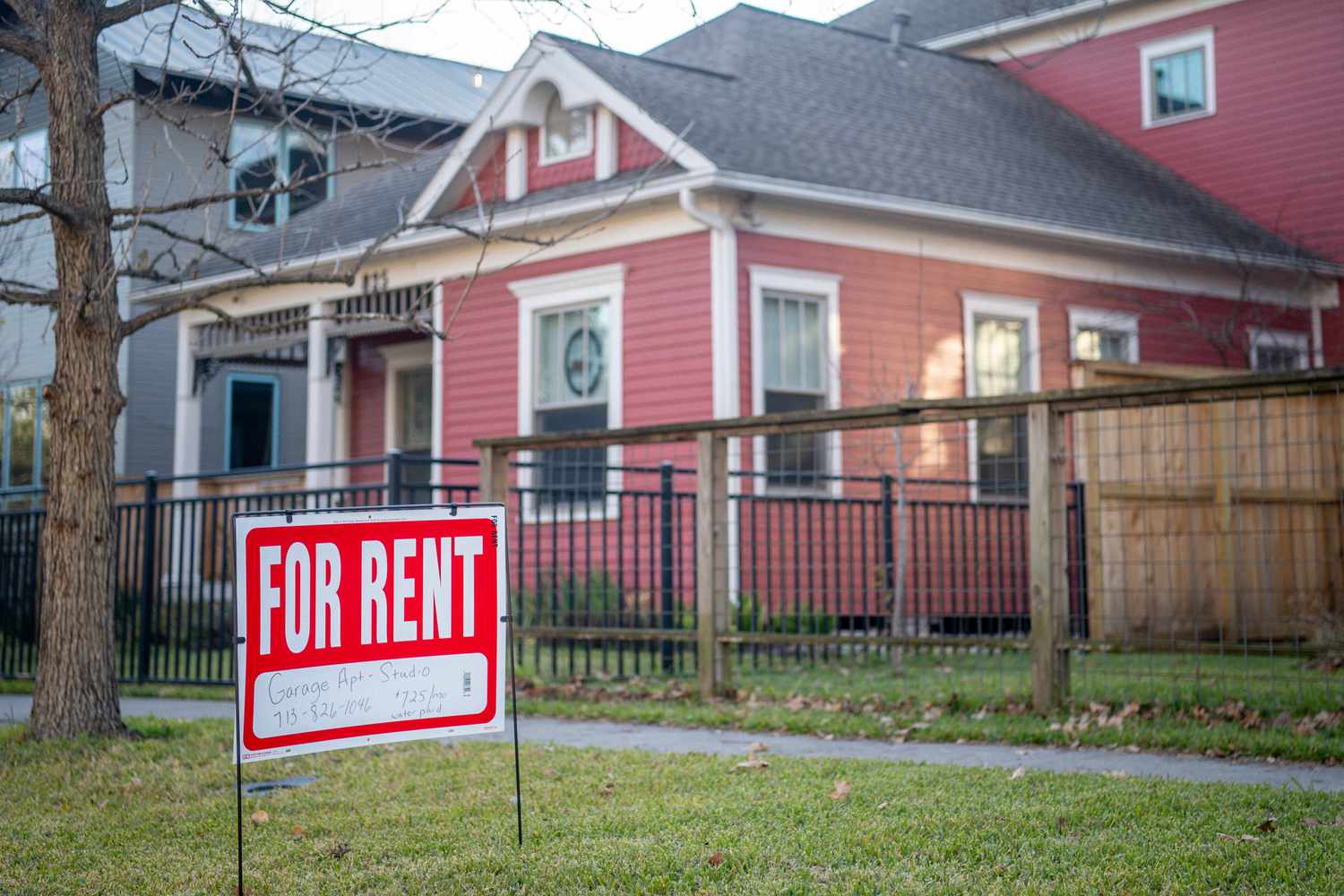
Texas capital's household growth surges, far outpacing national rate
Fox Business· 2026-02-17 22:23
Core Insights - The Austin, Texas region has experienced rapid population growth, adding households at a rate approximately four times that of the national average, with a 51% increase from 2014 to 2024 [1][2] Household Growth - The Austin region gained 357,000 households, increasing the total from 703,976 to 1,061,155, while the U.S. as a whole saw a 13% growth in households during the same period [2] - The growth in households was observed across both younger and older age groups, indicating a diverse demographic shift [2] Age Demographics - The share of households led by individuals under 25 increased from 5.1% to 5.9%, while those aged 25 to 34 rose from 21.1% to 21.7% from 2014 to 2024 [5] - Households headed by individuals aged 65 to 74 increased from 9.5% to 10.7%, and those over 75 rose from 5.6% to 7% during the same period [9][10] Housing Demand - The significant growth in households led by individuals in their late 20s and 30s is expected to drive demand for rentals and starter homes, maintaining a competitive entry-level housing market [6] - The diverse growth across age groups supports steady demand for various housing types, including single-level homes and properties with less maintenance [12][14] Market Dynamics - The simultaneous growth of young adults, families, and older households enhances housing demand across multiple price points and types, ensuring a balanced market [14] - The decline in the share of households led by those aged 35 to 44, 45 to 54, and 55 to 64 indicates a shift in demographic focus, but overall demand remains strong due to the growth in other age cohorts [12][13]


Kojamo Plc: Kojamo plc’s Financial Statements Release 1 January–31 December 2025
Globenewswire· 2026-02-11 06:00
Core Insights - Kojamo plc reported an increase in total revenue and net rental income for 2025, despite property sales, with an improved occupancy rate throughout the year [1][13] Financial Performance - Total revenue for Q4 2025 decreased by 1.8% to EUR 111.7 million compared to EUR 113.6 million in Q4 2024, while total revenue for the full year increased by 0.6% to EUR 455.2 million from EUR 452.4 million [6][7] - Net rental income for Q4 2025 increased by 2.2% to EUR 76.0 million, and for the full year, it rose by 1.6% to EUR 307.7 million [6][7] - The net rental income margin improved to 68.1% in Q4 2025 from 65.5% in Q4 2024, and for the full year, it was 67.6% compared to 66.9% in 2024 [6][7] - Profit before taxes for Q4 2025 was EUR 17.8 million, down 56.3% from EUR 40.7 million in Q4 2024, while for the full year, it was EUR 26.8 million, slightly up from EUR 26.3 million in 2024 [6][7] - Earnings per share decreased to EUR 0.06 in Q4 2025 from EUR 0.13 in Q4 2024, and for the full year, it was EUR 0.08 compared to EUR 0.09 in 2024 [6][7] Investment and Property Management - Kojamo owned 38,945 rental apartments at the end of 2025, down from 40,973 in 2024, having completed 0 apartments and sold 2,028 during the year [5][6] - Gross investments in Q4 2025 totaled EUR 14.8 million, a decrease of 52.7% from EUR 31.3 million in Q4 2024, while total gross investments for the year were EUR 42.5 million, down 19.6% from EUR 52.8 million in 2024 [6][8] - The fair value of investment properties at the end of 2025 was EUR 7.6 billion, down 4.3% from EUR 8.0 billion in 2024 [8] Occupancy and Market Trends - The financial occupancy rate improved to 94.8% in 2025 from 91.5% in 2024, with a notable increase in the last quarter to 96.3% [7][14] - The rental market is balancing, with signs of recovery in the capital region, while rental markets in Tampere and Turku have largely normalized [15][16] Future Outlook - For 2026, Kojamo estimates total revenue to be between EUR 484 million and EUR 497 million, with FFO expected to be between EUR 147 million and EUR 157 million, excluding non-recurring costs [9][11] - The outlook considers the acquisition of 4,761 apartments expected to be completed by April 2026, which aligns with the company's growth strategy [11][18] Customer Experience and Sustainability - The company has focused on improving customer experience, reflected in a Net Promoter Score (NPS) increase to 57, and a decrease in tenant turnover [17] - Progress towards carbon neutrality is on track, with a significant reduction in the carbon footprint per apartment [20]

Equity Residential(EQR) - 2025 Q4 - Earnings Call Transcript
2026-02-06 16:00
Financial Data and Key Metrics Changes - 2025 Same Store NOI results matched initial guidance, but the path to those results was not straightforward, with stronger rental growth in the first half followed by a deceleration in the latter half of the year [4][5] - The company purchased approximately $206 million of its stock during Q4 2025, totaling $300 million in stock purchases for the year [10] - The normalized FFO per share for 2025 was $3.99, with a guidance midpoint for 2026 at $4.08, reflecting a 2.25% improvement [27] Business Line Data and Key Metrics Changes - The blended rate for Q4 was 0.5%, driven by a strong renewal rate of 4.5%, while new lease rates were negative across most markets except San Francisco [14] - Other income growth was slightly below expectations due to less income from the bulk internet rollout and bad debt net improvement [14] Market Data and Key Metrics Changes - Coastal markets, particularly New York and San Francisco, showed strong performance, while Southern California markets and expansion markets experienced muted growth [14][21] - The company expects a significant decline in competitive new supply, with deliveries projected to decrease by 35% or about 40,000 units in 2026 compared to 2025 [11][12] Company Strategy and Development Direction - The company remains committed to a diversified portfolio strategy, investing in renovations, acquisitions, and development activities selectively [9] - The focus is on maximizing shareholder returns through a well-earning renter portfolio across various metropolitan areas [7] - The company plans to sell properties with lower forward return profiles and use proceeds for stock buybacks, enhancing forward growth rates [10] Management's Comments on Operating Environment and Future Outlook - Management noted heightened policy and geopolitical uncertainty impacted consumer and employer confidence, leading to a slowdown in job and rent growth [5] - The outlook for 2026 includes a broad range of possible outcomes for the U.S. economy, with expectations for steady demand and improved supply conditions [6][12] - The company anticipates a return to a more normalized peak leasing season due to reduced competitive supply and stable job growth [17] Other Important Information - The company returned over $1.3 billion to shareholders in 2025 through dividends and stock repurchases [11] - The company expects Same Store expense growth in 2026 to range between 3%-4%, with controllable expenses remaining stable [25] Q&A Session Questions and Answers Question: Can you talk about the assets you're selling and the fund that repurchases? - The assets being sold are typically older, non-core properties with higher CapEx loads, which are expected to improve the growth rate of the existing portfolio [35] Question: Can you provide more color on your comment around the renewals at 4.5%? - The renewal quotes are around 6%, with confidence in landing at 4.5% due to a strong centralized process and low economic hardship among residents [42][44] Question: On the 2026 supply outlook, can you give us some background on how you come up with your competitive supply set? - The company uses both data from providers and a boots-on-the-ground approach to evaluate competitive supply, confirming a meaningful decline in 2026 [46][47] Question: Are you factoring in regulatory costs when assessing different markets? - Yes, the company considers litigation costs and regulatory conditions in its underwriting and portfolio allocation decisions [51][53] Question: What is the expected cadence of Same Store revenue growth through the year? - The second half of the year is expected to be stronger than the first, primarily due to reduced competitive supply [83]

Why commercial real estate outlook for 2026 is slightly less optimistic
Youtube· 2025-12-30 12:36
Core Viewpoint - The commercial real estate sector is showing signs of recovery as interest rates decline, but sentiment among leaders is less optimistic compared to the previous year, with expectations for revenue improvement decreasing slightly from 88% to 83% for 2026 [1][2]. Sector Summaries Office Sector - Vacancy rates in the office sector are projected to drop below 18% as more tenants return, indicating a potential bottoming out of the market [3]. - There is a notable trend of "flight to quality," with Class A buildings nearing full occupancy, while office construction is at its lowest in over 30 years [3]. Multifamily Sector - The multifamily sector is experiencing easing rents due to a record level of new supply entering the market, although it has led investment sales volume since 2015 [4][8]. - Despite the easing of rents, demand remains strong as many potential homebuyers are unable to purchase homes, leading to increased rental demand [8][9]. Data Centers - Data centers are highlighted as a bright spot in the commercial real estate landscape, with demand significantly outpacing supply, and 100% of new construction in nine major global markets is already fully pre-leased [4][5]. - However, data centers face challenges related to financing, grid capacity, zoning, and local politics [5]. Future Outlook - The multifamily sector may benefit from potential incentives for affordable housing construction, although specifics are not yet defined [6][7]. - There is an expectation of future supply shortages in the rental apartment market as the construction of new buildings takes time, despite the current influx of new supply [9].

Kojamo plc’s Interim Report 1 January–30 September 2025
Globenewswire· 2025-10-30 12:00
Core Insights - Kojamo plc reported an improvement in occupancy rates, with total revenue and net rental income showing increases during the review period [1][6][12] Financial Performance - Total revenue for Q3 2025 was EUR 113.6 million, a 0.4% increase from EUR 113.2 million in Q3 2024 [5][6] - Net rental income for Q3 2025 was EUR 86.0 million, up 0.3% from EUR 85.7 million in Q3 2024, representing a margin of 75.7% [5][6] - Profit before taxes for Q3 2025 was EUR 32.8 million, down 35.2% from EUR 50.6 million in Q3 2024, influenced by a net loss of EUR 16.4 million from property valuations [5][6] - Funds From Operations (FFO) decreased by 3.3% to EUR 44.1 million in Q3 2025 compared to EUR 45.6 million in Q3 2024 [5][6] Investment and Property Management - Kojamo owned 39,001 rental apartments at the end of the review period, a decrease from 40,973 apartments the previous year [4] - Gross investments in Q3 2025 totaled EUR 13.6 million, representing 12.0% of total revenue, compared to EUR 2.2 million in Q3 2024 [5][6] - The fair value of investment properties was EUR 7.6 billion at the end of the review period, including EUR 41.8 million in properties held for sale [6] Occupancy and Market Conditions - The financial occupancy rate improved to 94.4% during the review period, with a further increase to 96.1% in Q3 2025 [6][13] - The rental market is balancing, with oversupply in the capital region but normalizing conditions in cities like Tampere and Turku [14] Strategic Developments - The company completed the sale of 44 residential properties, comprising 1,944 apartments, using EUR 200 million of the proceeds to repay loans [15] - A share buyback program was initiated, with plans to use up to EUR 75 million for buybacks [15] - A strategy review is underway to update the existing strategy, with further information expected during the financial statements publication [17] Outlook - Kojamo estimates a total revenue increase of 0-2% year-on-year for 2025, with FFO projected to be between EUR 135-141 million, excluding non-recurring costs [8][10]
NYC Rents Up 5.4%: Enough for the Typical Renter to Buy a Home in Yonkers, Philly or Orlando
Prnewswire· 2025-10-16 10:00
Core Insights - The median asking rent in New York City reached $3,599 in Q3 2025, marking a 5.4% increase year-over-year and a 20.2% rise compared to pre-pandemic levels [1][3] Rent Trends - Rents increased across all boroughs, with Brooklyn experiencing the highest growth at 6.8%, followed by Manhattan (6.0%), the Bronx (4.9%), and Queens (2.2%) [2] - Smaller apartments (up to two bedrooms) saw a median rent increase of 6.0% year-over-year, while larger units only grew by 1.0% [2] Affordability Challenges - Rent affordability remains a significant issue for New Yorkers, especially with the upcoming mayoral election [3] - Renters could afford to buy homes in nearby markets like Yonkers or Toms River with the same monthly payment as their rent, or even in more affordable cities like Philadelphia or Orlando [3][4] Home Buying Potential - Renters paying the median NYC rent could afford homes priced between $400,000 and $690,000 in various markets nationwide, assuming a 20% down payment and a 30-year fixed mortgage rate of 6.35% [4] - In Yonkers, NY, renters could afford the monthly cost of a typical home priced around $421,000, making it a viable option for transitioning to homeownership [5] Nearby Suburbs - New Jersey suburbs such as Toms River, Brick, Freehold, and Jersey City offer homes typically ranging from the mid-$400,000s to the upper $600,000s, which are affordable for renters with a Manhattan-level budget [6] Out-of-Metro Options - Renters could afford homes in out-of-metro markets like Philadelphia ($286,000), Pittsburgh ($276,000), Orlando ($391,000), and Myrtle Beach ($289,000) [8] - Naples, FL, is noted as the only popular out-of-metro destination that is generally out of reach for most renters due to higher home prices [8] Income Requirements - To afford typical NYC rentals under the "30% income rule," renters would need a gross monthly household income ranging from approximately $10,517 in the Bronx to $15,823 in Manhattan, translating to annual incomes between $126,000 and nearly $190,000 [8][9]


Equity Residential (EQR) Q2 Earnings on the Horizon: Analysts' Insights on Key Performance Measures
ZACKS· 2025-07-30 14:15
Core Viewpoint - Analysts forecast that Equity Residential (EQR) will report quarterly earnings of $0.99 per share, reflecting a year-over-year increase of 2.1% and revenues of $769.26 million, which is a 4.8% increase compared to the previous year [1]. Group 1: Earnings and Revenue Estimates - The consensus EPS estimate for the quarter has been revised downward by 0.2% over the last 30 days, indicating a collective reconsideration by analysts [2]. - Analysts predict that revenues from rental income for same-store properties will reach $726.27 million, representing a 1.1% increase from the prior-year quarter [5]. - The estimated physical occupancy rate is projected to be 96.4%, unchanged from the year-ago value [5]. Group 2: Key Metrics and Performance - Analysts expect the total number of apartment units to be 85,027, an increase from the previous year's figure of 79,738 [5]. - Depreciation is anticipated to arrive at $251.20 million based on analysts' collective assessments [6]. - Over the past month, shares of Equity Residential have returned +0.8%, compared to the S&P 500 composite's +3.4% change, with a Zacks Rank of 2 (Buy) indicating expected outperformance in the near future [6].
NYC Rents Have Skyrocketed: Bronx Rent Up 61% Since 2019, while its Rent-to-Income Ratio Reaches 81.6%
Prnewswire· 2025-07-29 10:00
Core Insights - A new analysis from Realtor.com® reveals that the median asking rent in New York City accounts for 55% of a typical household income, significantly higher than the national median of 44.5% [1][5] - Renters in the Bronx face the highest rent-to-income ratio at 81.6%, indicating a severe affordability crisis across all boroughs [2][5] - The report highlights the urgent need for a multi-faceted housing supply plan from mayoral candidates as renters now make up 70% of households in NYC [4] Rental Market Overview - The median asking rents by borough are as follows: Manhattan at $4,569, Brooklyn at $3,835, Queens at $3,349, and Bronx at $3,132 [3][5] - Year-over-year rent changes show Brooklyn at 6.0%, Queens at 2.7%, Bronx at 1.0%, and Manhattan at 3.3% [3] - Over the past six years, the Bronx has seen a staggering rent increase of 61.4%, the highest among the boroughs, while Brooklyn and Queens have increased by 40.8% and 40.2%, respectively [3] Affordability Analysis - The rent-to-income ratios indicate that even if rents were frozen, it would take 12-20 years of steady income growth to restore affordability to the recommended standard of 30% [2][5] - The maximum affordable rent under current income levels is significantly lower than the median asking rents, with the Bronx's maximum at $1,152 compared to a median rent of $3,132 [3][5] - New York State as a whole received a "D" grade for affordability, highlighting the widespread nature of the housing crisis [6] Political Implications - The deteriorating affordability is influencing political momentum, as seen in the recent Democratic NYC mayoral primary, where housing issues were a key focus [4] - The report emphasizes the necessity for mayoral candidates to present credible plans to address the housing supply crisis to gain voter support [2][4]