SPDR Gold Shares (GLD)

Search documents
There Are Only 2 Main Ways To Protect Money From Trump's Iran War
Investors· 2026-03-31 11:35
Core Viewpoint - The ongoing conflict in Iran has led to a significant decline in traditional safe-haven assets, prompting investors to seek alternative strategies to protect their portfolios amid rising volatility and political uncertainty [2][3][9]. Summary by Category Traditional Safe Havens - Gold and silver, typically seen as safe-haven assets, have experienced substantial declines, with SPDR Gold Shares (GLD) down over 14% and iShares Silver Trust (SLV) down more than 25% since the conflict began [3]. - Bonds, which are usually considered a safe harbor, have also faltered, with Vanguard Total Bond Market ETF (BND) down 2.2% this year, and the yield on the 10-year Treasury rising to 4.34% from 3.96% prior to the war [8]. Dividend-Paying Stocks - Dividend-paying stocks, often viewed as a buffer against political turmoil, have seen a decline, with Schwab U.S. Dividend Equity ETF (SCHD) down more than 4% since the onset of hostilities [5]. - The utilities sector, known for stable cash flows, has not fared much better, with State Street Utilities Select Sector SPDR (XLU) down nearly 4% [6]. Sector Performance - Among the 11 S&P 500 sectors, only the energy sector has shown positive performance, with State Street Energy Select Sector SPDR (XLE) up nearly 11% and United States Oil Fund (USO) experiencing a 58% increase due to rising oil prices [7][10]. - The overall performance of the S&P 500 has been negative, with the State Street SPDR S&P 500 ETF Trust (SPY) down 7.9% since the beginning of the conflict [10]. Cryptocurrency - Cryptocurrency, particularly Bitcoin, has shown resilience, with iShares Bitcoin Trust (IBIT) gaining 1.3% since the start of the war, positioning it as a potential alternative to traditional safe havens [4].
Gold ETFs Gain as Advisors Seek New Diversifiers
Etftrends· 2026-03-26 21:42
Core Insights - Gold ETFs are transitioning from short-term hedges to permanent portfolio components as global debt reaches $350 trillion and traditional diversification methods fail [2][5] - Financial advisors are increasingly moving gold from tactical positions to core strategic allocations, with a price target of $6,000 per ounce within the next 12 months [3][4] Group 1: Market Trends - Gold has been the top-performing U.S. dollar-denominated macro asset class in 2024 and 2025, indicating a significant shift in investor behavior [2] - The economic uncertainty index is currently double that of the previous Trump administration, prompting investors to seek "left tail" hedges [4] Group 2: Portfolio Allocation - Experts recommend that gold should represent 3% to 7% of a portfolio, with some institutional investors allocating as much as 10% to 15% [6] - Current global gold fund holdings are below 1% of total assets, suggesting potential for increased investment flows into gold ETFs as advisors adjust their strategies [10] Group 3: Investment Vehicles - Gold ETFs provide efficient access to physical gold prices without the complexities of futures or the risks associated with mining stocks [7] - Retail investors now account for 20% of State Street's gold ETF assets, reflecting a behavioral shift in the market [9]

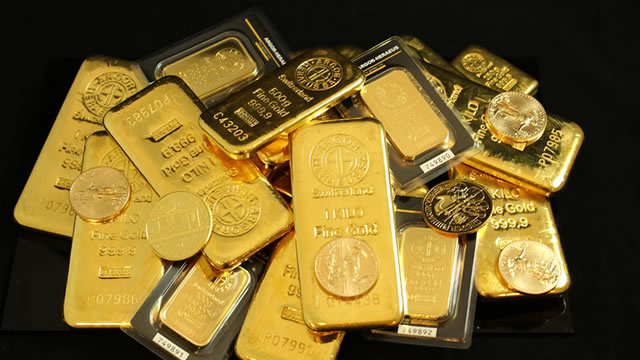
The Battle of the Gold ETFs: Is AAAU Better Than GLD?
The Motley Fool· 2026-03-25 21:17
Core Insights - The Goldman Sachs Physical Gold ETF (AAAU) has a lower expense ratio compared to SPDR Gold Shares (GLD), making it potentially more appealing for long-term investors [1][4] - Both ETFs are designed to track the price of gold bullion, but they differ in terms of scale, liquidity, and expense ratios [2][10] Expense and Performance Comparison - AAAU charges an expense ratio of 0.18%, while GLD charges 0.40%, which can significantly impact long-term returns for investors [4] - Over the last 10 years, AAAU returned 270%, slightly outperforming GLD's 264% return, and also showed better performance over the past five and one-year periods [12] Risk Metrics - The maximum drawdown over five years for GLD is 22.0%, while AAAU has a slightly lower drawdown of 21.6% [6] - Both ETFs have a beta of 0.67, indicating similar price volatility relative to the S&P 500 [3] Fund Structure and Holdings - Both AAAU and GLD hold physical gold to mirror spot prices and avoid leverage or derivatives, focusing solely on gold price movements [7][8] - AAAU was launched in July 2018 and is structured to provide direct exposure to bullion without currency hedging [7] Trading Experience - GLD offers greater liquidity and higher average daily volume, making it a better choice for short-term trading [10] - AAAU is considered a superior option for long-term investors due to its lower expense ratio and better historical returns [11][12]
VIDEO: ETF of the Week: GLDM
Etftrends· 2026-03-23 20:24
Core Viewpoint - The SPDR Gold MiniShares Trust (GLDM) is highlighted as a cost-effective alternative to the SPDR Gold Shares (GLD), providing exposure to the gold market with a lower expense ratio, making it attractive for cost-conscious investors [2][6]. Cost Efficiency - GLDM offers exposure to the spot gold market at an expense ratio of just ten basis points, significantly lower than GLD, which has a higher expense ratio but trades more frequently [2][3]. - The difference in performance between GLDM and GLD is primarily attributed to their expense ratios, with GLDM showing better returns in various market conditions due to its lower costs [7][8]. Market Demand and Performance - There is a growing demand for gold as a safe haven asset, especially amid geopolitical tensions, with central banks globally increasing their gold reserves [9][13]. - GLDM has seen strong inflows this year, indicating a positive market sentiment towards gold investments [6]. Portfolio Construction - It is suggested that investors consider allocating around 5% of their portfolio to gold, including GLDM, to diversify and mitigate risks associated with traditional equity and fixed income investments [17]. - Gold mining ETFs can complement investments in physical gold, but they serve different purposes and risk profiles, with GLDM being considered a safer investment [15][14].


Easy Come, Easy Gold: Why the Metal Is Tanking While Inflation Fears Rise
Yahoo Finance· 2026-03-23 14:08
Core Viewpoint - The current decline in gold prices is surprising given the rising inflation fears, leading to significant outflows from gold investment vehicles like SPDR Gold Shares (GLD) [3][4]. Group 1: Market Dynamics - Gold experienced a significant outflow of $3 billion in a single day, marking the largest exit in years and a 13-year high for monthly outflows [3]. - The SPDR Gold Shares (GLD) has been heavily sold down, indicating potential further downside risk as technical indicators suggest a bearish trend [4][5]. - The current market environment is characterized by institutional managers facing margin calls, leading to the liquidation of gold assets to raise cash [7]. Group 2: Investment Sentiment - Gold is traditionally viewed as a hedge against inflation, yet its recent performance contradicts this perception as fear in the market is dominating [4]. - The lack of earnings, dividends, or comparable valuation metrics for gold makes it susceptible to market sentiment driven by greed and fear [4]. - The current situation is described as "easy come, easy gold," where traditional support for gold is being undermined by macroeconomic pressures [7][8].
Gold Is Back Under $5,000, And This ETF May Be The Best Bet On A Rebound Run Higher
Yahoo Finance· 2026-03-20 17:55
Core Viewpoint - Gold prices have experienced significant volatility, crossing $5,000 per ounce in January before retreating below $4,600, impacting investment strategies in gold ETFs like iShares Gold Trust (IAU) [2][3]. Group 1: Gold Price Trends - Gold surged to record highs, returning 50% over the past year due to inflation hedging and central bank demand, but has recently seen a sharp pullback of nearly 9% in a single week [3]. - Despite the recent decline, IAU remains up about 6% year-to-date, indicating a divergence between short-term fluctuations and a longer-term bullish trend [3]. Group 2: iShares Gold Trust (IAU) Structure and Costs - IAU offers fractional ownership of physical gold stored in allocated vaults, with no earnings or dividends, and charges a low annual expense ratio of 0.25%, which is lower than SPDR Gold Shares (GLD) at 0.40% [4][7]. - The cost efficiency of IAU makes it an attractive option for investors looking to gain exposure to gold without the complexities of physical storage [4][7]. Group 3: Macro Factors Influencing Gold Prices - Real interest rates are crucial for gold's performance; rising yields diminish gold's appeal, while falling real rates or potential Federal Reserve rate cuts could support gold prices as a non-yielding asset [6][7]. - The future performance of gold over the next 12 months will depend on the Federal Reserve's actions regarding interest rates and the trajectory of Treasury yields [7].
The 12% Yield Gold Income ETF That Nobody Knows About
Yahoo Finance· 2026-03-19 14:07
Core Insights - NEOS Gold High Income ETF (IAUI) addresses the lack of income generation from traditional gold investments by employing a covered call strategy to provide monthly distributions [2][4] - Launched in June 2025, IAUI has quickly attracted $395.7 million in assets, indicating growing interest among income-focused investors [3] - The fund's structure includes approximately 63% in U.S. Treasury Bills, 24% in Goldman Sachs Physical Gold ETF, and an active options overlay, enhancing capital efficiency [4][6] Fund Strategy - IAUI utilizes Treasury Bills as collateral to gain synthetic gold exposure while implementing a dynamic covered call strategy, which allows for flexibility in strike selection based on market conditions [6][7] - The fund offers a 12.2% annualized distribution yield, contrasting with the 66% price return of SPDR Gold Shares (GLD) since its launch, highlighting the trade-off between income generation and capital appreciation [7] - The covered call strategy sacrifices some upside potential during gold bull markets to ensure predictable monthly income, making IAUI appealing to income-focused investors [7]
Got $3,000? Should You Buy Bitcoin, XRP, or Gold?
Yahoo Finance· 2026-03-15 09:20
Core Insights - Investors should consider exposure to both precious metals like gold and cryptocurrencies like Bitcoin or XRP, as each asset behaves differently and requires distinct ownership strategies [1] Group 1: Gold Investment - Gold has historically been a safe haven for investors due to its scarcity and universal acceptance of value, with the SPDR Gold Shares ETF price increasing by 79% over the past 12 months as of March 11 [3] - Central bank purchases have significantly supported gold demand, with global gold holdings now representing nearly 20% of official reserves, driven by concerns over the dollar's reserve currency status and geopolitical instability [4] - While gold may not offer the same high returns as riskier assets, it is advisable for investors without gold exposure to allocate funds towards it [5] Group 2: Bitcoin Investment - Bitcoin is considered a classic cryptocurrency investment, often referred to as digital gold, but it carries higher risk compared to gold [6] - The rationale for investing in Bitcoin parallels that of gold, as it is a scarce asset increasingly recognized as a store of value, with growing interest from organizations, individuals, and governments for future allocations [6]
JPMorgan warns investors are quietly moving away from gold since war began
Yahoo Finance· 2026-03-13 17:10
Core Insights - Geopolitical conflicts traditionally drive investors towards safe-haven assets like gold, government bonds, and energy commodities, but current market data indicates a potential shift in this behavior [1] Group 1: Historical Context of Safe-Haven Assets - Gold has historically been a primary beneficiary during military conflicts and geopolitical instability, with significant price increases observed during events like Russia's invasion of Ukraine in February 2022, where spot gold briefly exceeded $1,960 per ounce [2] - Similar price patterns were noted during earlier conflicts, such as the Iraqi invasion of Kuwait in August 1990, where gold prices rose from approximately $370 to $415 per ounce before retreating [3] - Traditional market reactions during geopolitical uncertainty often see stock declines while commodities like oil and precious metals increase as investors seek to hedge risks [4] Group 2: Current Market Dynamics - Recent data from JPMorgan indicates a divergence in investor behavior towards digital assets during the current conflict, with significant differences in ETF flows between gold and Bitcoin since the escalation of the Iran war in late February [5] - The largest gold ETF, SPDR Gold Shares (GLD), experienced outflows of about 2.7% of its assets under management during this period, contrasting with BlackRock's iShares Bitcoin Trust (IBIT), which saw inflows of around 1.5% of its assets [6] - This divergence has effectively reversed the earlier year-to-date advantage that gold ETFs held over Bitcoin funds [6]
Here's Why Gold ETFs Remain a Smart Long-Term Portfolio Bet
ZACKS· 2026-03-13 16:55
Core Insights - The ongoing Middle East conflict is driving investors towards safe-haven assets, particularly gold, which has seen significant price increases due to heightened global market volatility [1][4][9] - J.P. Morgan and Deutsche Bank have bullish forecasts for gold prices, predicting $6,300 and $6,000 per ounce respectively by year-end [2] - The CBOE Volatility Index has surged, indicating increased market turbulence, with a 22.03% rise over the past five days and 58.42% over the past month [4][5] Gold Market Dynamics - Gold prices have increased by approximately 17.70% year-to-date and 1.16% over the past month, reflecting strong demand for safe-haven assets [1][9] - Inflation concerns, particularly energy-driven inflation, are supporting continued investment in gold despite pressures from a strengthening dollar [6] - Gold has historically outperformed inflation, making it a valuable tool for portfolio diversification [7] Investment Strategies - A long-term passive investment approach in gold is recommended to navigate short-term market disruptions, with gold ETFs emerging as an attractive option [8][10] - Investors are encouraged to consider various gold ETFs, such as SPDR Gold Shares (GLD) and iShares Gold Trust (IAU), to increase their exposure to gold [11] - Gold Miner ETFs, like VanEck Gold Miners ETF (GDX), provide access to the gold mining industry and can magnify gains and losses associated with gold prices [13]