
SPDR Gold Shares ETF

Search documents
What's the Better Buy to Save for Retirement: Bitcoin vs. Gold
Yahoo Finance· 2026-03-28 08:20
Group 1 - The article discusses the importance of asset allocation in retirement portfolios, emphasizing that certain assets should be prioritized based on their historical performance and stability [1][2]. - Gold is highlighted as a long-standing store of value, having survived various economic crises while maintaining purchasing power, with the SPDR Gold Shares ETF returning approximately 44% over the past 12 months despite a recent 15% decline [3][4]. - The historical performance of gold shows that its worst peak-to-trough decline was about 44%, indicating that while it is considered stable, it does not guarantee price stability for retirement savers [5][6]. Group 2 - Bitcoin is compared to gold, with its annualized volatility being approximately 3.6 times that of gold, indicating a higher risk for retirement investors [6]. - The sequencing of return risk is crucial for retirement investors; a 15% drop in gold may not derail retirement plans if the portfolio is diversified, while a 45% drop in Bitcoin could significantly impact financial timelines [7][8].
Should You Buy Gold After Its 19% Correction? Here's What History Says.
The Motley Fool· 2026-03-24 08:26
Core Viewpoint - Gold remains a significant store of value, primarily driven by its scarcity and demand as a hedge against inflation and economic uncertainty [1][4][10] Group 1: Gold Demand and Investment - Most gold demand is from investors seeking to hedge against inflation and economic instability, with many opting for ETFs like SPDR Gold Shares for convenience and cost-effectiveness [2][10] - The SPDR Gold Shares ETF has seen increased investment, with Tudor Investment Corporation raising its position by 49% in late 2025, reflecting a growing interest in gold as a protective asset [10] - Gold's historical performance shows an average annual gain of 8% over the last 30 years, which is lower than the S&P 500's 10.7% return during the same period [11] Group 2: Economic Context and Gold's Value - The U.S. government reported a $1.8 trillion budget deficit for fiscal 2025, contributing to a national debt of $39 trillion, which has implications for gold's value as a hedge against currency devaluation [9] - The abandonment of the gold standard in 1971 has led to a significant increase in the money supply, resulting in a loss of purchasing power for the U.S. dollar and a corresponding rise in gold's value [7][10] Group 3: Gold's Industrial Use and Limitations - Despite being an excellent conductor of electricity, gold's high cost and limited supply restrict its use in industrial applications, leading manufacturers to prefer alternatives like silver [5] - Gold's primary use remains in jewelry, with limited industrial demand impacting its overall market dynamics [5] Group 4: Investment Strategy and Diversification - Diversification is emphasized as a key strategy for long-term success, suggesting that while stocks may offer superior returns, a small allocation to gold can provide protection during economic and political uncertainty [14] - The recent 19% dip in gold prices may present a favorable entry point for investors looking to diversify their portfolios [14]

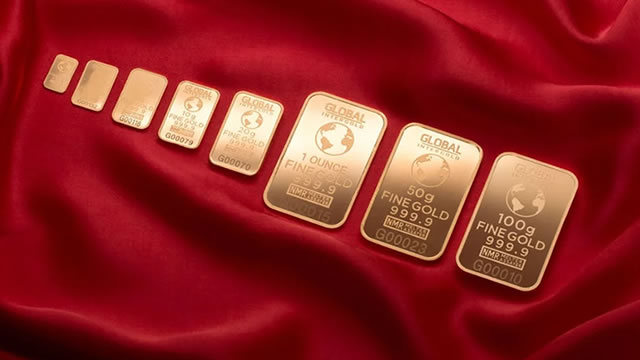
Gold prices surge amid global risks, but experts warn long-term investors to be careful
The Economic Times· 2026-03-21 20:34
Core Insights - Gold has shown strong returns since early 2024, but experienced investors caution that it can also underperform [1] - Historically, gold performs well during global crises, but its long-term performance is often inferior to stocks [1][2] Performance Over Time - From 1985 to 2025, the S&P 500 returned 11.9% annually before inflation and 8.9% after inflation, while gold returned 6.7% annually before inflation and 3.8% after inflation [2] - From 1995 to 2025, stocks again outperformed gold, returning 11.1% annually before inflation and 8.4% after inflation, compared to gold's 8.1% and 5.4% respectively [5] - From 2005 to 2025, gold returned 11.6% annually before inflation and 8.8% after inflation, while stocks returned 10.7% annually or 7.9% after inflation [6] Gold and Inflation - Gold prices do not closely track inflation; between 1987 and 2001, inflation averaged around 3% while gold prices fell [7] - In 2022, despite high inflation, gold prices remained mostly flat, rising 13% early in the year but later dropping 10% [7][1] Gold During Crises - Gold typically rises during periods of investor fear, such as during the COVID-19 crash in 2020 when stocks fell over 30% but gold remained stable [8] - Gold prices surged during significant events like the 2008 financial crisis and the aftermath of 9/11 [8] Volatility of Gold - Gold prices are highly volatile; for instance, it rose 6% in 2012 but fell 28% in 2013 [9] - Over a five-year period ending in 2016, gold dropped 16.5%, but it has risen about 50% in recent years [9][16] Investment Vehicles - Gold ETFs are more convenient than physical gold, avoiding storage and insurance issues; SPDR Gold Shares ETF has about $105 billion in assets [10][16] - iShares Gold Trust offers lower fees compared to SPDR Gold Shares, and investors can also consider gold mining company funds [10]

SPDR Gold ETF monthly outflows already at 13-year high (GLD:NYSEARCA)
Seeking Alpha· 2026-03-20 10:38
Core Viewpoint - There is a significant outflow of money from gold, with the SPDR Gold Shares ETF (GLD) experiencing its largest monthly outflows since April 2013, indicating a notable shift in investor sentiment towards gold [2] Group 1: Market Trends - The SPDR Gold Shares ETF (GLD) has recorded the biggest monthly outflows in 13 years, highlighting a trend of decreasing investment in gold [2] - There are still 8 trading days remaining in the month, suggesting that the outflow figures may increase further before the month concludes [2]

Well below US$5K/oz, gold’s surefire status as a safe haven has shifted
The Market Online· 2026-03-20 01:55
Core Viewpoint - Gold prices have experienced a significant decline after a historic run, influenced by geopolitical tensions and changing economic conditions, particularly the potential for U.S. interest rate hikes [1][4]. Group 1: Gold Price Trends - Gold prices have climbed approximately 66% in CY25, following a double-digit rally in CY24, largely driven by the Iran War and conflicts in the Middle East [2]. - Recently, gold has seen a decline of over 10% in the last month, dipping below the psychologically significant US$5,000 per ounce level [5]. Group 2: Market Reactions - Gold stocks have been among the biggest fallers in the market, with companies like New Murchison Gold experiencing significant losses [7]. - The Global X Physical Gold ETF has decreased by 9% over the last week, while the SPDR Gold Shares ETF has fallen by 7% over the last month, indicating a broader trend of declining investor confidence in gold as a safe haven [9]. Group 3: Economic Influences - The potential for a hawkish Federal Reserve and a strengthening U.S. dollar have contributed to increased geopolitical volatility, impacting gold prices [4]. - The recent market dynamics suggest that the safe haven appeal of gold is diminishing, necessitating a readjustment period for investors, likely tied to the resolution of the Iran War [9].
Does This 1 New Trend Mean You Should Sell Gold and Buy Bitcoin Right Now?
Yahoo Finance· 2026-03-18 09:20
Core Insights - A significant capital shift is observed from gold to Bitcoin, with Bitcoin ETFs experiencing over $560 million in net inflows in early March, while SPDR Gold Shares ETF saw a record outflow of $2.9 billion on March 4 [1][3][4] Group 1: Market Trends - The SPDR Gold Shares ETF recorded its largest single-day outflow since 2016, shedding approximately 25 metric tons of gold in the week surrounding March 4 [3] - Spot Bitcoin ETFs collectively absorbed more than $642 million in inflows on the same day, indicating a potential migration of institutional capital from gold to Bitcoin [3] Group 2: Performance Analysis - Gold prices reached $5,400 earlier in March, marking a 68% increase over the past year, which may lead to profit-taking among investors [4] - Historical analyses suggest that gold and Bitcoin have alternated in leading performance cycles, indicating that gold may be nearing the end of its current upward trend [5] Group 3: Historical Context - Historically, after the nine best years for gold returns, the following year has seen positive returns in all but two instances, suggesting that gold may continue to perform well even after significant gains [6]
This ETF Has Given Investors a Golden Opportunity
The Motley Fool· 2026-03-14 16:09
Core Viewpoint - The evolution of exchange-traded funds (ETFs) has expanded investment opportunities beyond stocks, allowing for a diversified portfolio across various asset classes, including commodities like gold [1]. Group 1: ETF Market Evolution - The introduction of SPDR Gold Shares (GLD) has significantly impacted the commodity investment landscape, particularly in gold, which has recently reached $5,000 per ounce, increasing investor interest [2]. - SPDR Gold Shares filled a critical gap in the market by providing a more accessible way to invest in gold compared to purchasing physical coins or bars, which involved high markups and logistical challenges [5][6]. Group 2: Benefits of SPDR Gold - SPDR Gold allows investors to buy and sell shares like any other stock or ETF, eliminating the need to deal with coin dealers or the complexities of physical gold ownership [7]. - The ETF manages the acquisition, storage, and insurance of gold bullion, charging a modest annual expense ratio to cover these costs, making it a convenient option for investors [7]. Group 3: Market Performance - The popularity of gold investing has surged with the availability of SPDR Gold, although its attractiveness as an investment has varied over its 20-year history [8].
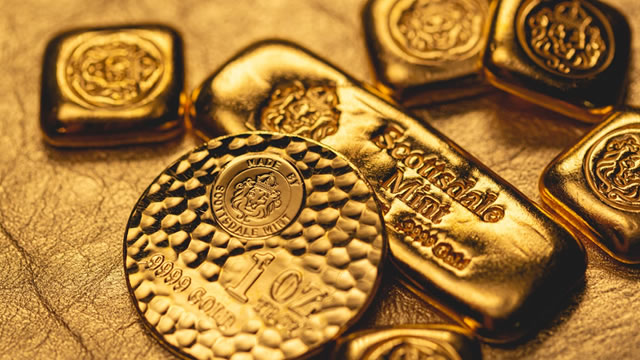
Is It Smarter to Buy XRP or Precious Metals With $500 Right Now?
Yahoo Finance· 2026-03-11 21:25
Group 1 - Investors are currently facing a choice between seeking safety and pursuing growth amid increasing global volatility, with a need for downside protection while also recognizing lucrative opportunities ahead [1] - Central banks and individuals are purchasing gold at historically high levels due to ongoing geopolitical and economic uncertainty, which supports the investment thesis for gold as a finite and portable store of value [3] - Exposure to gold can be easily obtained through gold exchange-traded funds (ETFs) like the SPDR Gold Shares ETF, while silver and other precious metals can also be accessed via ETFs [4] Group 2 - Silver is more volatile than gold due to its significant industrial demand, which may lead investors to regret not choosing gold for a first-time hard asset allocation [5] - Platinum, while rarer than gold, is also used in industrial processes and does not attract the same level of investment inflows as gold during times of market uncertainty, making it less favorable for safety-seeking investors [6]
Weekly ETF flows: four of 11 sectors record outflows; Bitcoin leads inflows (NYSEARCA:SPY)
Seeking Alpha· 2026-03-10 21:12
Group 1 - The SPDR S&P 500 Trust (SPY), the world's largest exchange-traded fund, experienced outflows of $14.07 billion for the week ending March 6 [1] - The price of SPY decreased by 2.04% during the same period [1] - The SPDR Gold Shares ETF (GLD) also faced significant outflows, totaling $4.58 billion last week [1]

This Gold ETF Is Outshining Its Peers in 2026
Yahoo Finance· 2026-02-27 19:35
Group 1 - Gold was one of the best-performing assets in 2025 and continued its momentum into 2026, prompting interest in bullion-linked ETFs [1] - The SPDR Gold Shares ETF (GLD), launched in November 2004, is a $181.29 billion ETF that has democratized gold investing [2] - The gold ETF market is evolving, with new options like the WisdomTree Efficient Gold Plus Gold Miners Strategy Fund (GDMN) outperforming traditional gold ETFs [3][4] Group 2 - GDMN, with a market size of $283.53 million, has shown significant outperformance compared to SPDR Gold Shares on a year-to-date basis [4] - The WisdomTree ETF employs a two-pronged approach, providing exposure to both the gold futures market and a basket of gold mining equities [6] - This ETF allows investors to gain exposure to both assets in one fund, enhancing efficiency in gold investing [7] Group 3 - GDMN's futures exposure offers leverage to spot gold prices, while its mining component is seen as having potential for greater upside due to attractive margins [8]